
Last updated September 20, 2026
Level 1 sweep and inspection to the NFPA 211 annual standard - flue, crown, cap, and flashing checked and photographed
Chimney sweep logs do not sweep chimneys. They loosen some creosote - which then falls where a brush and vacuum still have to collect it.
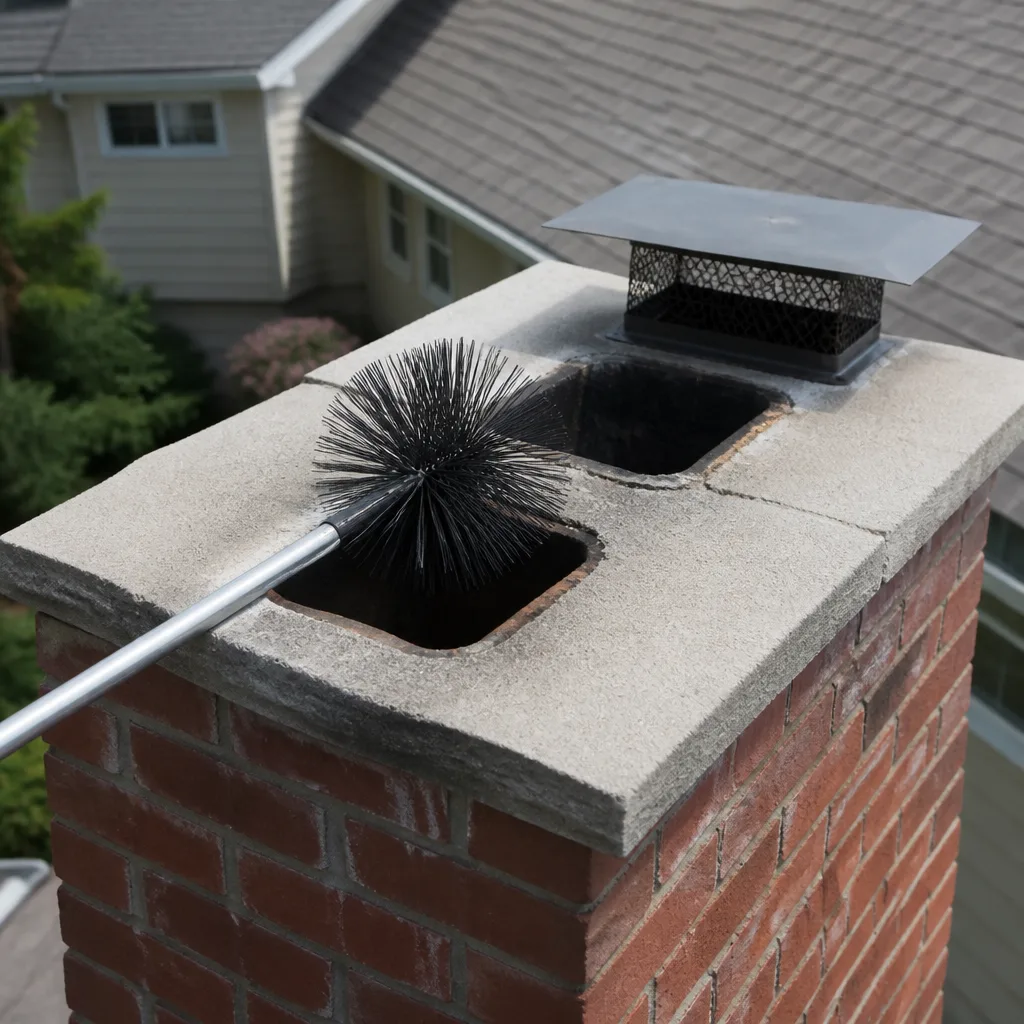
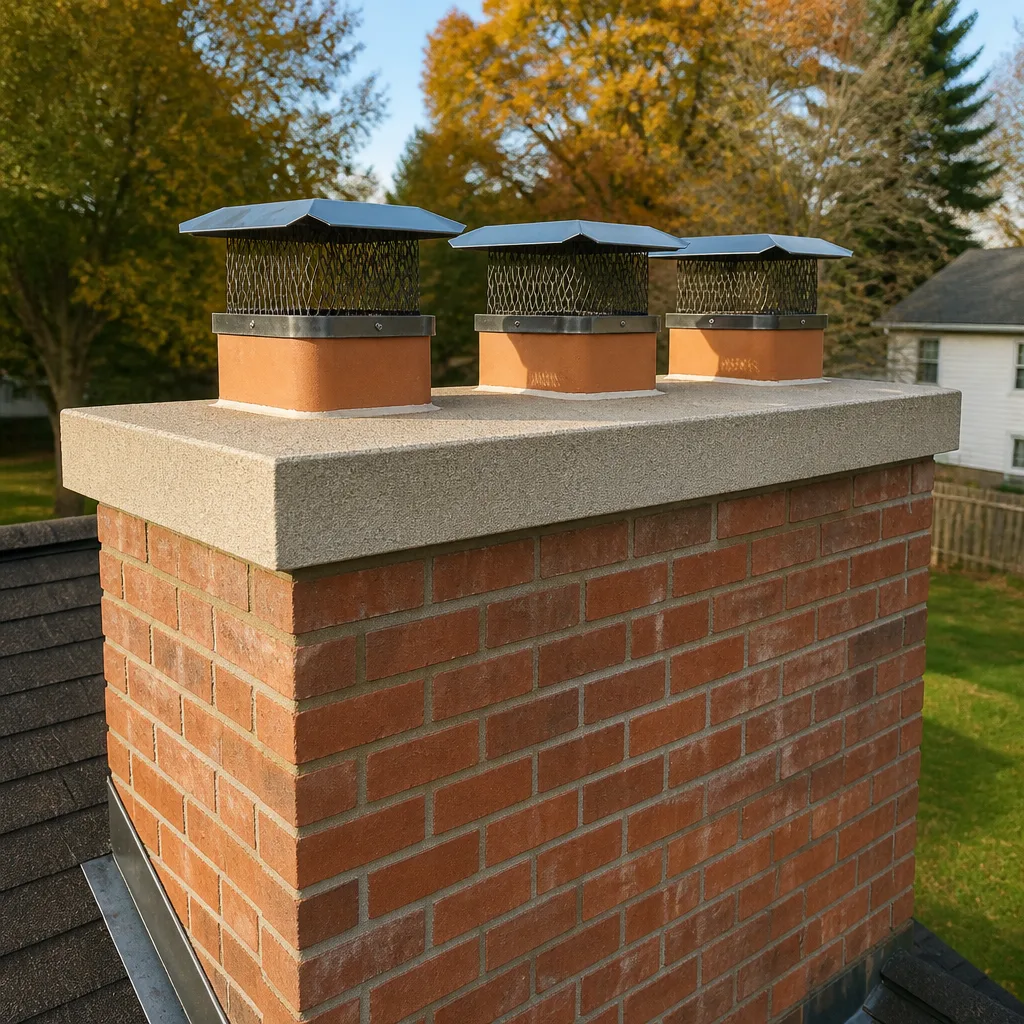
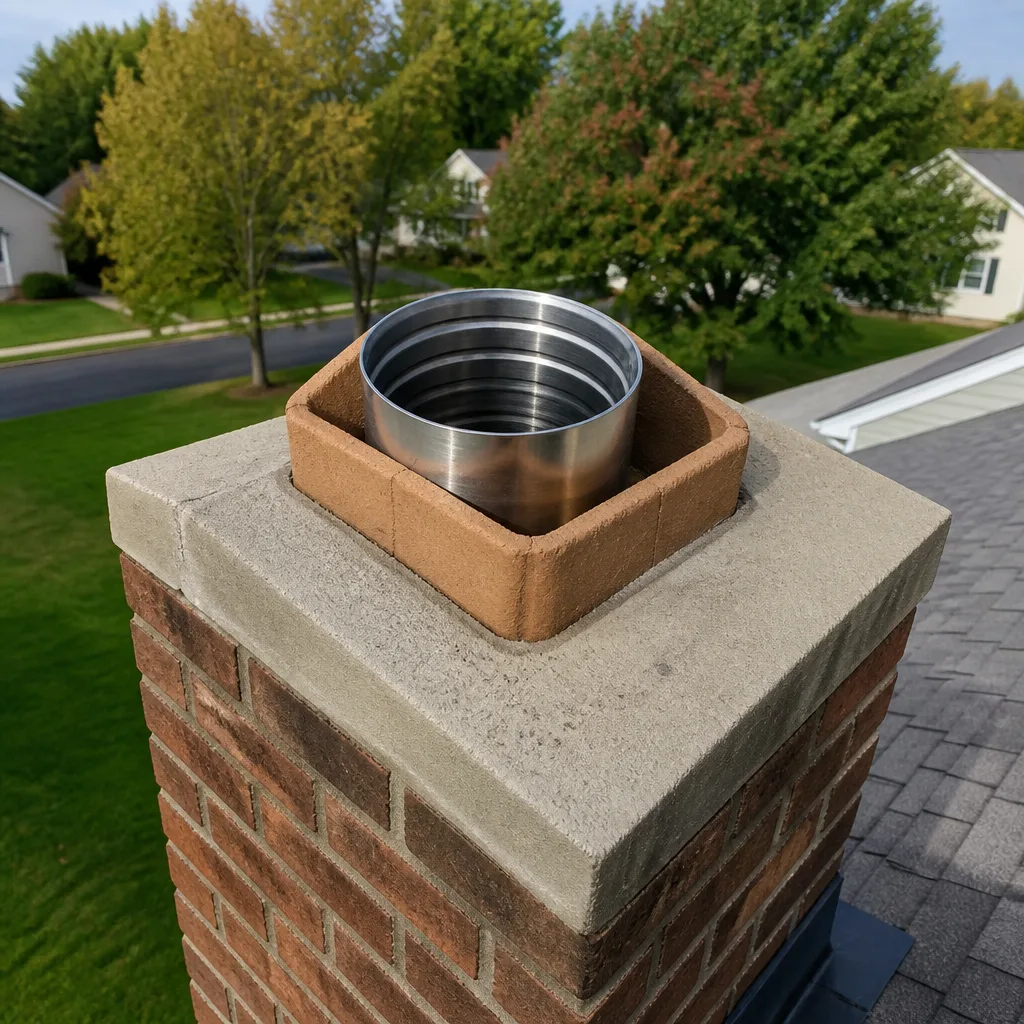
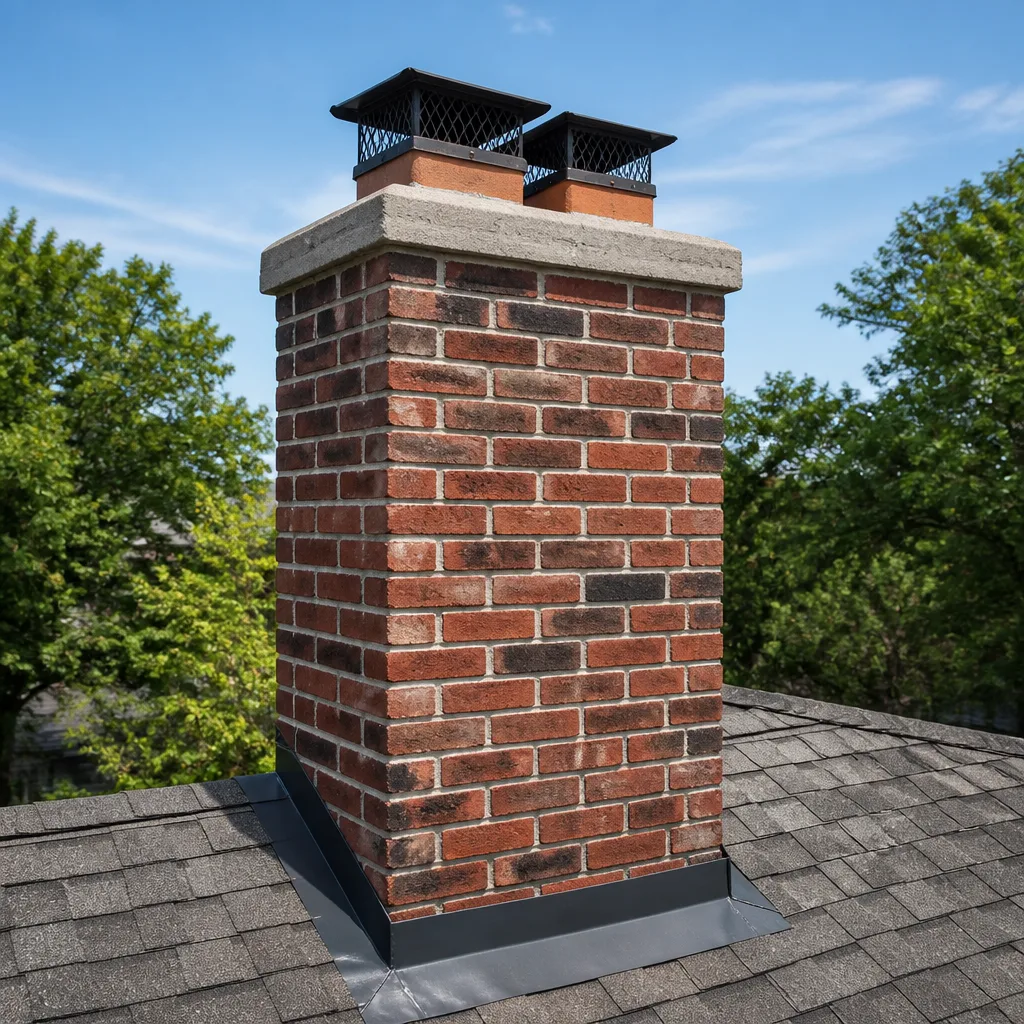
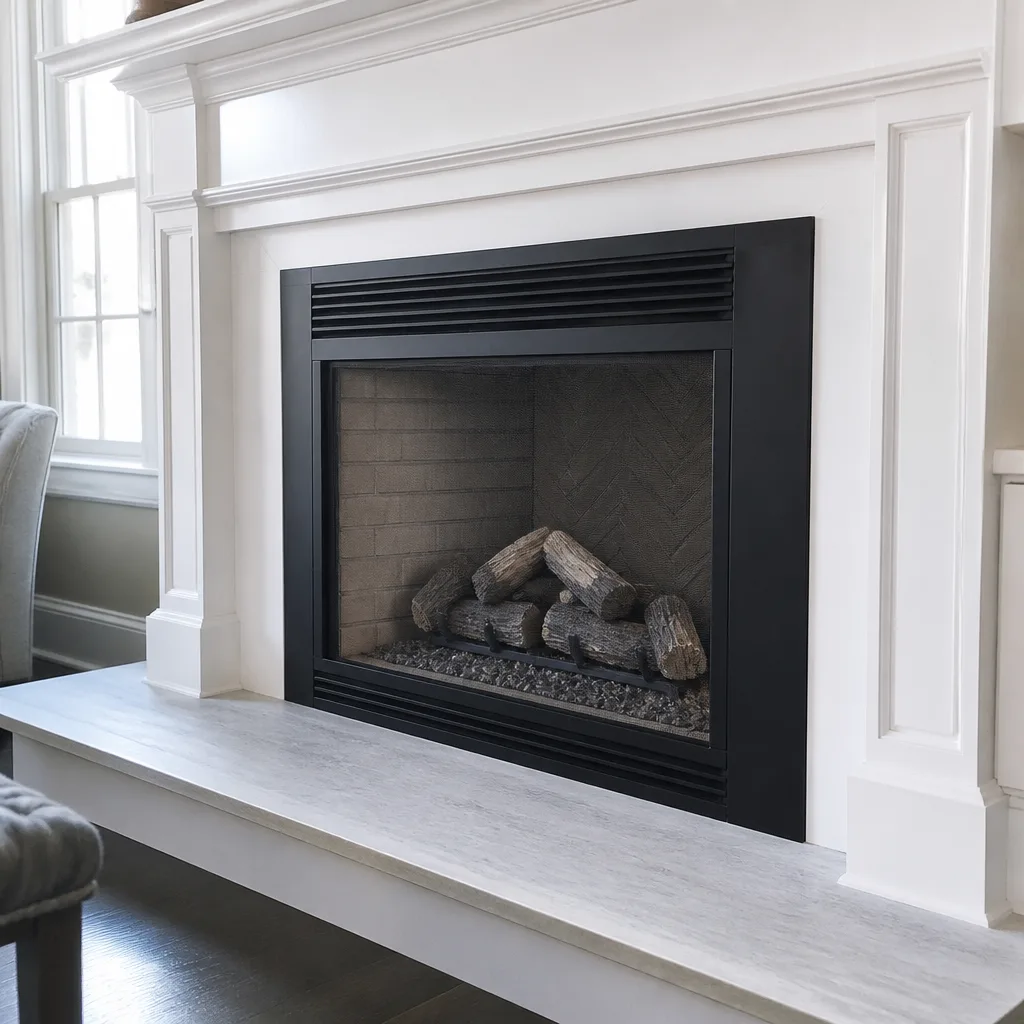
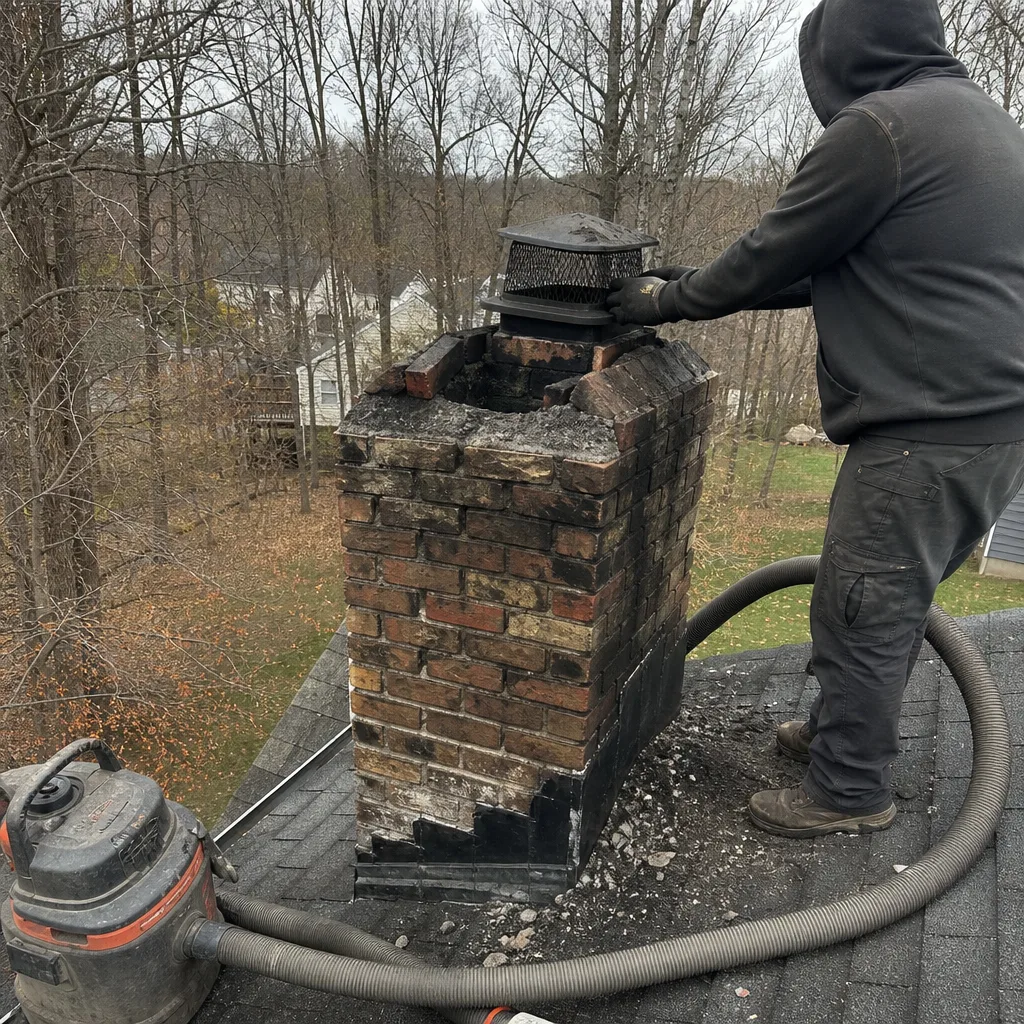 Before
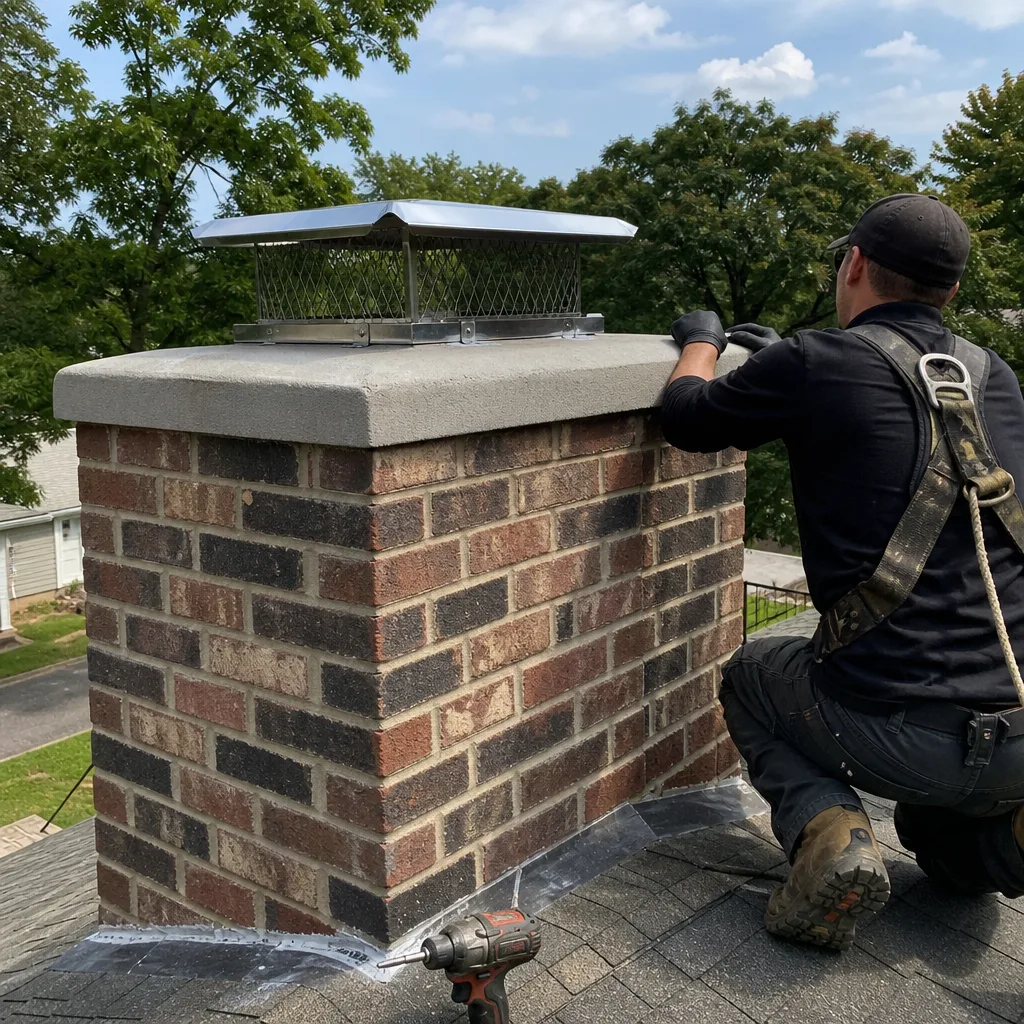 After
After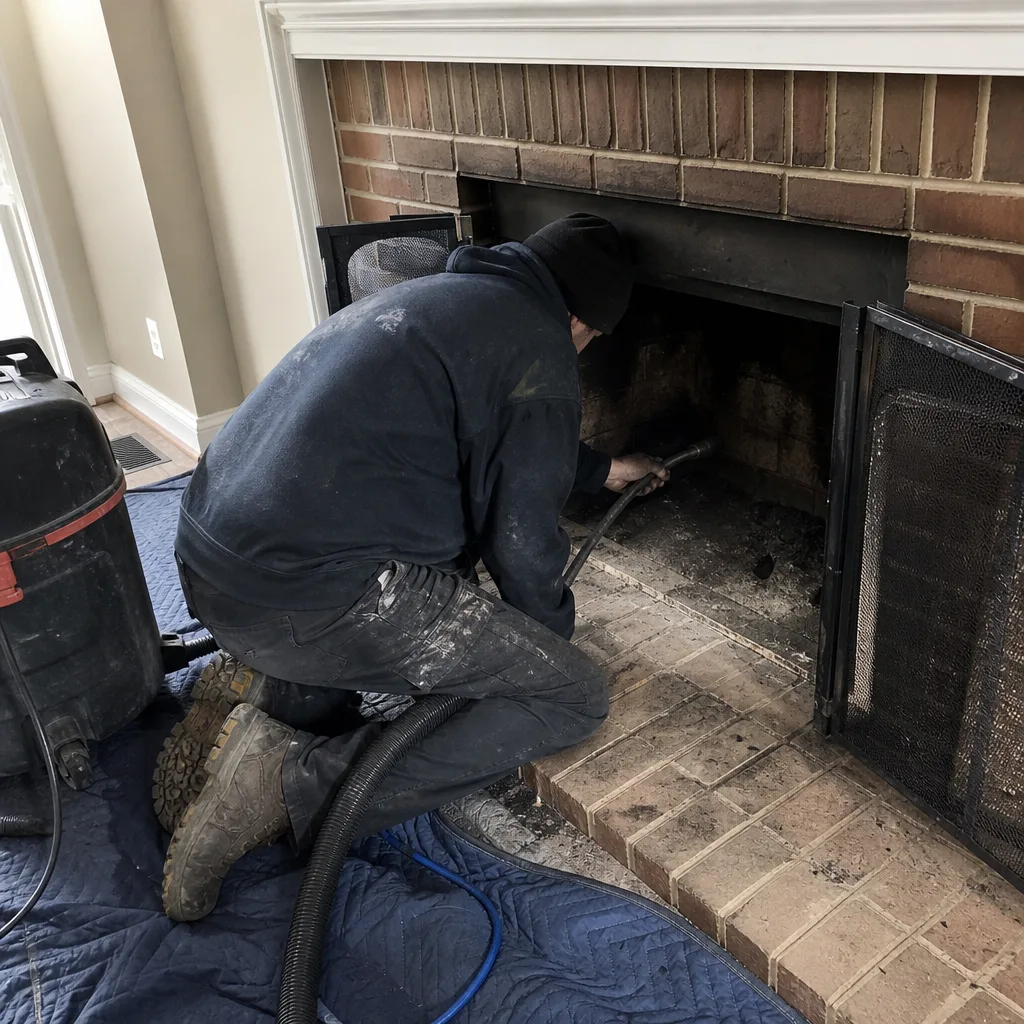 Before
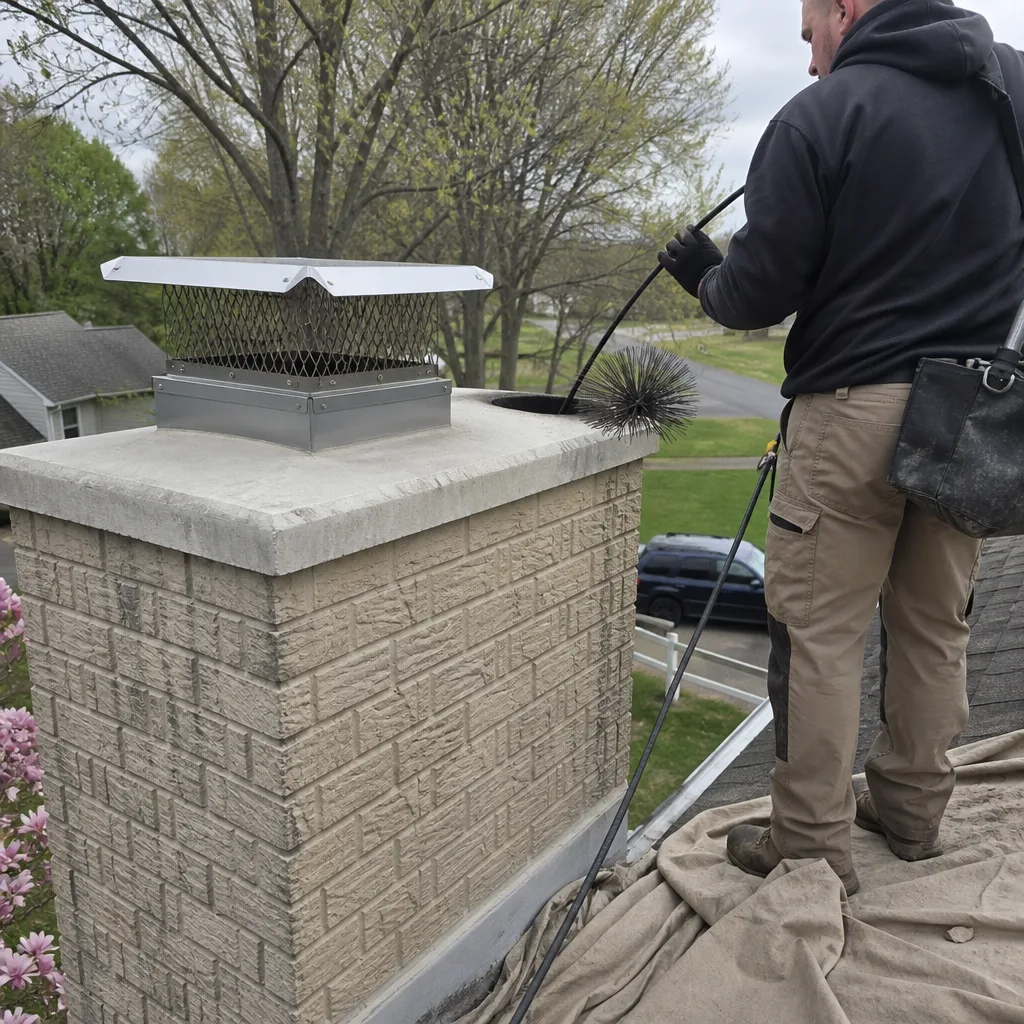 After
After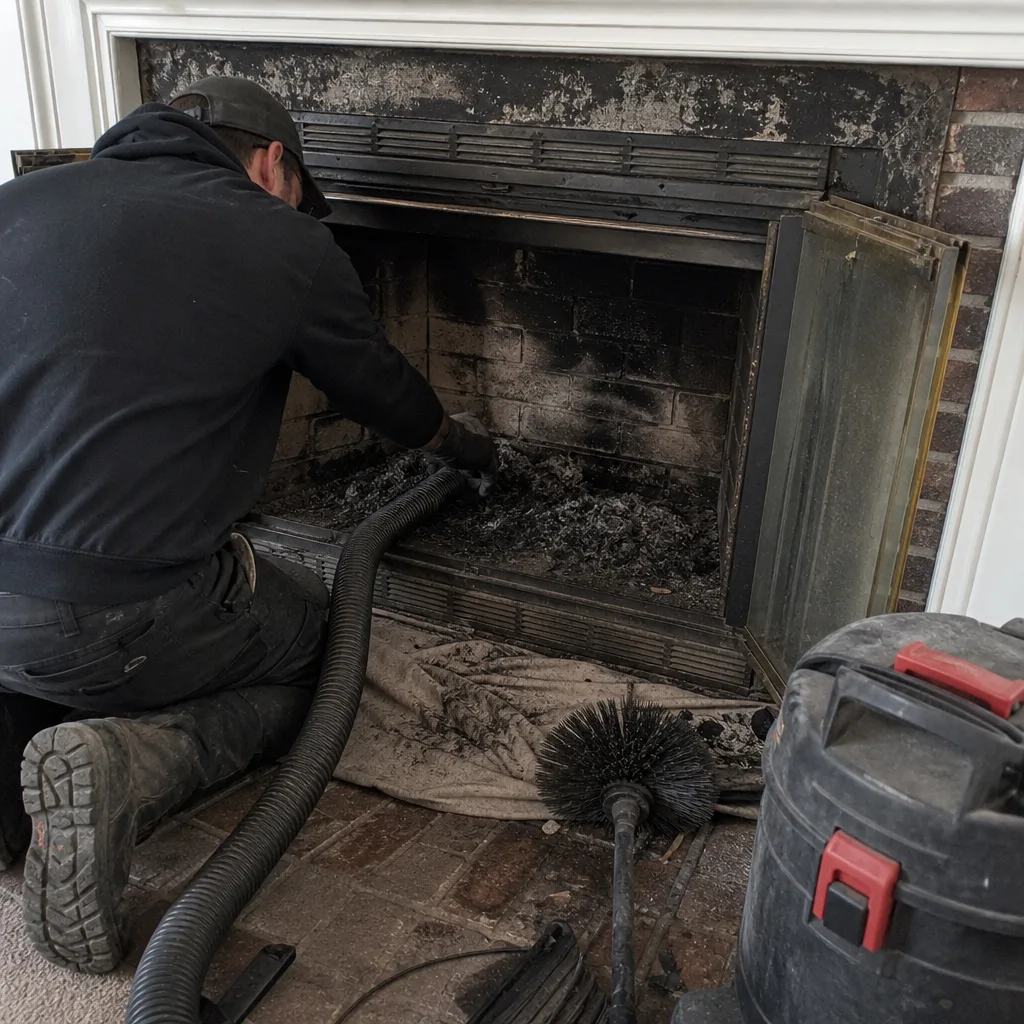 Before
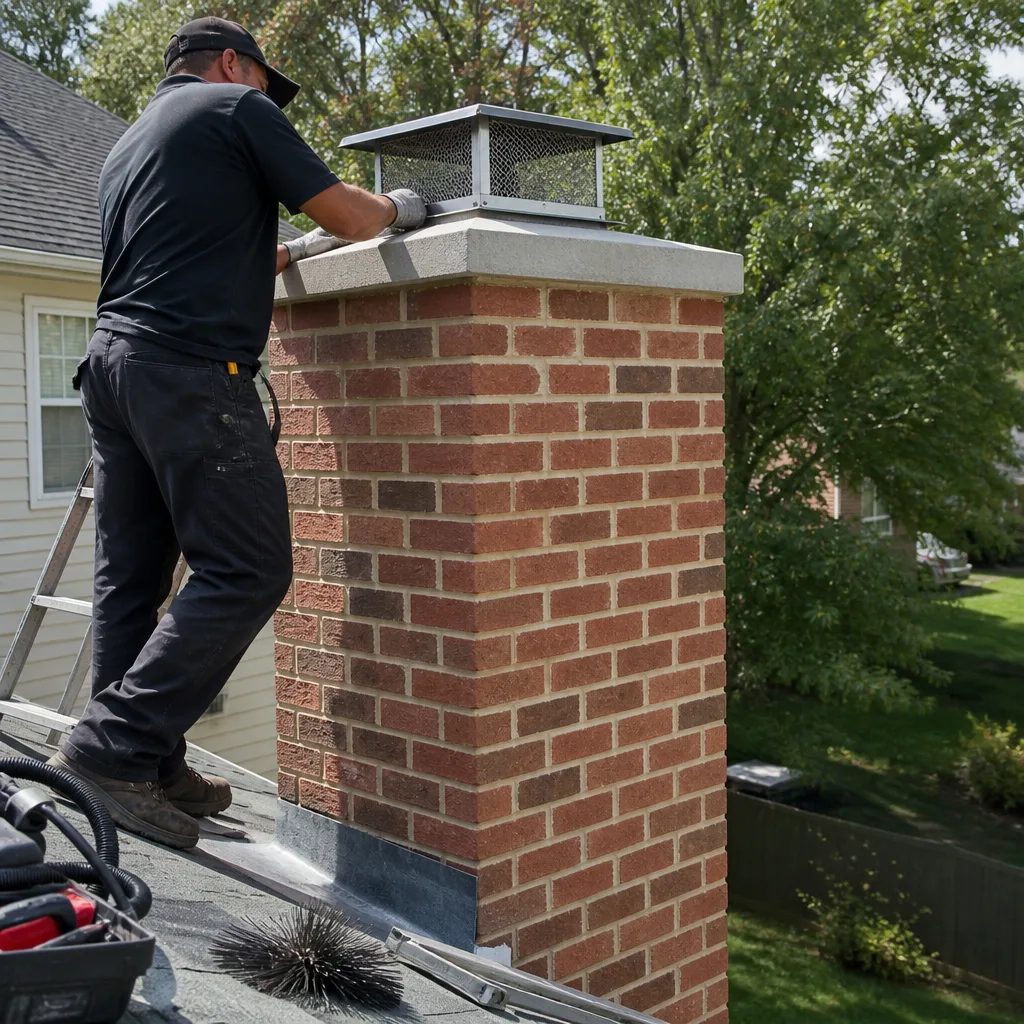 After
AfterThe Complete Guide to Chimney Cleaning in Manassas
Most Manassas homeowners who had their chimney “cleaned” last year cannot produce a single photo of the inside of their flue. They have a receipt, not a record. That distinction matters more than most people realize, because when an insurance adjuster asks what was done and when, or a home inspector questions the liner condition before closing, a receipt proves only that someone was paid. This guide explains what a documented chimney cleaning in Manassas actually requires, what it should cost, and why the camera scan is the difference between guessing and knowing. For more guides & resources on protecting your home, see our blog.
Quick Answer
A chimney cleaning in Manassas typically costs between $189 and $329 for a standard sweep with a documented camera inspection, depending on flue height, creosote load, and access. The cleaning should follow NFPA 211 Level 2 inspection standards, which means a camera goes down the flue and you receive a written record with photos. Without the camera documentation, you cannot verify the work was done correctly or prove it to an insurer, buyer, or fire official later.
Table of Contents
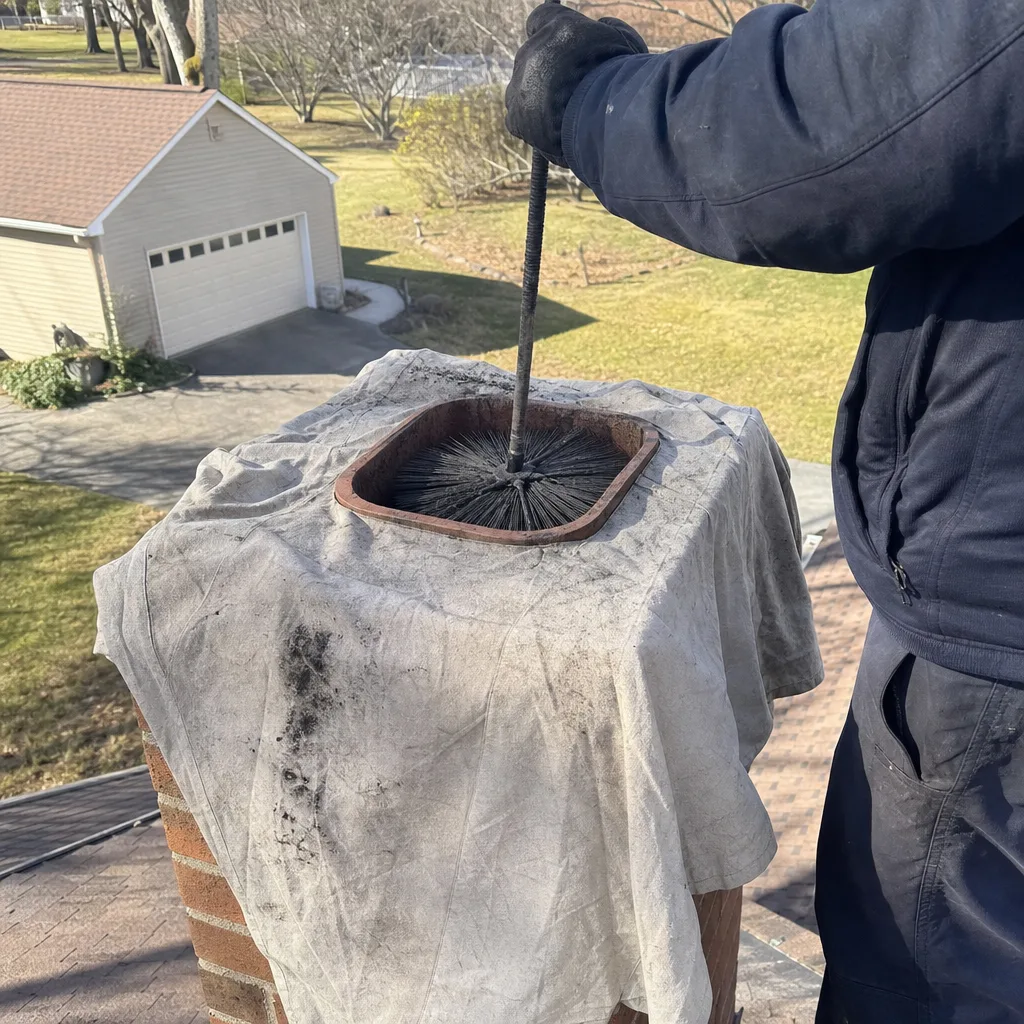
- How Much Does Chimney Cleaning Cost in Manassas?
- What a Documented NFPA 211 Level 2 Cleaning Actually Includes
- The Three Manassas-Specific Creosote Factors
- What a Written Price Before Work Starts Must Include
- What the Camera Footage Shows That a Flashlight Misses
- How a Written Record Protects You at Resale, After a Fire, and in an Insurance Dispute
- Common Mistakes to Avoid
- When to Call a Professional
- Frequently Asked Questions
- The Bottom Line
BeforeAfterHow Much Does Chimney Cleaning Cost in Manassas?
In the Manassas market, expect to pay between $189 and $329 for a standard chimney sweep and documented camera inspection. Homes in older Prince William County neighborhoods like Georgetown South, Point of Woods, and the historic district around Old Town Manassas often have taller flues or clay-tile liners from the pre-1990 build era, which can add $40 to $75 to the base price because of extended rod work and access setup.
Here is the price breakdown we quote in writing before any work starts:
- Standard sweep with NFPA 211 Level 2 camera scan: $189-$249 for a single-story flue with standard access
- Two-story flue or steep roof access: $229-$299, reflecting ladder setup, ridge work, and longer rod runs
- Heavy creosote removal (Class III glazed): add $80-$140 for rotary loop treatment or chemical breakdown passes
- Chimney cap inspection and minor crown sealing: $45-$90 when done alongside the sweep
- Dryer vent or furnace flue cleaning: $79-$129 as an add-on while we are already on site
These prices are not “starting at” numbers with fine print. Under Clause 1 of the Haven Standard, we deliver a written scope of work, written price, and written warranty before any tool comes off the truck. You see the full number, the exact work items, and the warranty terms in writing, and you approve or decline before anything begins. No one works on your chimney and then hands you a surprise invoice.
If you already have a written estimate from another company, we offer a free second opinion on any written chimney estimate in Manassas. Bring it, and we will walk you through line by line what is necessary, what is optional, and what you can safely defer.
What a Documented NFPA 211 Level 2 Cleaning Actually Includes
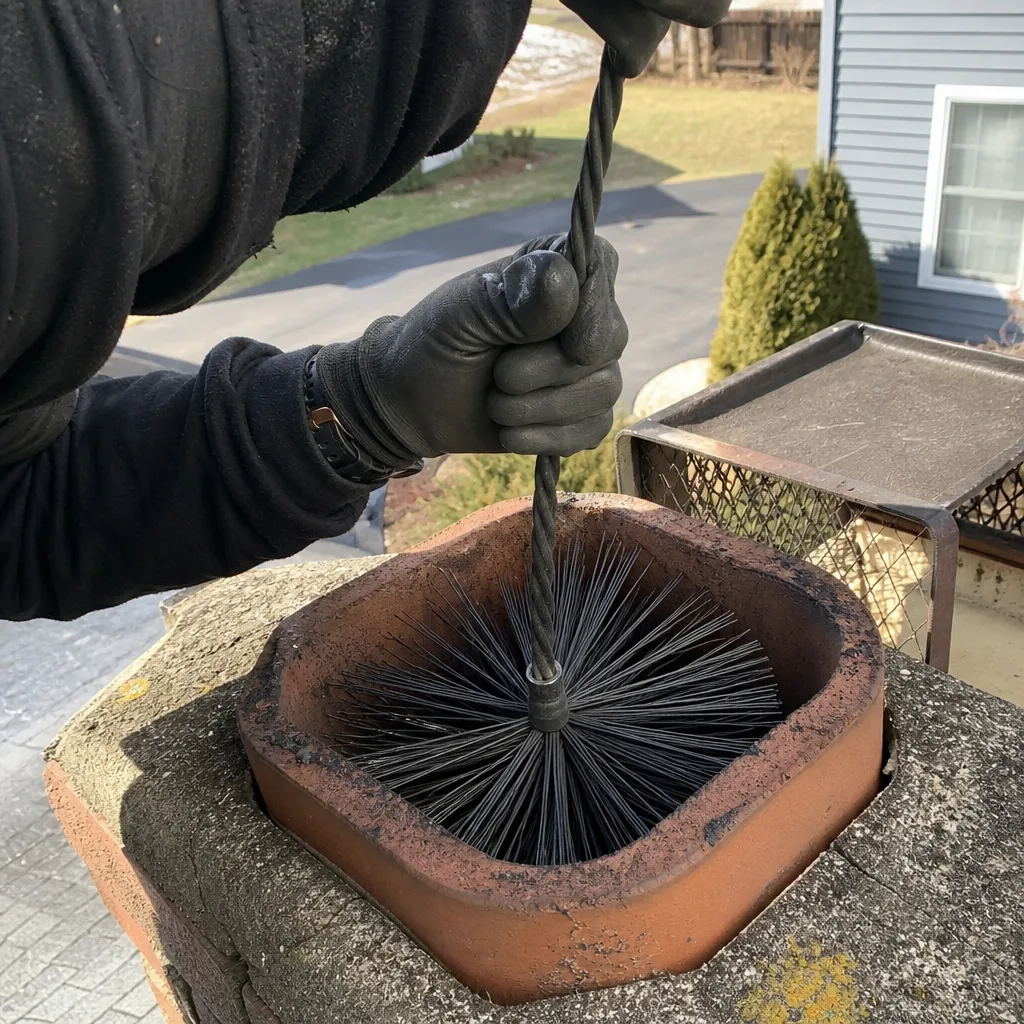
There is a meaningful difference between a brushing visit and a documented NFPA 211 Level 2 cleaning. A brushing visit is what most Manassas homeowners receive: a technician runs a wire brush up and down the flue, peers up with a flashlight, collects the soot that falls, and writes a receipt. If you are weighing whether to do it yourself, read our DIY vs Professional Chimney Cleaning: The Manassas Homeowner’s Decision Guide first. Nothing is measured. Nothing is filmed. Nothing is recorded beyond the transaction.
An NFPA 211 Level 2 cleaning includes the sweep, but it goes further. The standard requires a camera or optical scan of the entire flue interior, from the firebox up through the crown. The goal is to document what the naked eye and a flashlight cannot see: hairline cracks in clay tiles, offset joints from settling, missing mortar, animal nests, and the staging zones where glazed creosote is accumulating but has not yet become a visible fire hazard from below.
Here is the step-by-step sequence we follow in Manassas, and it has been our standard since 2009:
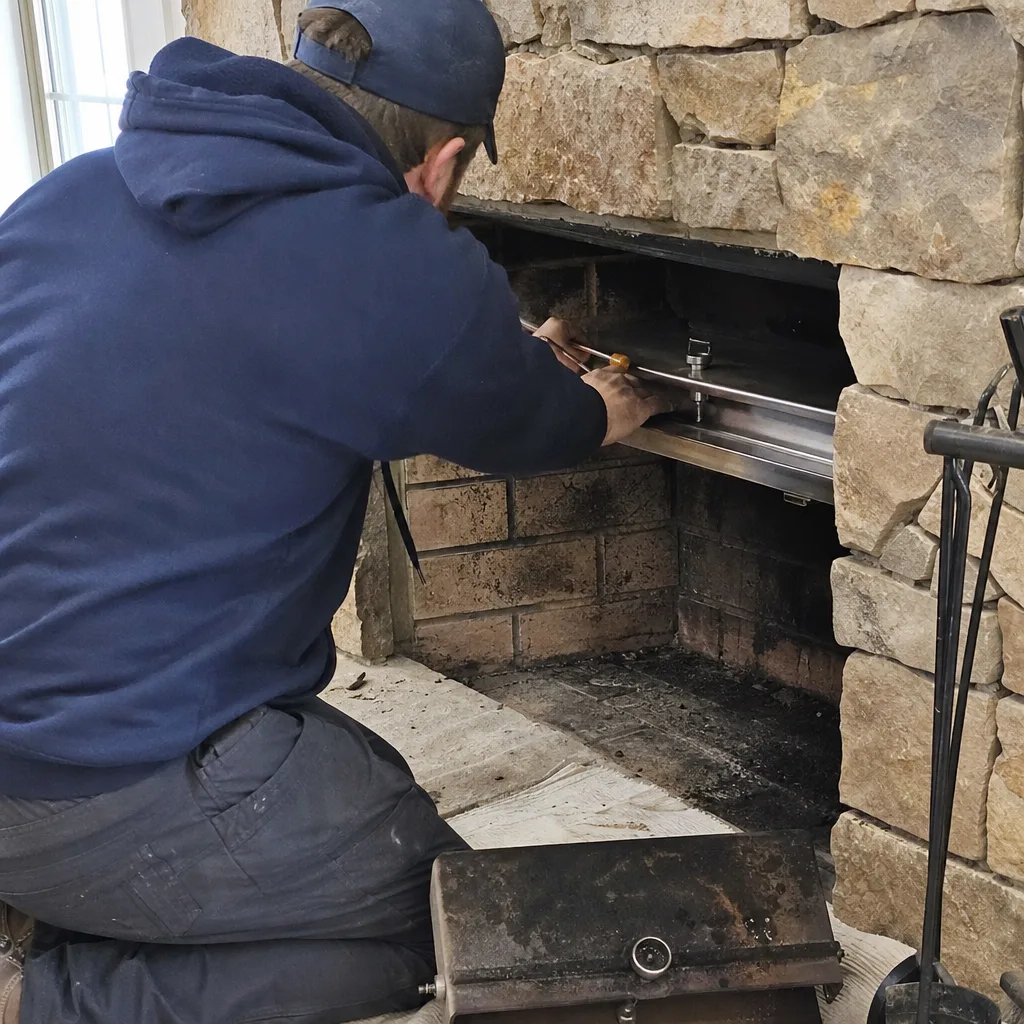
- Interior protection and setup. Drop cloths are laid from the entry to the hearth. The firebox is sealed with a sweep shroud. A HEPA vacuum is positioned at the flue opening.
- Visual pre-inspection. We examine the firebox, damper, smoke chamber, and accessible flue sections with a bright light before any tools are used.
- Mechanical sweep. Wire or poly brushes sized to the flue run the full length from firebox to crown, removing creosote and debris while the vacuum captures the dislodged material.
- Camera scan, full descent and ascent. A high-resolution camera on a rigid rod is lowered and raised through the entire flue. We record the footage and capture stills at every transition point: firebox, damper, first tile joint, mid-flue, and crown.
- Written condition report. We note the creosote class (I, II, or III), tile condition, joint alignment, crown integrity, and cap function. Every finding is written, not just spoken.
- Photo record delivery. You receive the still images and camera footage archive reference before we leave, not days later. Clause 4 of the Haven Standard requires this on every job, no exceptions.
- Written warranty. The scope, the completed work, and the warranty are documented in one file that stays on record for as long as you own the home.
That last point is the one most people do not understand until they need it. A documented record shows what was found and what was done, on what date, by whom. In Virginia, when a home insurance claim involves a chimney fire or a CO event, the adjuster asks for maintenance records. “We had it cleaned last year” without documentation is hearsay. A dated camera report showing a clean flue is evidence.
The Three Manassas-Specific Creosote Factors
Creosote does not form uniformly. Its density, class, and location depend on how the wood burns, what kind of wood it is, and the condition of the flue. Manassas has a specific combination of factors that affect creosote buildup in ways a chimney company from Richmond or Winchester might not account for.
Factor one: the Northern Virginia burn season. Manassas sits in USDA Plant Hardiness Zone 7a, which means reliable freezes from mid-November through late March. People here burn more often than they do in warmer parts of Virginia, and they burn in long, steady sessions on cold evenings. Low-burn overnight fires with the damper throttled down are the single largest creosote producer in this climate, because incomplete combustion cools the flue gases before they exit and deposits tar on the tile walls. We see it in early-season sweeps every year: a thin, flaky Class I creosote that has built up over one winter and a more stubborn Class II glaze that formed over two.
Factor two: the fuel mix from local hardwood suppliers. Manassas homeowners buy mixed hardwood from the same local suppliers: oak, hickory, sometimes maple, occasionally a fruitwood like apple or cherry. Oak and hickory burn hot and clean when properly seasoned. Fruitwoods burn cooler and produce more particulate. The problem is seasoning. In Northern Virginia’s humid summers, wood stacked outdoors without a cover can still carry 20-25% moisture into fall. Unseasoned wood is the direct cause of rapid creosote accumulation, and we routinely see first-year Manassas homeowners surprised by how fast their flue collects Class II creosote after burning what looked like dry wood.
Factor three: older clay-tile flues in Prince William County homes built pre-1990. A substantial share of Manassas housing stock in ZIP codes 20110 and 20111 was built between 1960 and 1990, which is the era of clay-tile flue liners. Clay tile is durable, but it absorbs heat slowly and cools unevenly, which creates condensing surfaces for creosote. Hairline cracks in those old clay tiles also trap creosote in ways a smooth stainless liner does not. Homes in Sudley, Yorkshire, and Bull Run are common examples where we encounter this. The flue still works, but it demands more consistent cleaning discipline than a newer stainless-lined system.
These three factors together mean a Manassas chimney is not the same project as a chimney in a drier, warmer market. The cleaning frequency that works in Richmond may not be sufficient here. In our experience, most Manassas wood-burning fireplaces need a sweep every year, and every second year is the absolute maximum interval we would accept for a flue seeing regular use.
What a Written Price Before Work Starts Must Include
Under Clause 1 of the Haven Standard, “Have it in writing,” we deliver a written price, a written scope, and a written warranty before anyone starts working. That is our own standard, and it is also the standard you should demand from any chimney company in Manassas, whether or not you hire us. Our How to Hire a Chimney Cleaning Contractor in Manassas: A Step-by-Step Guide walks you through exactly what to verify.
When you get a written estimate, here is what it must include. If any of these items is missing, the estimate is incomplete, and you should ask for it in writing before signing anything.
- Exact scope of work. The specific tasks: sweep, camera scan, cap replacement, crown sealing, liner patch. Not “chimney service.”
- Flue liner condition at the time of the estimate. The tech should note what the liner looks like from the accessible opening: clay, stainless, cast-in-place, visible cracks or missing sections. If they cannot see the liner, they should say so.
- Access points and roof condition. Which side of the roof, what type of ladder or staging, whether a chimney cricket or steep pitch requires special setup. This affects price and safety.
- Creosote class or estimate before cleaning. The tech should state the visible creosote condition: light soot, flaky, glazed. The cleaning price should account for this, not surprise you later.
- Exact price, in dollars, with all fees listed. Labor, materials, disposal, travel. No “additional charges may apply” language.
- Warranty terms, in writing. What is covered, for how long, and what the remedy is if the work is not done right. Ours is the 365-Day Done Right Promise: if it is not done right, we make it right, stamped on every job.
- Documentation promised. Will you receive photos, camera footage, or a written report? If the answer is “we describe what we saw verbally,” you are getting a receipt, not a record.
Including these items forces a discipline that most Manassas chimney companies would prefer not to commit to, because it exposes exactly what they won’t do. We have been doing it since 2009 and have completed more than 38,000 inspections and cleanings this way. The written record is the product, not the afterthought.
What the Camera Footage Shows That a Flashlight Misses
The single most important piece of equipment on any chimney job in Manassas is the camera, not the brush. A flashlight illuminates the flue from below and shows the first few feet of tile or stainless. It is effectively useless beyond the firebox, because clay-tile flues curve, offset, and narrow as they rise, and the geometry of a chimney blocks line of sight from the hearth.
A rigid-rod camera solves this by traveling the full flue length, recording continuous footage of every interior surface. Here is what that footage has shown us in Manassas homes, over and over, that a flashlight inspection would have missed:
- Hairline cracks in clay tiles. These are invisible from below but perfectly clear on camera. A crack of 1/16 inch is enough for creosote to seep behind the tile and reach combustible framing. In homes built before 1990 in Manassas, we find these in roughly one in four chimneys we scan.
- Offset joints. Clay tiles installed in the 1970s and 1980s sometimes shifted during construction or as the house settled. A joint that has separated by an inch creates a ledge where creosote accumulates and a pathway for heat to the masonry. The camera reveals the exact location and degree of offset.
- Glazed creosote staging zones. Class III creosote does not form evenly. It stages in bands, often at the upper third of the flue where cooling is most rapid. From the firebox, the lower flue looks acceptable. The camera shows the glazed band up top that a flashlight never reaches.
- Animal intrusion. Manassas gets its share of raccoons, squirrels, and chimney swifts. A nest or a dead animal above the damper blocks draft and creates smell and fire risk. The camera finds it. A flashlight does not.
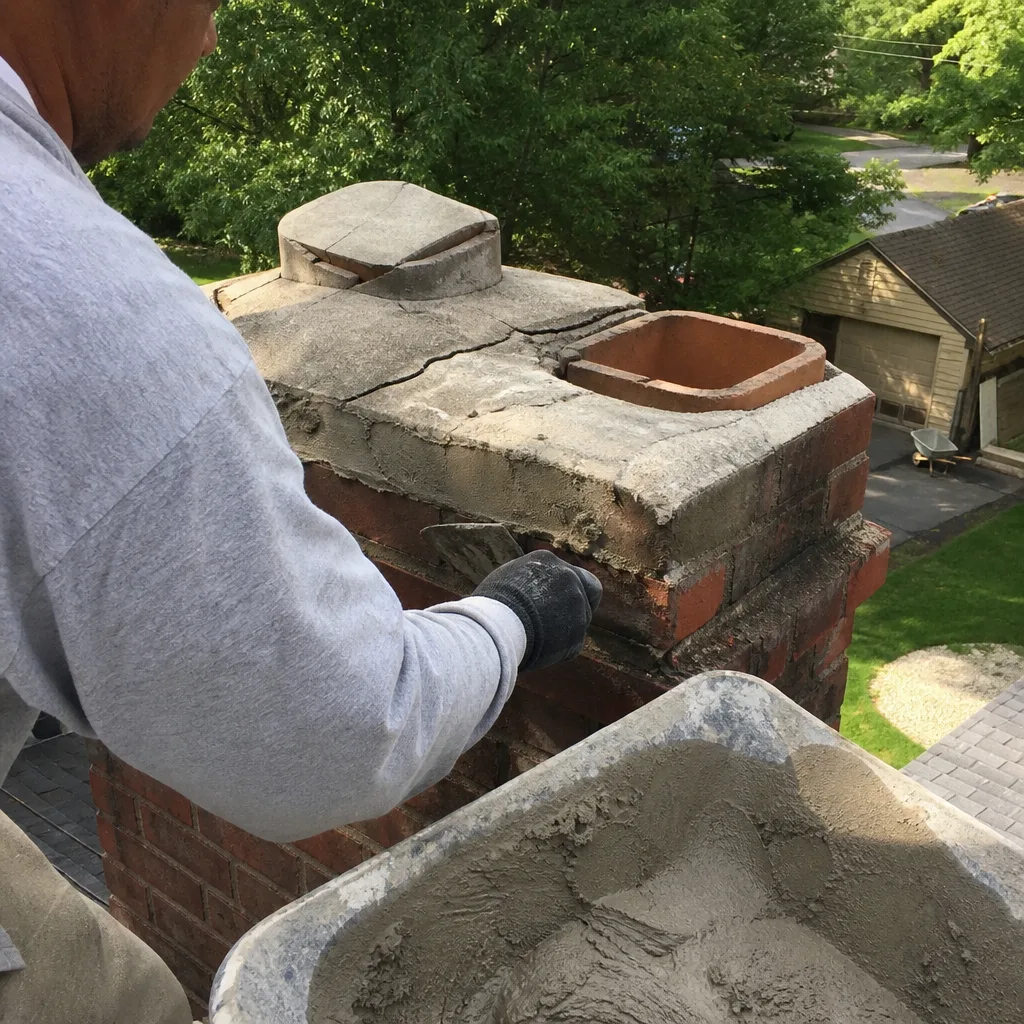
- Missing mortar at the crown level. The crown is the concrete wash at the top of the chimney. Weather and freeze-thaw cycles in Northern Virginia crack it. When the crown fails, water enters the masonry and damages the flue tiles below. The camera ascent shows the crown joint and tells you whether the damage is active.
When we finish a chimney cleaning in Manassas, the homeowner leaves with a documented photo record of the entire flue, top to bottom. That is Clause 4 of the Haven Standard, and it has been continuous practice since 2009. We do not believe you should take a chimney company’s word for anything that a photo can show you directly.
How a Written Record Protects You at Resale, After a Fire, and in an Insurance Dispute
The practical reason to insist on a documented chimney cleaning is not aesthetics or peace of mind. It is evidence. Three specific scenarios in Virginia make the written record the most valuable item you receive from a chimney company.
At resale. When you sell a home in Manassas, the buyer’s home inspector will examine the fireplace and chimney. They may flag the chimney for further evaluation if they see creosote buildup, a cracked crown, or a missing cap. If you can produce a dated camera report showing a clean flue, a sealed crown, and an intact cap, the inspection concern typically resolves without negotiation. If you only have a receipt from a brushing visit, the inspector has no basis to downgrade the finding, and the buyer may demand a repair credit. A written record has already saved more than one Manassas seller a four-figure concession.
After a chimney fire. Chimney fires happen, especially in older Manassas homes with clay-tile flues and heavy creosote. If a fire occurs, your insurance company will investigate. The adjuster asks for maintenance records, and specifically for evidence that the flue was cleaned and inspected on a reasonable schedule. A dated photo record showing clean tiles and intact joints before the fire is strong evidence of responsible maintenance. A receipt with “chimney swept” and a signature is not enough. We have had adjusters call us directly to verify the record, and a documented archive makes that call a five-minute confirmation instead of a multi-week dispute.
In a homeowner’s insurance dispute after a water or CO event. Prince William County sees freeze-thaw cycles that crack crowns and admit water into the flue. Water weakens clay tiles. Weak tiles spall, which means the surface flakes off and drops into the flue. If the damage leads to a claim, the insurance company may deny it on the basis of deferred maintenance. A written record showing regular cleaning and inspection, with photos of the crown and tiles before the failure, is the strongest possible evidence that the damage was sudden and weather-driven rather than years of neglect.
This is the part of chimney service that most Manassas homeowners do not understand until they are in the middle of it. The cleaning itself is routine. The documentation is the asset. Corrine Halstead, who runs our Manassas operation, puts it simply: the photos are the proof, and the proof is what protects the house.
Seasonal Maintenance for Manassas Homes: The Fireplace Owner’s Calendar
Manassas weather creates a predictable maintenance rhythm for fireplace owners. Here is the calendar we recommend to our customers in ZIP codes 20110 and 20111, based on the local burning season and the freeze-thaw pattern. For a deeper look at year-round maintenance, see our Seasonal Chimney Cleaning Care for Manassas: Year-Round Homeowner’s Guide.
August: Book the pre-season sweep. The rush starts in late September when the first cold snap hits Northern Virginia. Scheduling in August gives you the widest choice of dates and gets the flue documented before the first fire. This is also the right time to have a crown assessment and chimney cap inspection in Manassas before winter water damage begins.
October: First burn check. Build a small fire, not a large one. Confirm the damper opens fully and the smoke draws upward rather than into the room. If smoke enters the living space, stop burning and call us. A blocked flue or reverse draft is a fire and CO hazard, not something to burn through.
December through February: Burn smart. Use seasoned hardwood from local Manassas suppliers. Avoid burning pine in an open fireplace, it pops and throws creosote-laden sparks, and it burns too hot for older clay-tile flues. Open the damper fully during burns. Do not throttle the fire overnight, that is the single biggest creosote producer in our market.
March: Post-season inspection if you burned heavily. If you burned more than two cords over the winter, have the flue camera-scanned before you close the fireplace up for the summer. Creosote left in a flue over a humid Virginia summer hardens and becomes harder to remove the following fall. Removing it in March while it is still brittle means a faster, cheaper cleaning.
April and May: Check the exterior. Walk around the outside of the chimney. Look for cracks in the crown, missing mortar joints, rust or loose flashing at the roofline, and a damaged or missing chimney cap. These are the entries through which water gets into the masonry and damages the flue from the outside. If you see any of these, a Manassas fireplace inspection before summer storms is the cheapest way to catch a problem early.
This calendar is general guidance, not a substitute for the condition of your specific flue. A heavy-burning year or a wet season changes the schedule. The written record from each visit tells us exactly where your flue stands and how aggressive you need to be.
Common Mistakes to Avoid
- Paying for a “clean” without asking for the camera record. If a Manassas chimney company cleans your flue and offers no photo or video documentation, you have paid for labor, not for proof. Ask for the full flue scan, not a verbal summary.
- Burning unseasoned wood you bought off a truck at the corner of Liberia and Sudley. Unseasoned wood is heavy, it hisses, and it deposits creosote fast. Split and stack your wood in April, cover the top, and let it dry through the summer before burning.
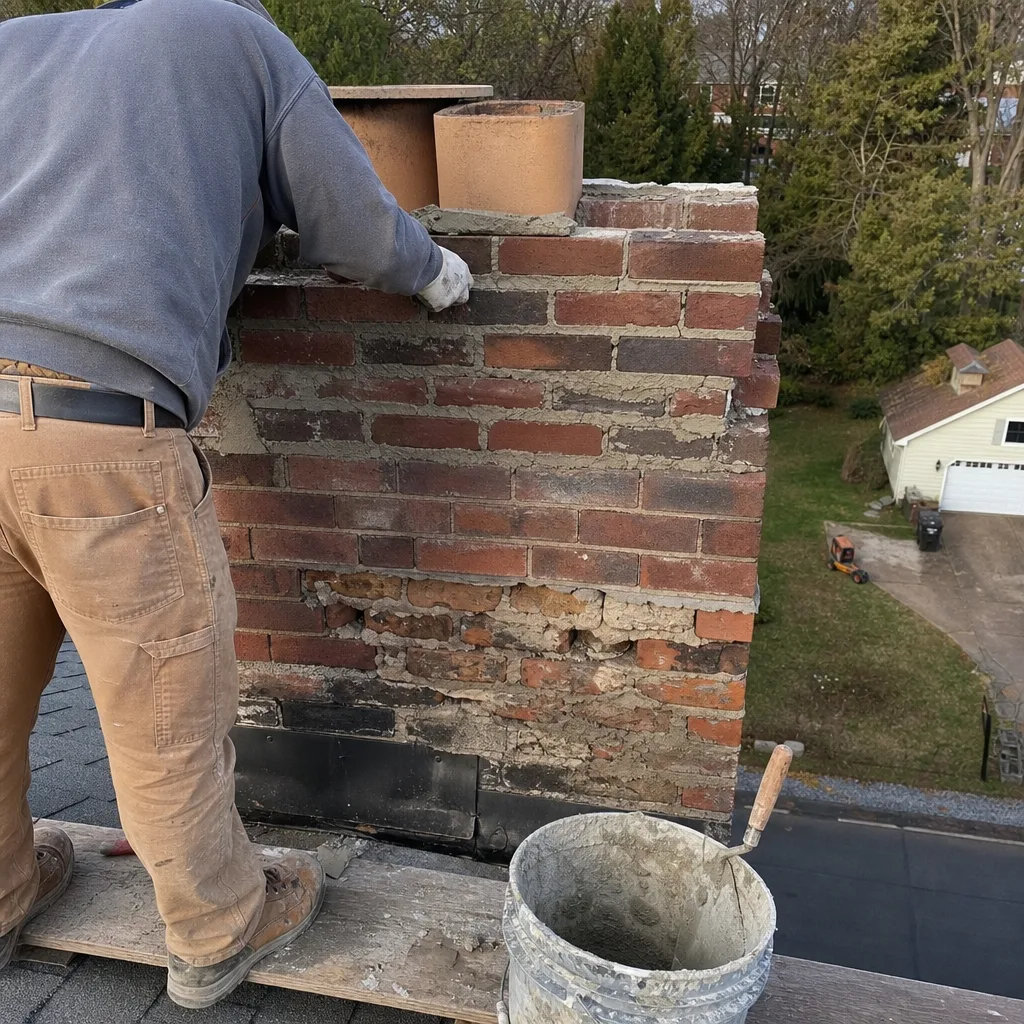
- Ignoring the chimney cap. A missing or damaged cap lets animals, leaves, and rain enter the flue, and Manassas raccoons are persistent. A $45 cap inspection during a sweep is far cheaper than removing a dead raccoon from the firebox.
- Waiting until you smell smoke to address a draft problem. Draft issues are almost always structural: a blocked flue, a cracked tile, an improperly sized liner. Burning through a draft problem turns a repair into a fire hazard.
- Accepting an estimate that does not list the flue liner condition. If the tech cannot tell you what your liner is made of and what condition it is in, they have not inspected anything meaningful. Get it in writing or decline the work.
- Using the fireplace as an incinerator for wrapping paper, cardboard, or treated lumber. These materials flash-burn at high temperatures, throw sparks, and the paper ash carries upward and sticks to the flue walls. The firebox is not a trash barrel.
- Deferring a known issue because “it has been fine for years.” In older Prince William County homes, clay-tile flues fail gradually. By the time you see a problem from the firebox, the damage behind the tile is usually further along than you expect. The camera shows the truth before it becomes an emergency.
When to Call a Professional
Call a chimney professional when you smell smoke in the house during a fire, when you see soot or creosote flakes falling into the firebox, when the damper sticks or will not seal, when water stains appear on the ceiling near the chimney, or when you bought a home in Manassas and have no documentation of the last cleaning. Also call if you see cracks in the exterior masonry or a missing chimney cap. These are not items to observe and defer. A blocked or cracked flue is a fire and carbon monoxide hazard, and chimney repair work on flue interiors and tall masonry is not a safe DIY project. Level Two Chimney Manassas offers free estimates in Manassas, call (571) 946-2300.
Frequently Asked Questions
A chimney sweep in Manassas costs between $189 and $329, depending on flue height, creosote load, and roof access. The price should include a documented camera scan, not just the brushing. If the company cannot produce photo documentation of the flue after the sweep, you have paid for a partial job. For an exact quote on your chimney, call (571) 946-2300, estimates are free, and every quote is written before work starts.
Every year for a wood-burning fireplace in Manassas that sees regular use during the Northern Virginia burn season. The combination of long burn seasons, mixed hardwood from local suppliers, and older clay-tile flues in pre-1990 Prince William County homes means creosote accumulates faster here than in warmer markets. Gas fireplaces can typically go two years between inspections, but the venting should still be checked for blockages.
You need a new liner only if the camera scan shows cracks, spalling, missing tile sections, or an offset that exposes the masonry to heat and creosote. Most Manassas chimneys do not need a liner replacement. That is why the camera documentation matters: you should see the evidence for yourself before approving thousands of dollars of work. If a company recommends a new liner, ask for the photos, or get a free second opinion from us.
Creosote accumulates in the flue. Class I creosote is flaky and manageable. Class II is a thicker deposit. Class III is glazed, hardened, and combustible. A chimney fire occurs when enough Class II or III creosote reaches ignition temperature, which is around 1,100 degrees Fahrenheit. The fire can crack clay tiles, spread into the framing, and destroy the chimney from the inside. Even without a fire, a blocked flue sends carbon monoxide back into the house. In Manassas, skipping a year on a regularly used fireplace is a risk that compounds quickly.
You can technically sweep a flue with an off-the-shelf rod and brush kit, but you cannot see what you have cleaned, and you cannot document the condition of the liner. Homeowner-grade rotary brushes from the big box stores reach only straight sections and often miss the smoke chamber and offset joints entirely. More critically, chimney cleaning involves roof work at height, hot and sharp surfaces, and the danger of a fall. This is not a safe weekend project. Even setting aside the documentation standard, a professional sweep with a camera scan is the only way to know the flue is actually clear.
Most Virginia home insurance policies require the homeowner to maintain the chimney as part of general property upkeep, and when something goes wrong, the adjuster asks for proof. A dated camera report and a written condition record satisfy that proof requirement. A receipt without documentation does not. If you have been cleaning regularly but do not have records, start now and keep the file. The record is what protects you.
The Bottom Line
A chimney cleaning in Manassas is only as good as the documentation that comes with it. The brush removes creosote. The camera confirms the flue is sound. The written record proves the work was done, protects your insurance position, and satisfies a buyer’s inspector at resale. The three local factors that drive creosote, the Northern Virginia burn season, the mixed hardwood fuel supply, and the prevalence of older clay-tile flues, mean Manassas homeowners cannot afford to skip the annual cycle. Demand a written price before work starts and a photo record when work ends. If a company will not provide both, keep looking. Manassas has better options.
Written by Corrine Halstead, Owner at Level Two Chimney Manassas, serving Manassas since 2009.