
Last updated September 20, 2026
Level 1 sweep and inspection to the NFPA 211 annual standard - flue, crown, cap, and flashing checked and photographed
Chimney sweep logs do not sweep chimneys. They loosen some creosote - which then falls where a brush and vacuum still have to collect it.
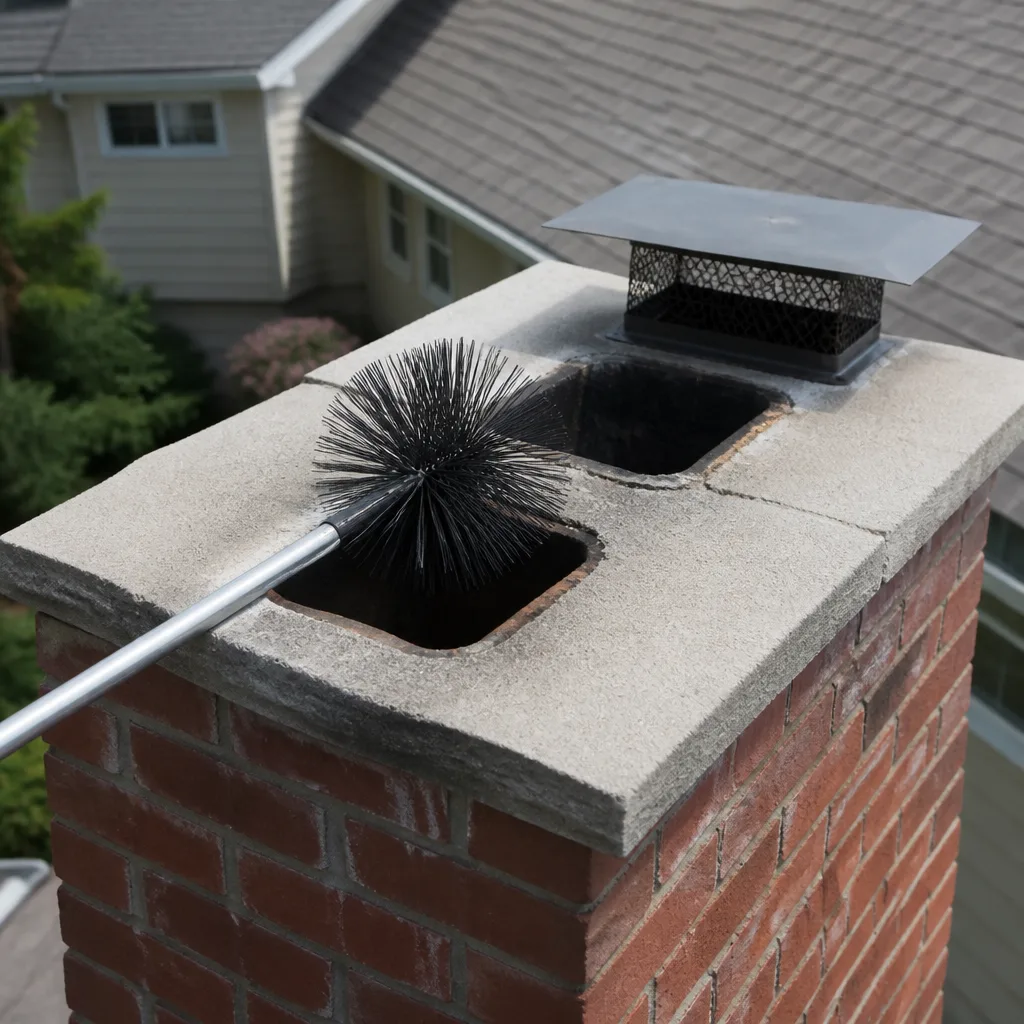
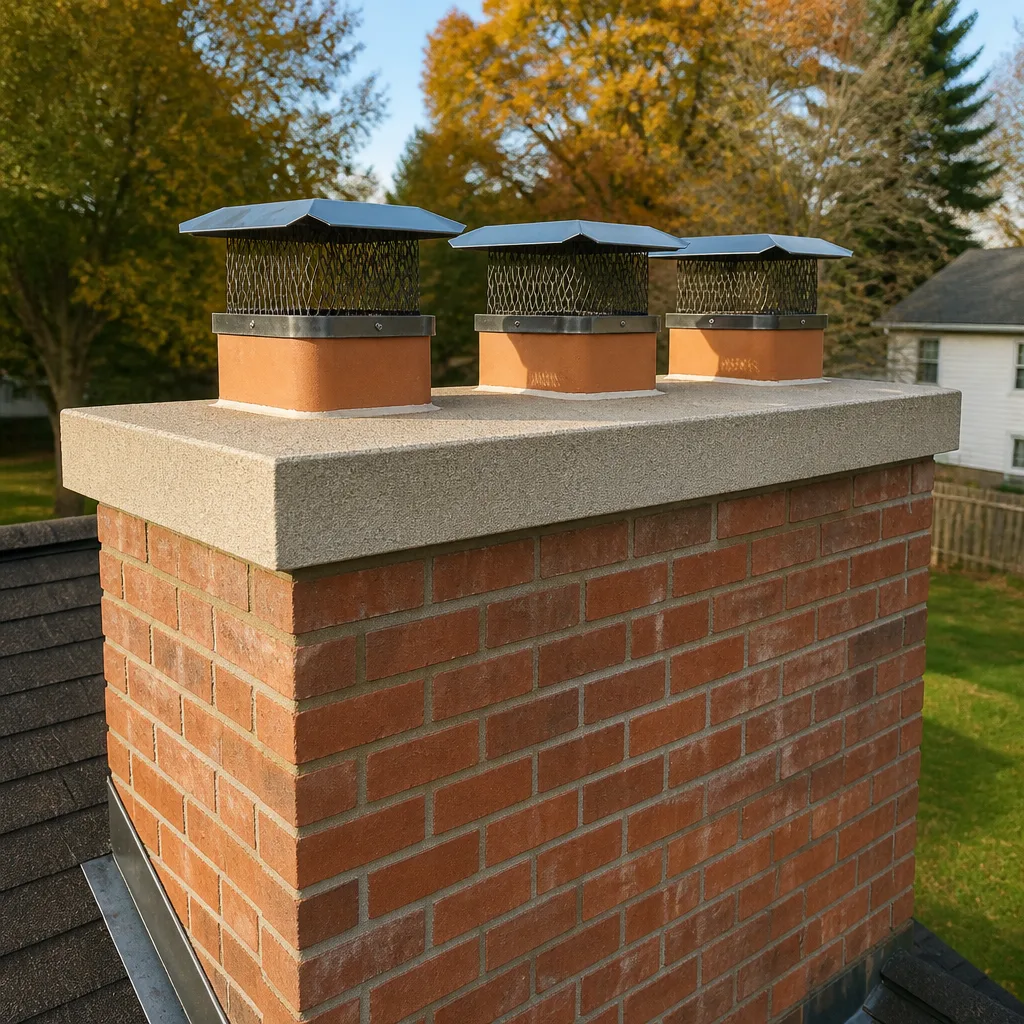
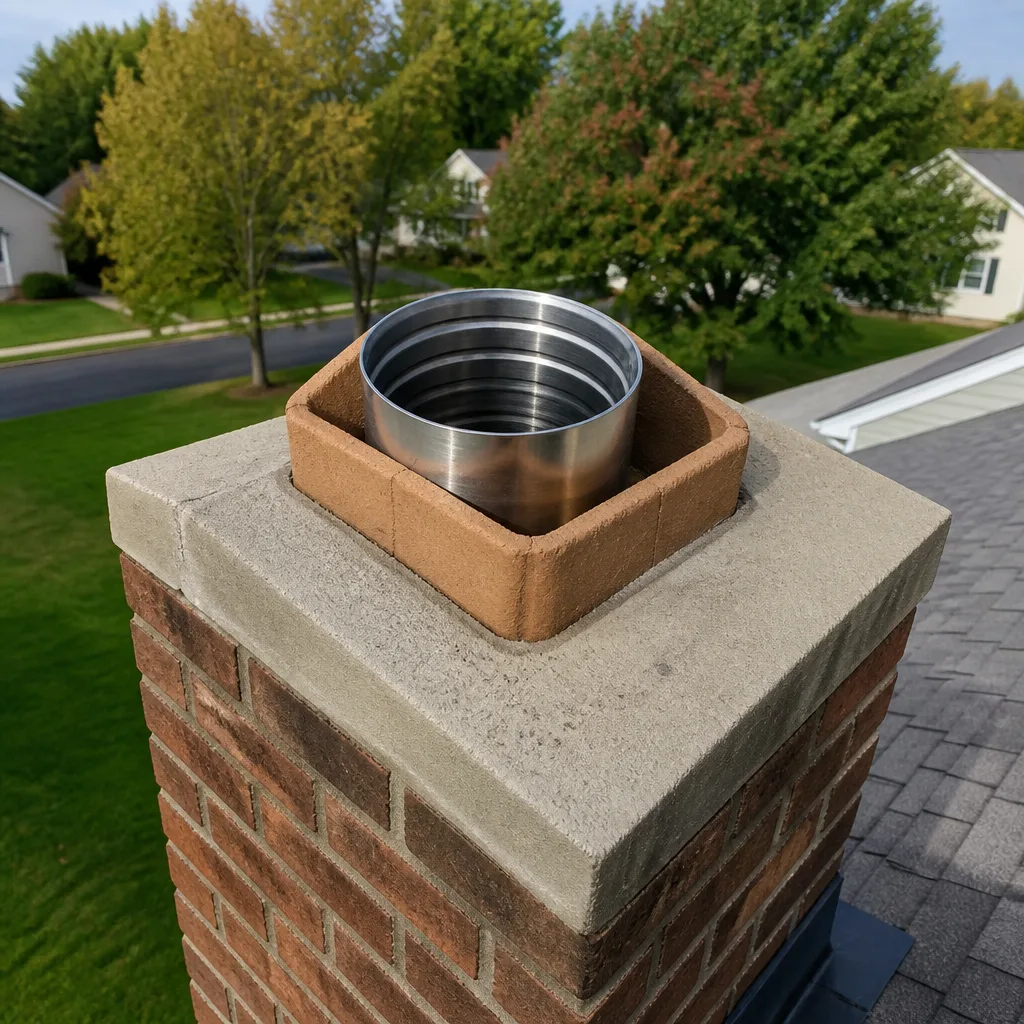
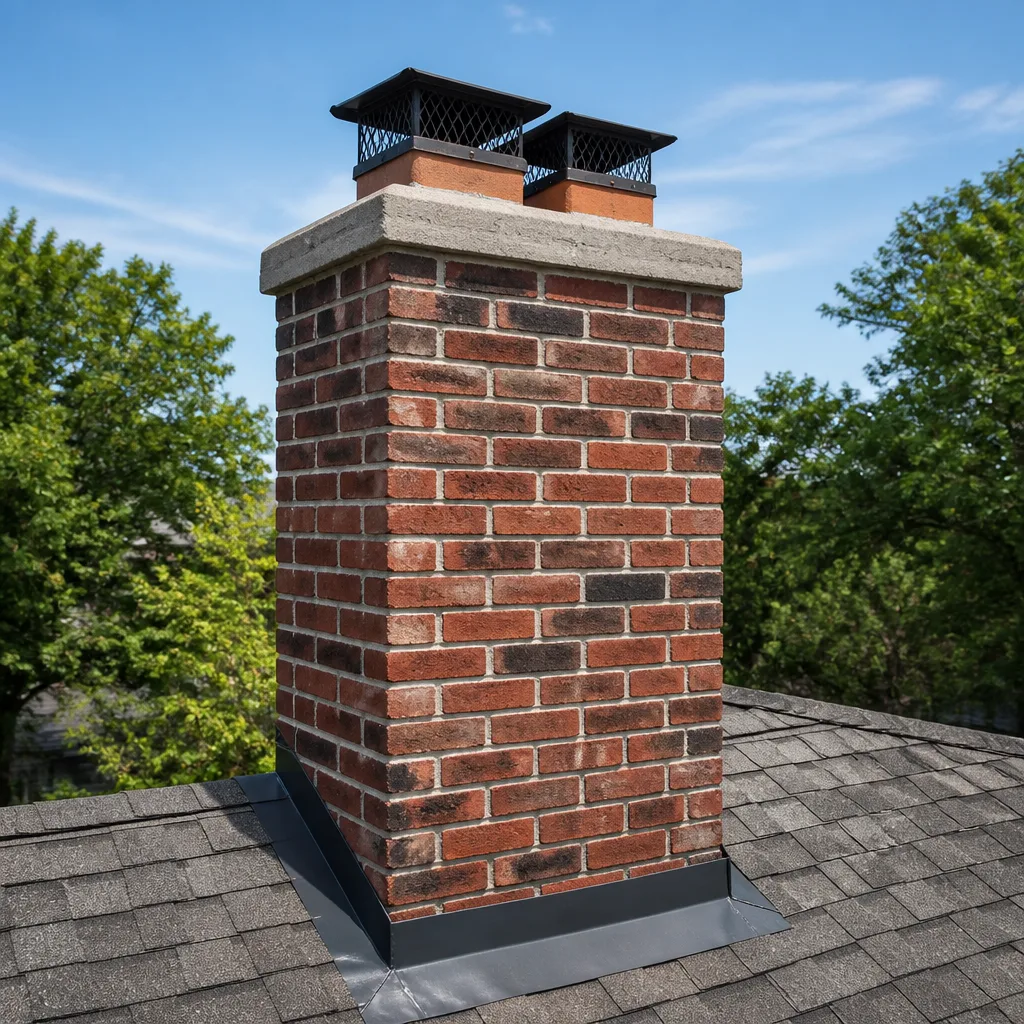
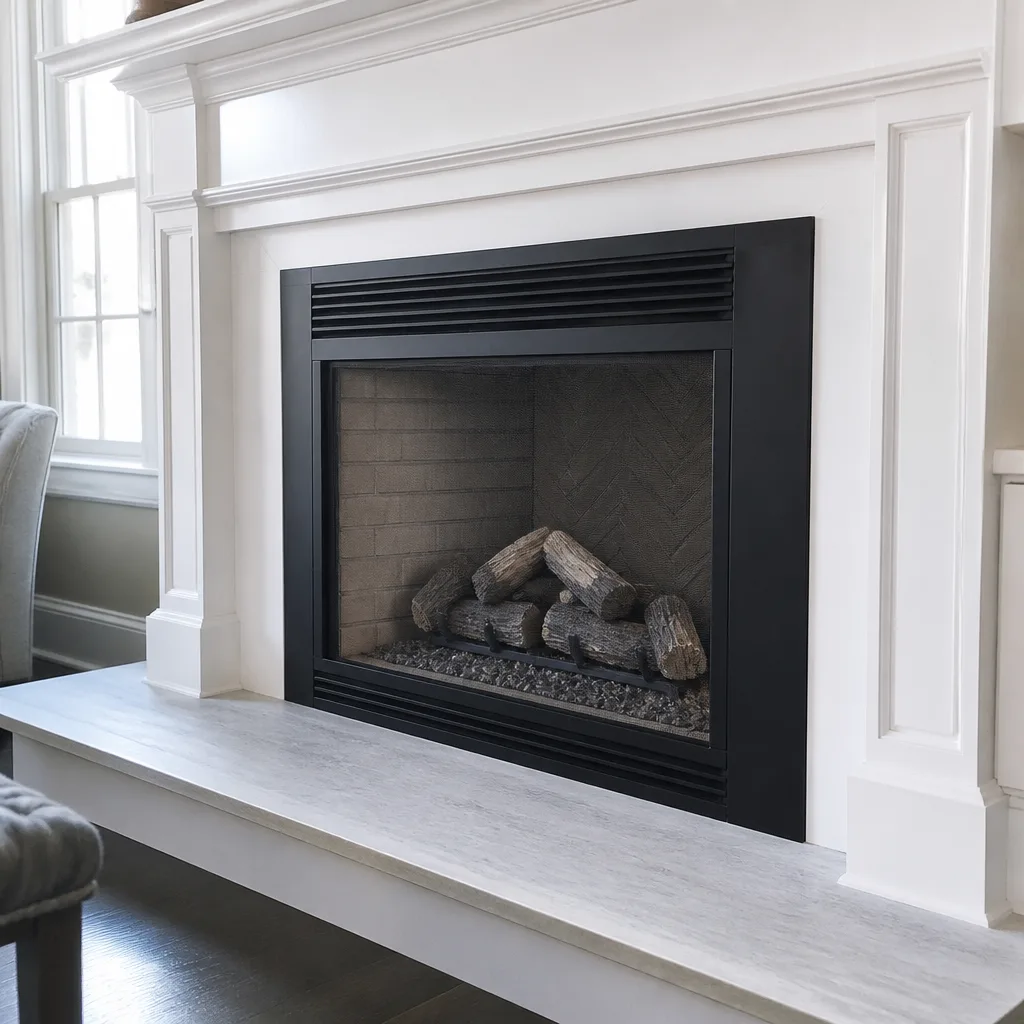
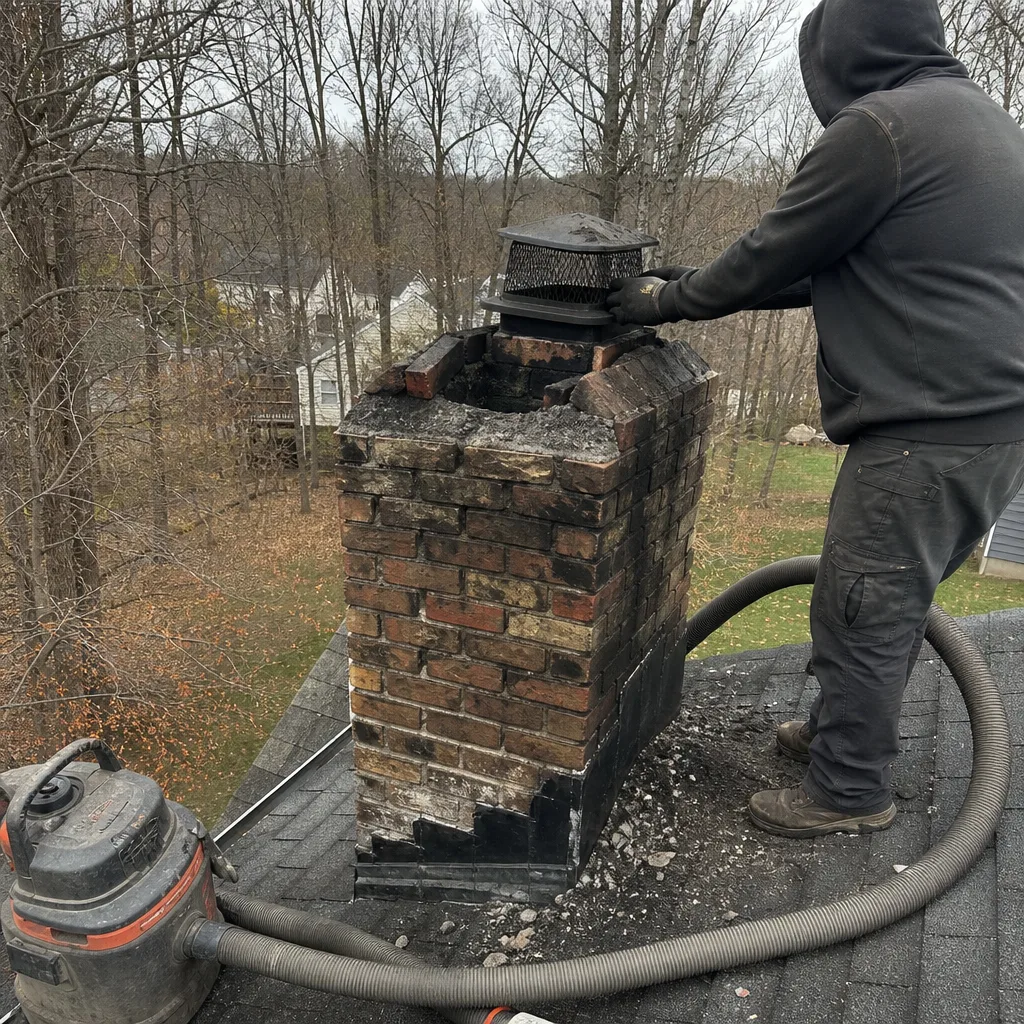 Before
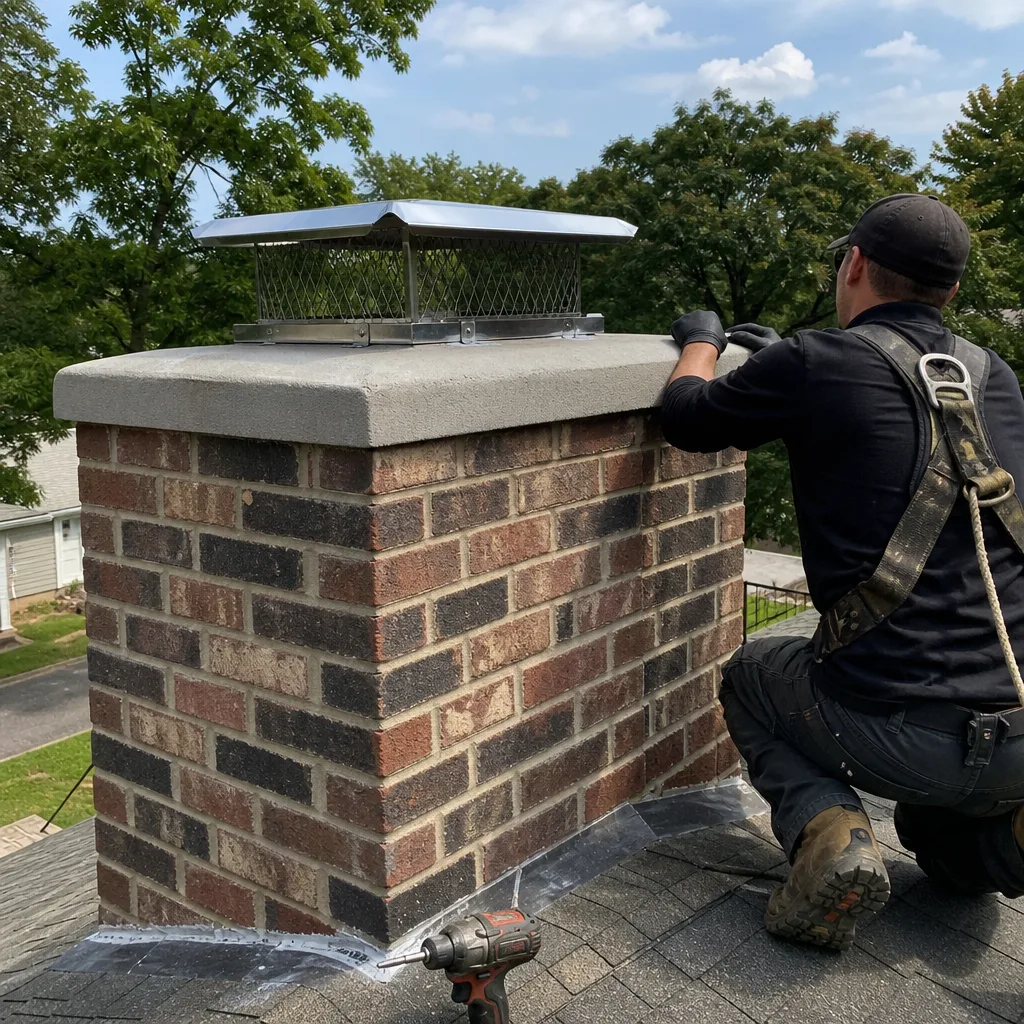 After
After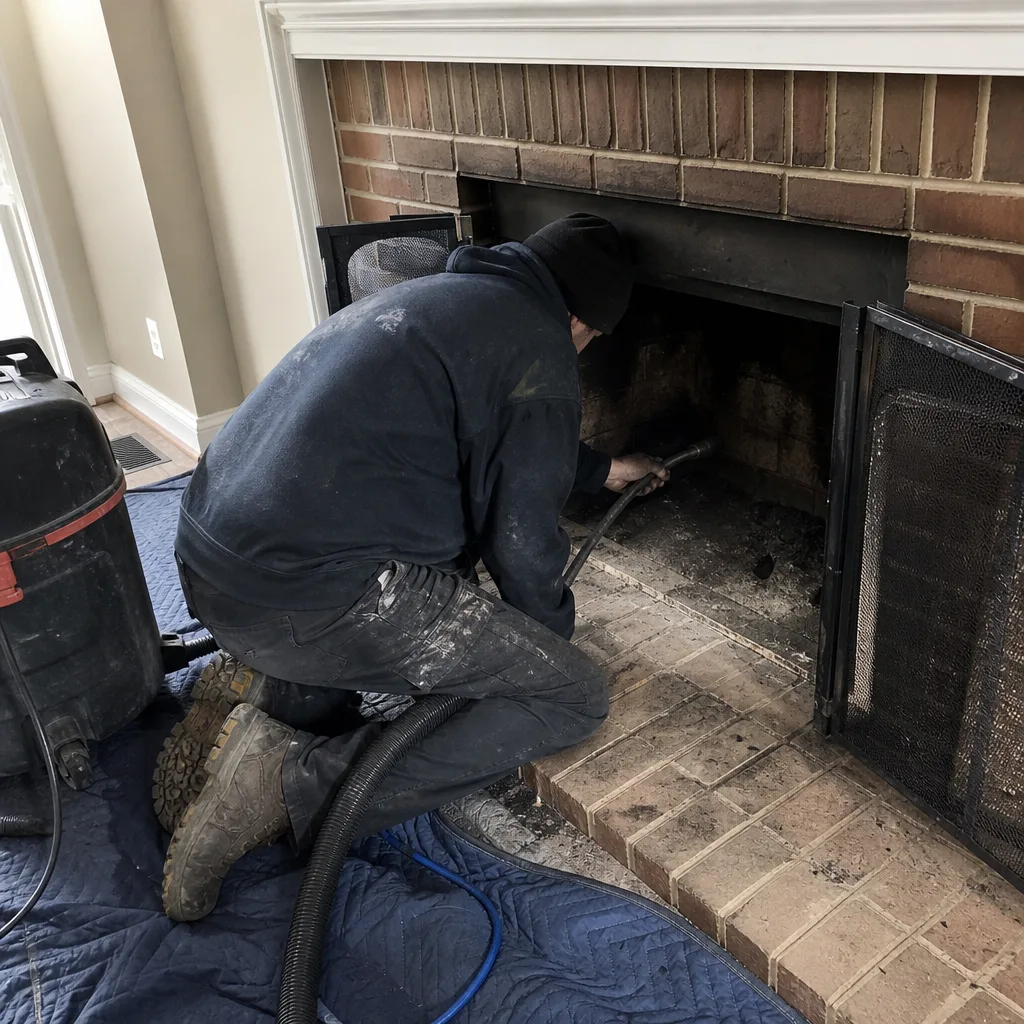 Before
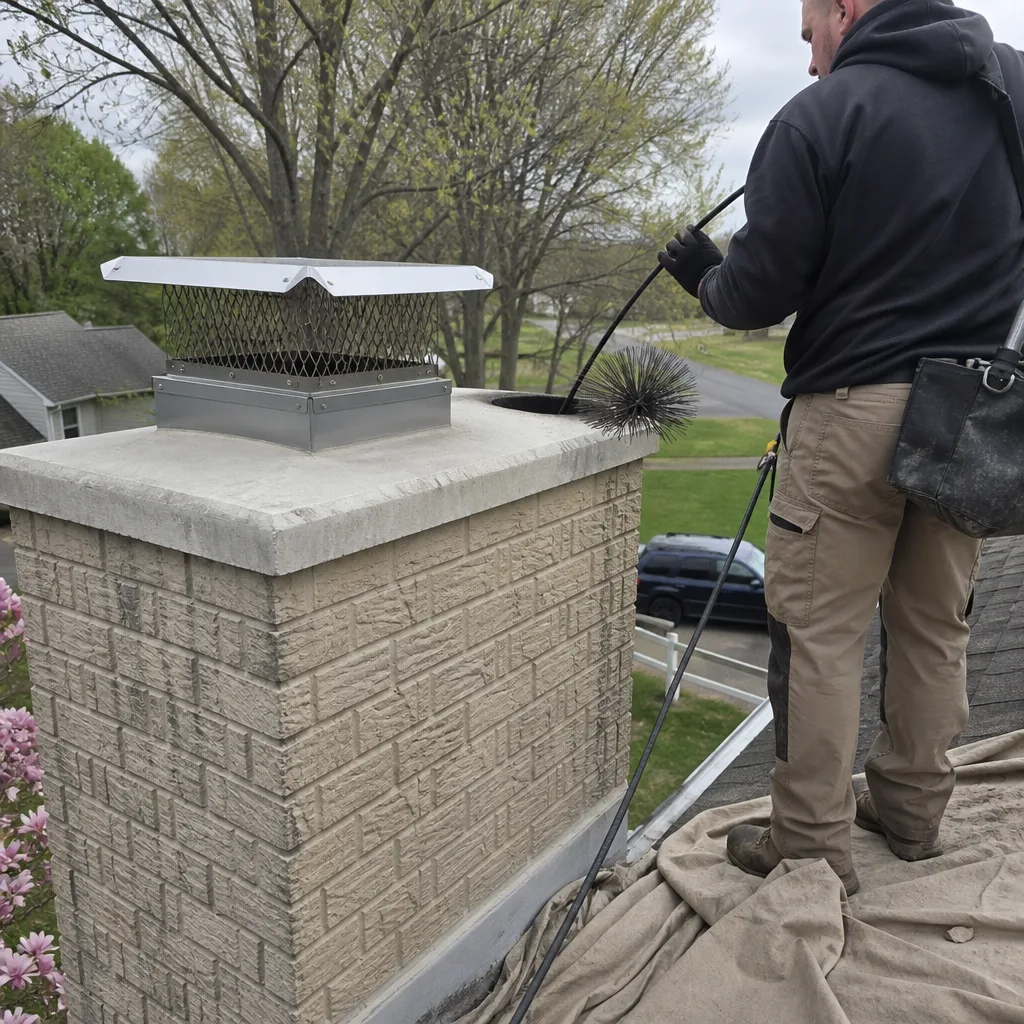 After
After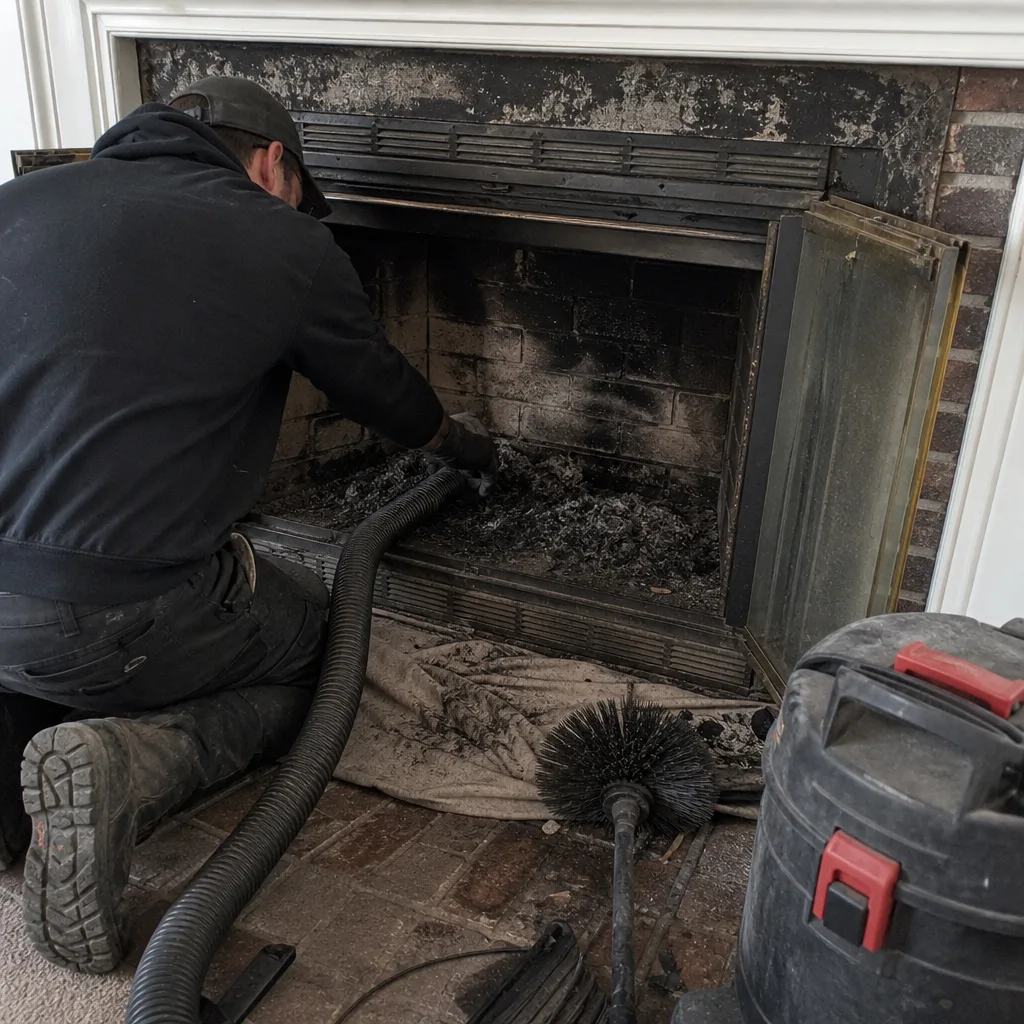 Before
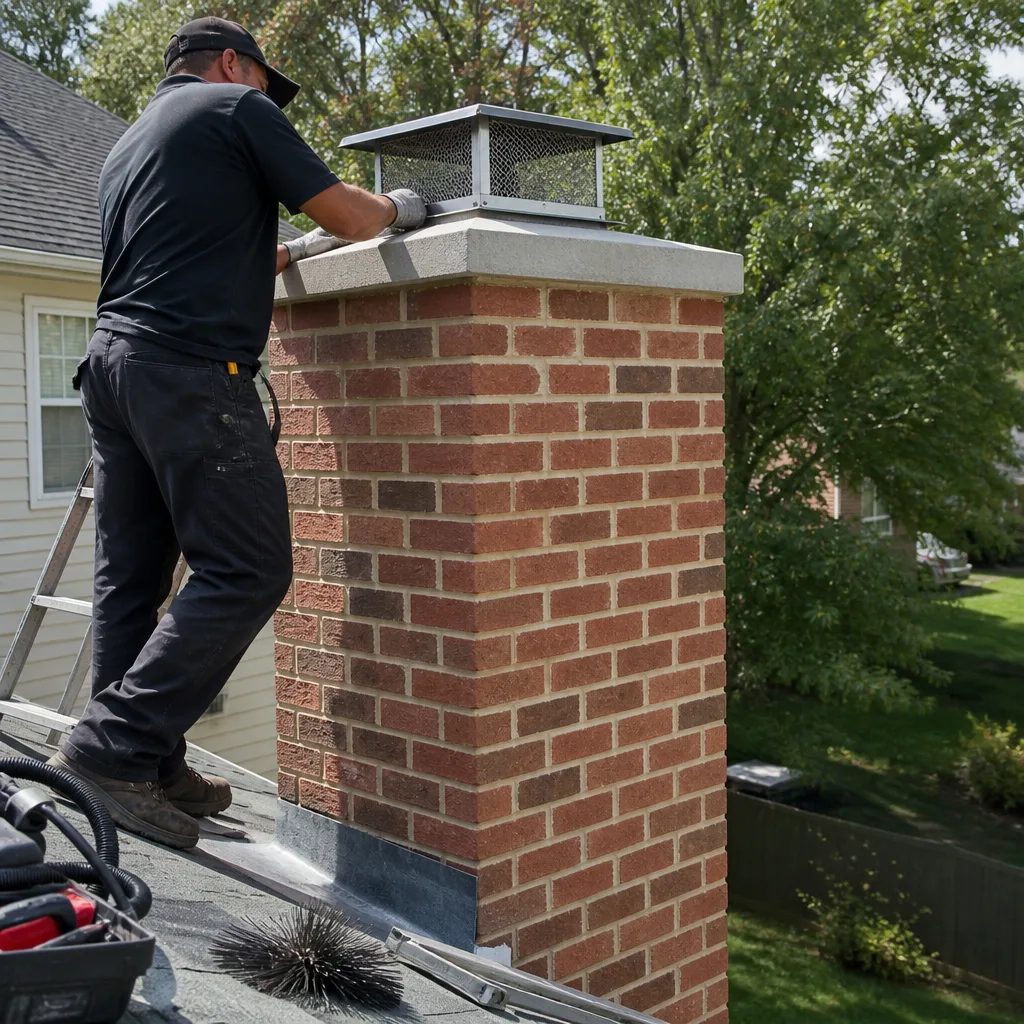 After
AfterChimney Cleaning & Sweep Maintenance Checklist for Manassas Homeowners
The damper moves freely, the brick looks clean, and the firebox smells fine. None of those three observations tells you whether your flue is safe to light. In Manassas, where winter fires give way to spring rain and summer humidity, a chimney that looked fine in February can be hiding a cracked flue liner by October. This guide gives you a maintenance checklist that follows the same order an NFPA 211 Level 2 inspection runs: cap and crown first, liner midpoint, smoke chamber and damper last. For The Complete Guide to Chimney Cleaning in Manassas, see our companion resource. You’ll learn what you can check from the ground, what requires camera equipment or roof access, and when documentation matters more than a visual once-over.
Quick Answer
A complete chimney maintenance checklist for Manassas homeowners covers six inspection points, in this order: chimney cap and crown condition, flue liner integrity, smoke chamber mortar joints, damper operation, flashing at the roofline, and clearance from combustibles. You can visually check four of these from the ground; two require a camera scan or roof access. The NFPA 211 standard calls for a Level 2 inspection any time the home changes hands, after any chimney fire, or after a severe weather event. A written record with photos is part of the inspection, not an add-on.
Table of Contents
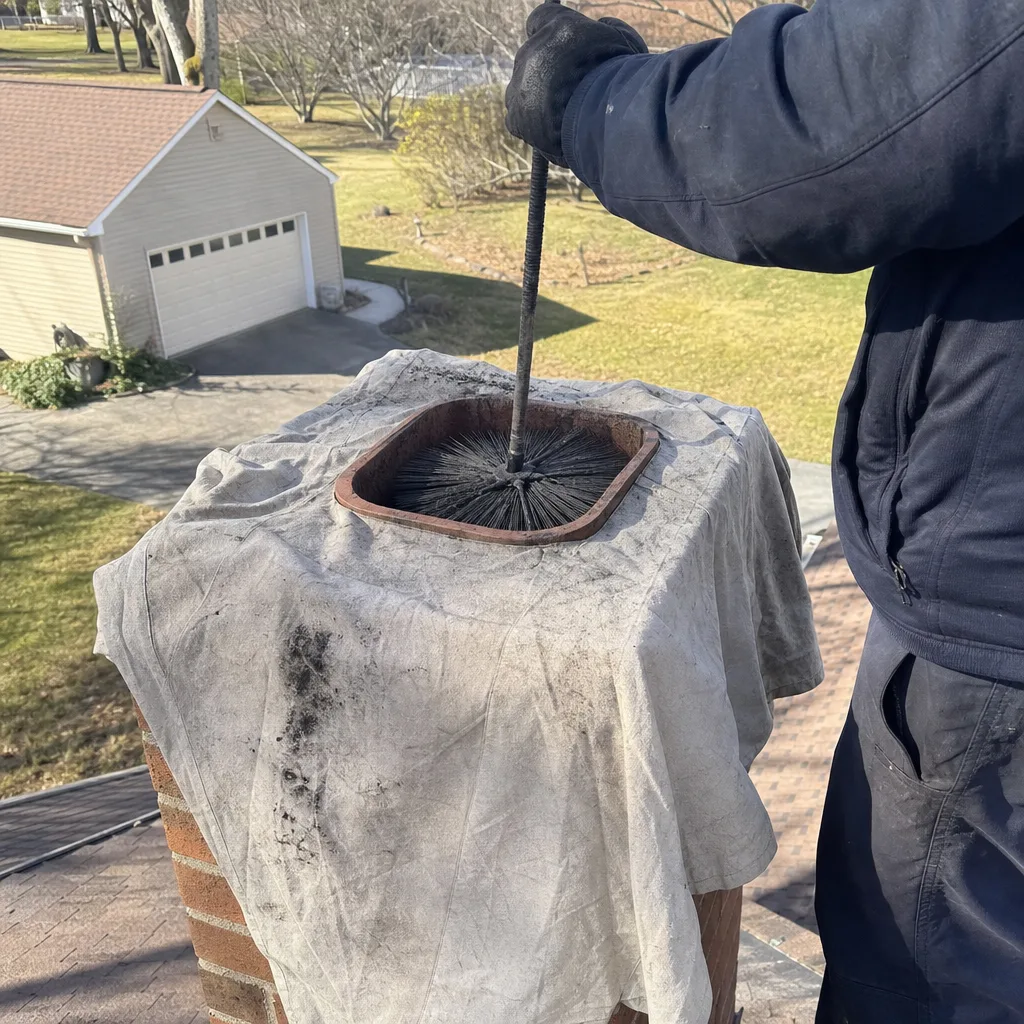
- Chimney Cap and Crown: The First Line of Defense
- Flue Liner Condition: What the Camera Sees
- Smoke Chamber and Damper: The Overlooked Middle
- Flashing at the Roofline: The Leak You Don’t Notice Until Spring
- Clearance from Combustibles: The Chase and the Attic
- Seasonal Timing in Northern Virginia: When to Book
- Documentation: What You Should Walk Away With
- Common Mistakes to Avoid
- When to Call a Professional
- Frequently Asked Questions
BeforeAfterChimney Cap and Crown: The First Line of Defense
An inspection that starts inside the firebox is already out of order. The chimney cap and crown are the first components a Level 2 inspection photographs, because they’re the first components to fail in a Manassas climate that cycles through freeze-thaw every January and February. The crown is the concrete or mortar slab that seals the top of the chimney around the flue. The cap is the metal cover, usually stainless steel or copper, that sits over the flue opening itself.
Here’s what happens when the crown cracks: water enters the masonry, freezes, expands, and spalls the brick face. Spalling means the brick surface flakes off in sheets. You can spot it from the ground as a pile of brick chips at the base of the chimney or a rough, pitted look on the upper courses. A cracked crown is not a cosmetic issue. It’s the mechanism by which a $400 repair becomes a $4,000 rebuild.
What You Can Check From the Ground
- Visible cracks in the concrete crown wider than a dime
- Missing or rusted chimney cap
- Brick chips accumulating at the base or on the roof line
- Efflorescence: the white chalky deposits that signal water moving through masonry
- A cap that’s tilted, loose, or missing its screen
If you see any of these, don’t wait for fall. A missing cap in Manassas also means an open invitation to squirrels, raccoons, and chimney swifts. We’ve pulled enough nesting material out of uncapped flues to fill a dumpster. A stainless cap from Olympia Chimney installed with a proper crown seal runs about $350 to $600 in this market, depending on flue size and roof pitch.
Flue Liner Condition: What the Camera Sees
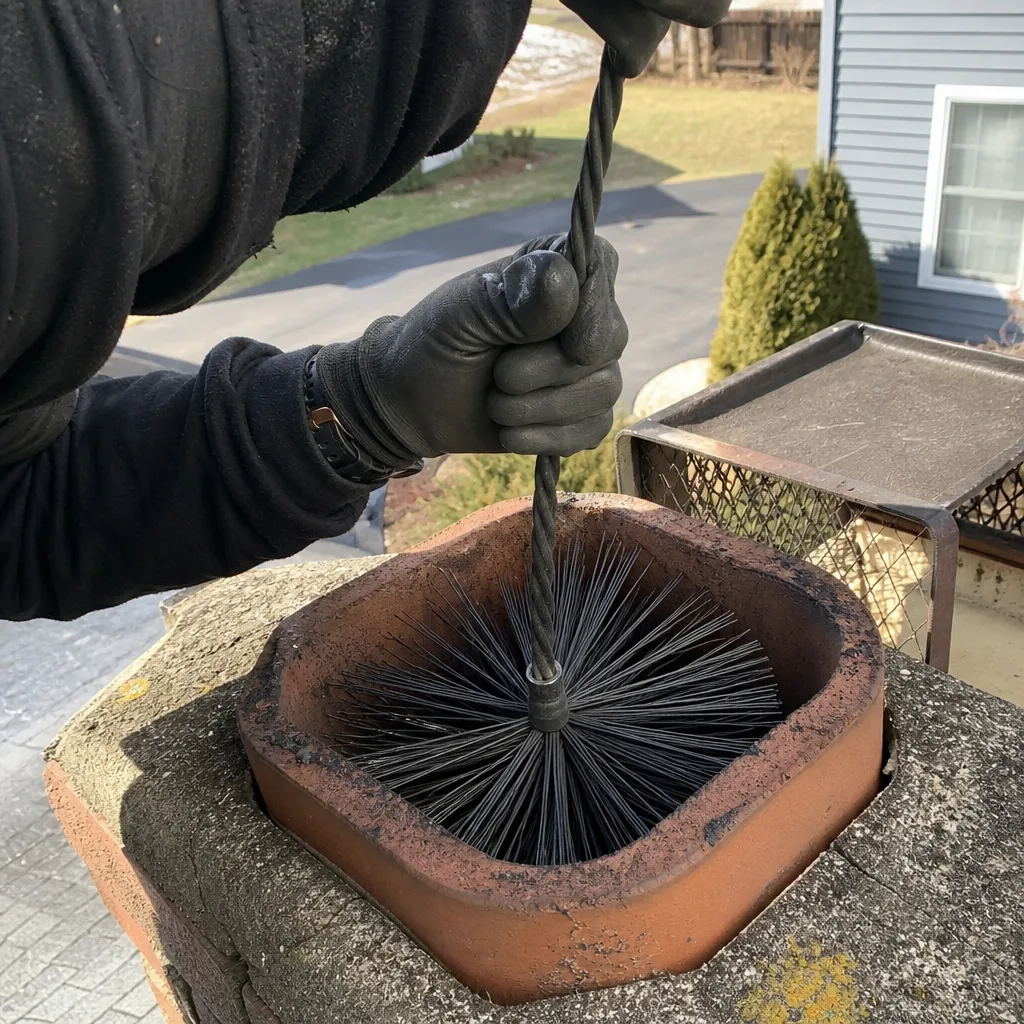
The flue liner is the vertical passage that carries smoke and combustion gases from the firebox to the top of the chimney. In homes built in Manassas between 1960 and 1990, that liner is usually clay tile. Modern rebuilds and relines use stainless steel, often from Chimney Repair in Manassas suppliers like DuraFlex or Gelco. Clay is fine when it’s intact. When it’s cracked, it’s an open path for heat and carbon monoxide to reach the wood framing around the chimney chase.
A camera scan is the only way to assess liner condition accurately. A flashlight from the firebox or a look down from the roof shows you maybe the top two feet. The middle of the flue, where creosote builds and where thermal stress concentrates, is invisible without a camera. That’s why Clause 4 of the Haven Standard requires a documented photo record on every visit. We’ve been running camera scans as standard practice since 2009, and the archive is the difference between “probably fine” and “here’s the crack, here’s the photo, here’s the written scope.”
Liner Condition Checklist
- Camera scan the full flue length, midpoint to top
- Check for cracked or missing clay tile sections
- Look for gaps between mortar joints where heat can escape
- Note any creosote accumulation by class: Class I (fine dust), Class II (flaky scale), or Class III (glazed, tar-like buildup)
- Document the liner material and condition in a written record with photos
Class III creosote is the one that worries us. It’s glossy, hardened, and burns like candle wax at around 2,000 degrees. It can’t be removed by brushing alone. If a camera scan shows glazed creosote in a Manassas chimney that burned softwood through a damp winter, the fix is a chemical treatment or a mechanical removal process, not a standard sweep. The written price should reflect that before work starts, not as a surprise after the technician is already on the roof.
Smoke Chamber and Damper: The Overlooked Middle
Between the firebox and the flue liner sits the smoke chamber. It’s the funnel-shaped transition zone that most homeowners never see and many sweeps never inspect thoroughly. In older Manassas brick chimneys, smoke chamber walls are often corbeled brick with rough mortar joints that catch creosote like a filter. A cracked mortar joint here is a direct fire risk, and it’s also the last place anyone looks.
The damper is the metal plate just above the firebox that opens and closes the flue. A damper that moves freely is a good sign. A damper that’s rusted, warped, or sealed shut by creosote is a sign of water intrusion or long-term neglect. The smoke chamber and damper should be inspected in the same pass as the liner, because a camera inserted at the firebox level sees all three in sequence.
Homeowners in Manassas most commonly skip three things, and this is one of them. The other two are flashing at the roofline and clearance from combustibles in the chase. All three are invisible from the hearth, which is exactly why they get skipped.
Flashing at the Roofline: The Leak You Don’t Notice Until Spring
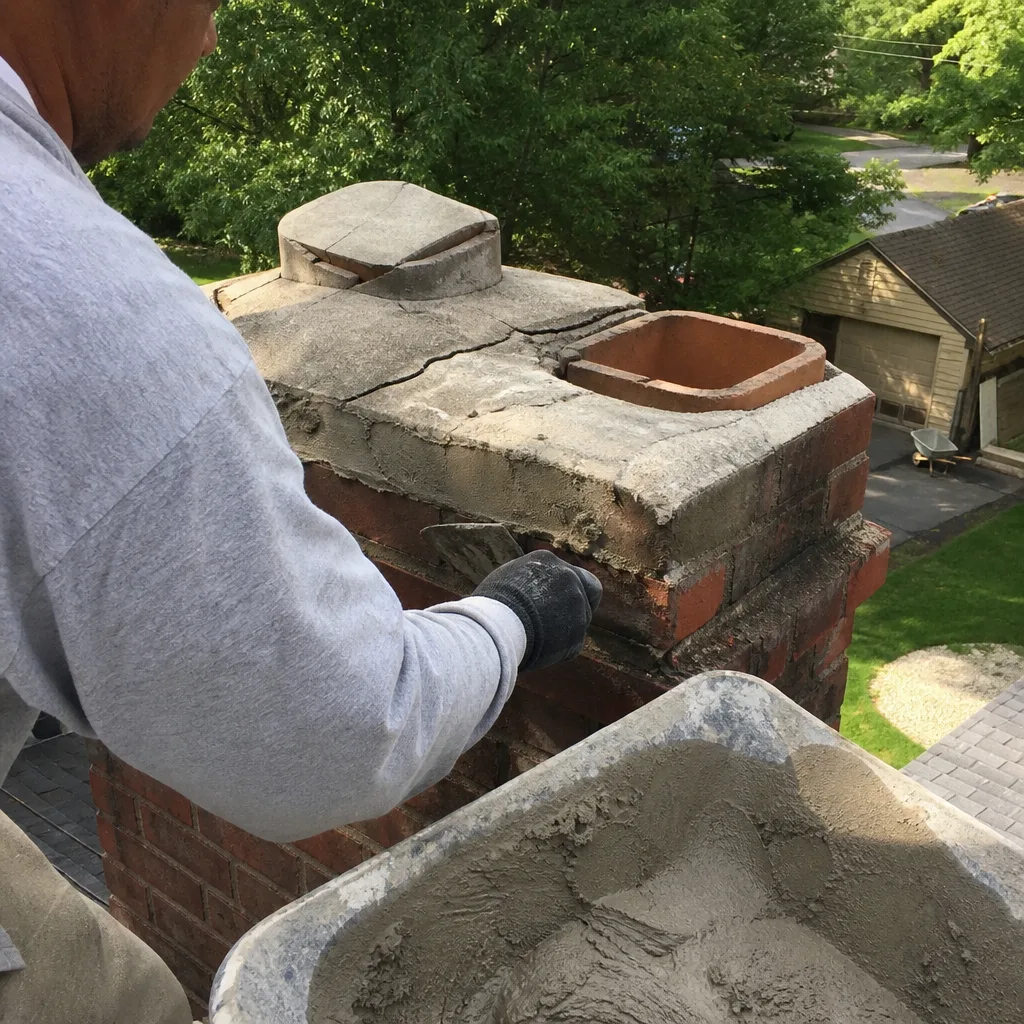
Flashing is the metal barrier where the chimney meets the roof. In Manassas, where asphalt shingle roofs are standard and summer thunderstorms roll through every afternoon, stepped flashing that’s lifting, missing, or corroded lets water run between the chimney and the roofline. You won’t see the leak until the drywall stain shows up on the ceiling.
The check is simple: from the ground, look for lifted flashing, missing sealant, or rust streaks running down the chimney face. From the roof, a technician checks the counter-flashing, the step flashing, and the sealant. This is one of the checklist items that requires roof access. Don’t climb up there yourself. A fall from a roof is a life-changing injury, and no checklist item is worth it.
When flashing fails, the repair is usually in the $400 to $900 range in this area, depending on roof pitch and whether the flashing is copper (common on older Manassas Victorians) or galvanized steel. If the flashing has been leaking long enough to rot the decking underneath, you’re looking at roof sheathing repair on top of the flashing work.
Clearance from Combustibles: The Chase and the Attic
The chimney chase is the framed enclosure around the flue, usually in a wall cavity or attic chase. Building code requires a minimum air space between the flue and any wood framing: typically 2 inches for an exterior masonry chimney, 1 inch for an interior one. When a liner fails, or when a previous homeowner insulated too tightly around the chase, that clearance disappears.
From the attic, a technician checks that no insulation is touching the flue, that the chase is properly vented, and that no framing member is within the required clearance. This is another checklist item that requires access, not a ground-level look. In older Manassas neighborhoods like Old Town or West Gate, we’ve seen chases stuffed with fiberglass batts by well-meaning homeowners trying to stop drafts. That’s a fire hazard, not a fix.
The checklist item reads: “Verify 2-inch clearance from combustibles in the chase.” The action threshold: if framing, insulation, or stored items are touching the flue, call a sweep and remove them. This is not a monitoring situation.
Seasonal Timing in Northern Virginia: When to Book
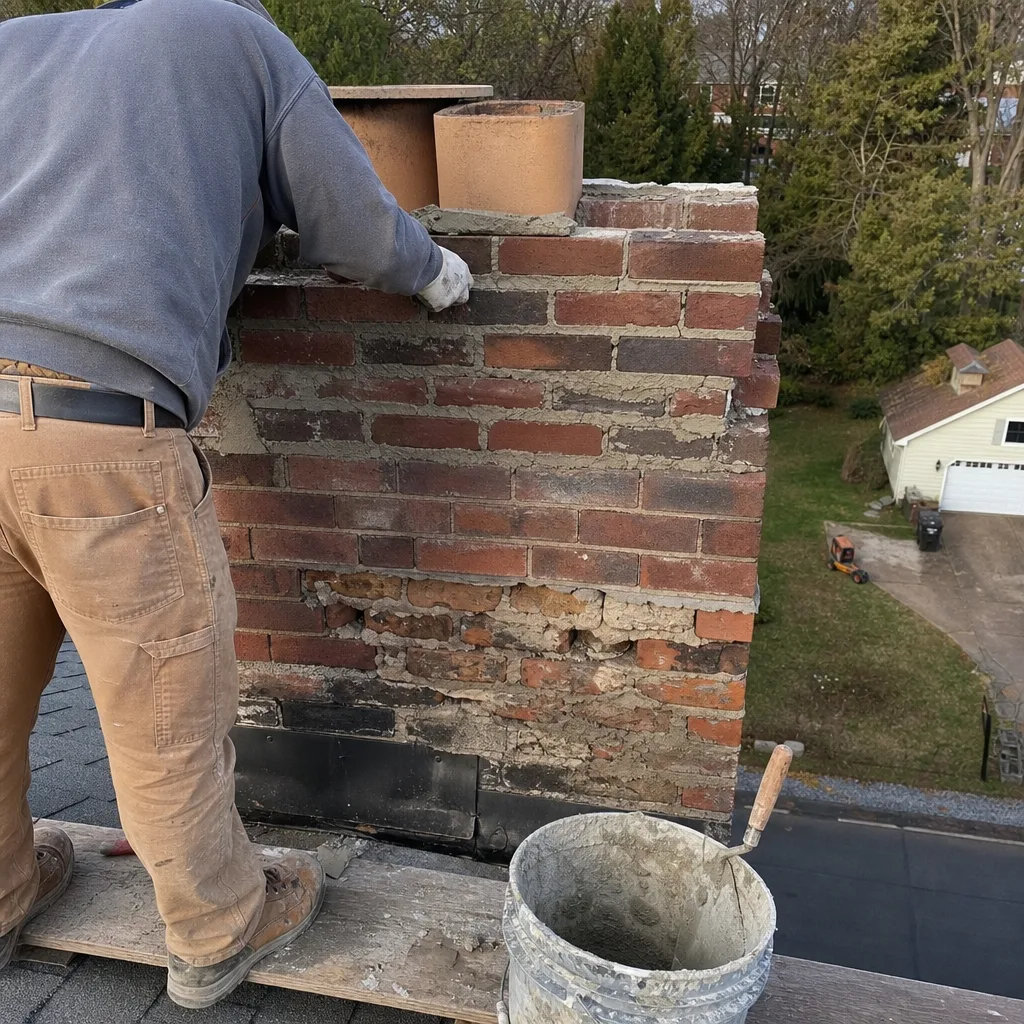
Manassas has a compressed burn season: fires from November through March, shoulder months in April and October. A warm March can push maintenance out of mind entirely, which is exactly how a chimney enters October with a season’s worth of creosote and a cracked crown that no one addressed.
The practical window for a sweep in Manassas runs from April through August. That’s when demand is lowest, scheduling is flexible, and a written price has room for negotiation. If you wait until September, you’re competing with every other homeowner who smelled the first cold front and remembered the fireplace exists. Prices don’t necessarily rise in fall, but availability collapses, and a rush job is never as thorough as an off-season camera scan.
A good rule for Manassas homeowners: book after the last fire of spring, not before the first fire of fall. A chimney swept in May is clean, documented, and ready when the weather turns. A chimney swept in October might be clean, but it might also be a scramble.
Documentation: What You Should Walk Away With
A sweep without a written record is a visit, not an inspection. Here’s what a proper chimney maintenance visit in Manassas should leave in your hands:
- A written scope of work, with prices, before anything starts
- A written warranty on the work performed
- A photo record of the flue interior, crown, cap, and smoke chamber
- Creosote class notation, if present
- Moisture readings for the masonry, if requested
- Notes on anything deferred: what can wait, what can’t, and why
The photo record matters more than most homeowners realize. It’s your baseline. Next year, when a different technician or a different company looks at the chimney, the photos show what changed. Without a baseline, every recommendation is a first guess. With a baseline, you can see the crack that grew, the patch that failed, the creosote that returned. The archive practice built by Level Two Chimney Manassas home has been running continuously since 2009, and it’s the reason a homeowner can compare year-over-year photos instead of relying on memory.
Common Mistakes to Avoid
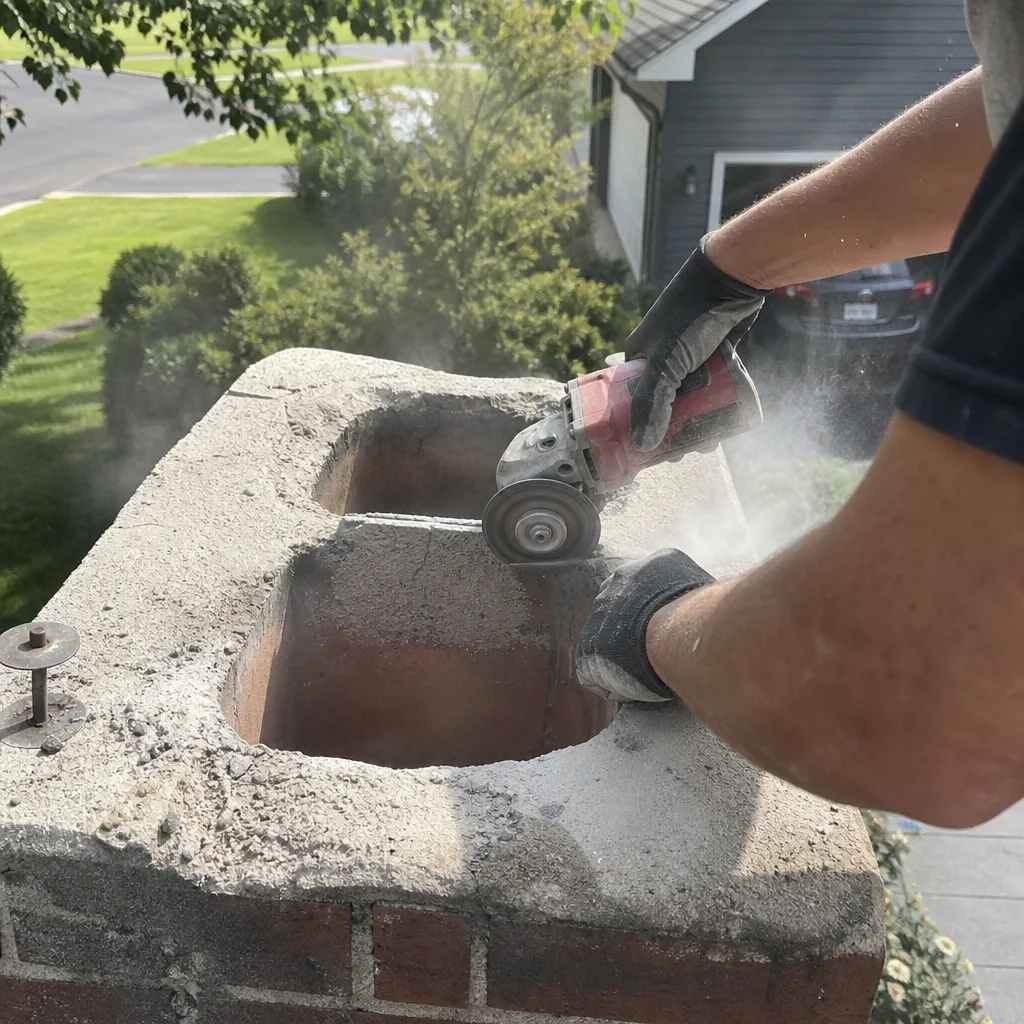
- Checking the firebox and skipping the crown. A clean firebox means nothing if the crown is cracked. The crown is where water enters; the firebox is where you burn wood. Different failure modes, different urgency.
- Assuming a sweep is just a sweep. In Manassas, some companies charge a flat rate for a brush-down and call it done. That’s not a Level 2 inspection, and it’s not what the NFPA 211 standard describes. Ask what’s included before you book.
- Doing the “paper test” on the damper and trusting it. A damper that holds a piece of paper isn’t necessarily sealing correctly. It’s a rough check, not a diagnosis. Camera evidence is the standard.
- Putting off flashing repair because it’s not visible from inside. Flashing leaks run silently behind walls. By the time you see the stain, the decking and drywall are already wet.
- Burning unseasoned wood and blaming the chimney. Green wood produces more creosote than dry wood. Manassas humidity means wood takes a full year to season, not one summer.
- Caulking the crown as a fix. Caulk is a temporary patch, not a crown repair. A proper fix is a new crown pour or a crown sealant system, not a bead of silicone from a hardware store.
When to Call a Professional
Call a sweep when you see bricks spalling at the base, a rusted cap, a cracked crown, or white efflorescence on the chimney face. Call one when your camera scan isn’t something you own, because a phone camera from the firebox isn’t getting you past the first foot of liner. Call one when you see a roof stain near the chimney, smell creosote in the house after a rain, or hear birds inside the flue. If you’ve had a chimney fire, even a small one, you need a Level 2 inspection before another fire is lit. Fireplace Services in Manassas cover inspection, cleaning, and repair. Level Two Chimney Manassas offers free estimates in Manassas. Call (571) 946-2300.
Frequently Asked Questions
A standard our Chimney Cleaning & Sweep services in Manassas typically runs $180 to $340, depending on flue height, creosote volume, and whether the chimney has been recently serviced. If a camera scan is included (and it should be), expect the price to fall in the $250 to $400 range. A sweep plus a full Level 2 inspection with documentation is usually $300 to $500. Without seeing the chimney, any price is a guess. That’s why Level Two Chimney Manassas gives a written price before work starts, every time. Call (571) 946-2300 for an exact quote; estimates are free.
The NFPA 211 standard says chimneys should be inspected at least once a year and cleaned whenever creosote buildup reaches 1/8 inch or more. For most Manassas homeowners who burn a fire a few times a week from November through March, one sweep per year, in spring or summer, is the right cadence. Heavy burners who use an open fireplace as primary heat may need a second sweep mid-season. A camera scan tells you if the buildup has reached the action threshold.
Creosote accumulates, and creosote is fuel. A chimney fire burns at up to 2,000 degrees, hot enough to crack clay liners and push flames into the house through compromised mortar. Skipping a sweep also means skipping the inspection, which means a cracked crown or failed flashing goes unnoticed while water quietly damages the masonry and framing. The cost of a sweep is $180 to $340. The cost of a chimney fire or a rotted chase is measured in thousands.
You know because the camera shows it. A cracked clay liner is a visible failure, documented in photos. If the camera scan shows gaps in the mortar joints, missing tile sections, or cracks that run the full length of the flue, a new stainless liner is the right fix. Level Two Chimney Manassas doesn’t recommend a reline without camera evidence, and we won’t. If another company quoted a reline without showing you photos of the damage, get a second opinion. We’ll review any written estimate for free.
A properly run sweep doesn’t. The fireplace opening is sealed with a barrier during brushing, and a HEPA vacuum captures the airborne dust. The bigger mess risk comes from a Damaged liner or water intrusion staining drywall, not from the sweep itself. Chimney Cleaning & Sweep in Manassas should include floor protection as standard, not as an upcharge.
Manassas follows the Virginia Uniform Statewide Building Code, which references NFPA 211 for chimney construction and maintenance. That means a Level 2 inspection is the recognized standard for property transfers, post-fire inspection, and after any event that might compromise the flue. If you’re buying or selling a home in Manassas, a documented Level 2 inspection with photos is the evidence both sides should ask for.
The Bottom Line
A chimney maintenance checklist that only covers the firebox and damper isn’t a checklist. It’s a to-do list that stops at the fireplace door. The components that fail first in Manassas are the crown, the liner, the flashing, and the clearance in the chase. Four of them are invisible from the hearth. Two of them require roof access or a camera. Every one of them is documented in a proper Level 2 inspection with photos and a written price. Book in April or May, ask for the camera scan, and keep the photo record. For more guides & resources, visit our blog. That’s the whole system.
Written by Corrine Halstead, Owner at Level Two Chimney Manassas, serving Manassas since 2009.