
Last updated September 20, 2026
Level 1 sweep and inspection to the NFPA 211 annual standard - flue, crown, cap, and flashing checked and photographed
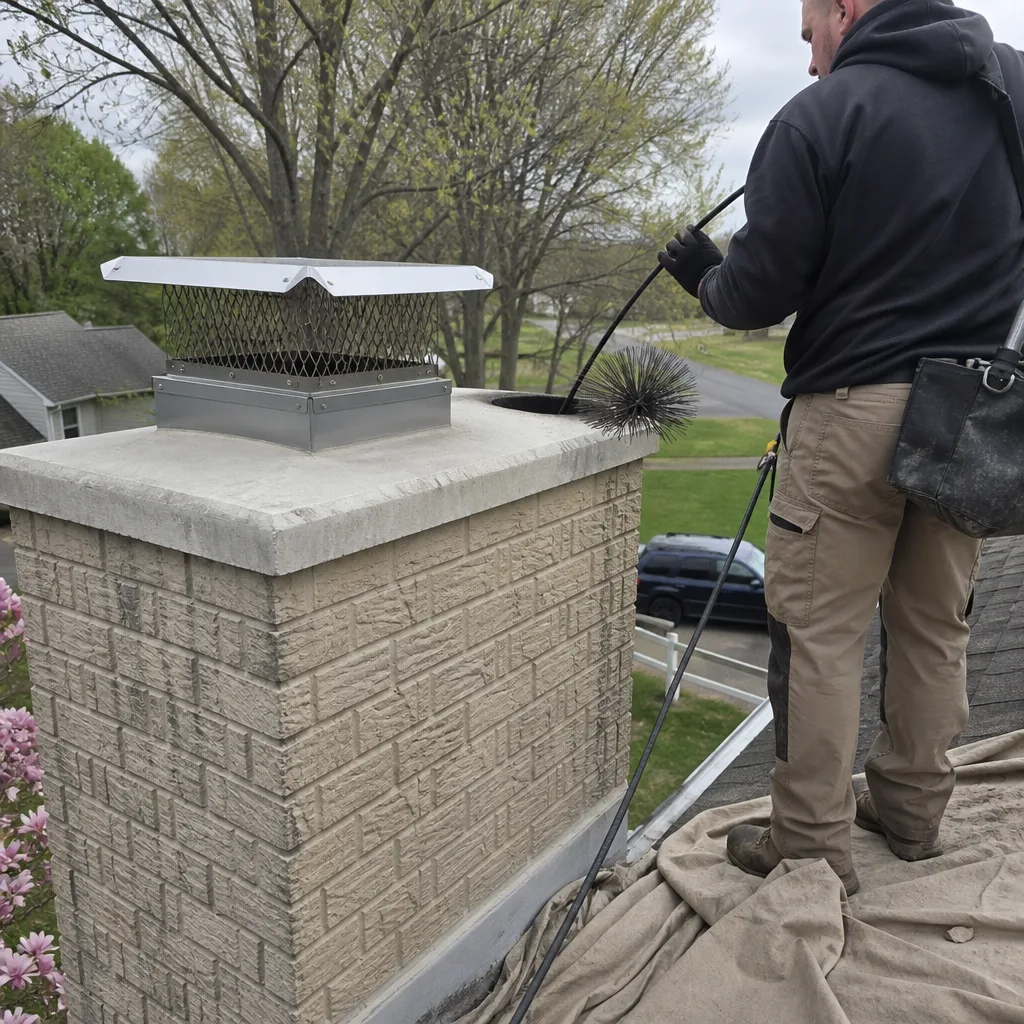
Chimney sweep logs do not sweep chimneys. They loosen some creosote - which then falls where a brush and vacuum still have to collect it.
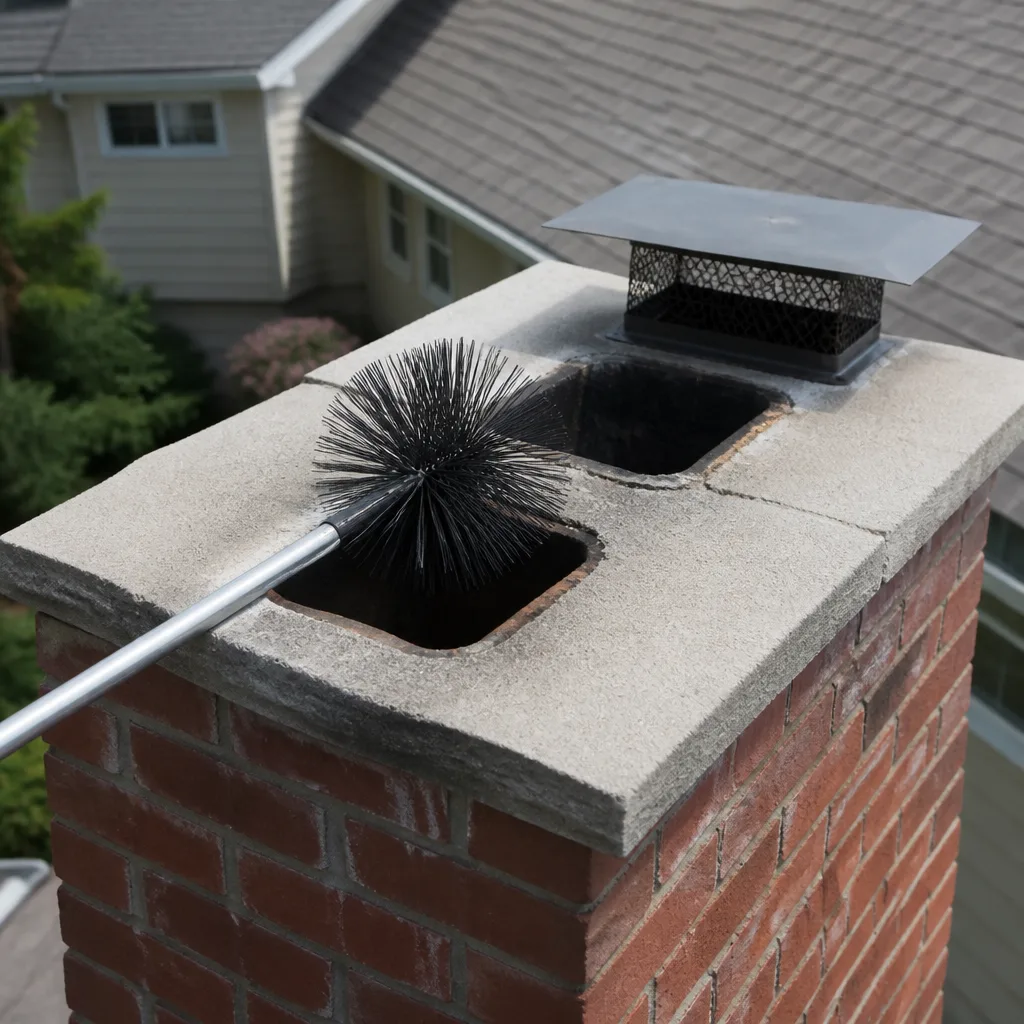
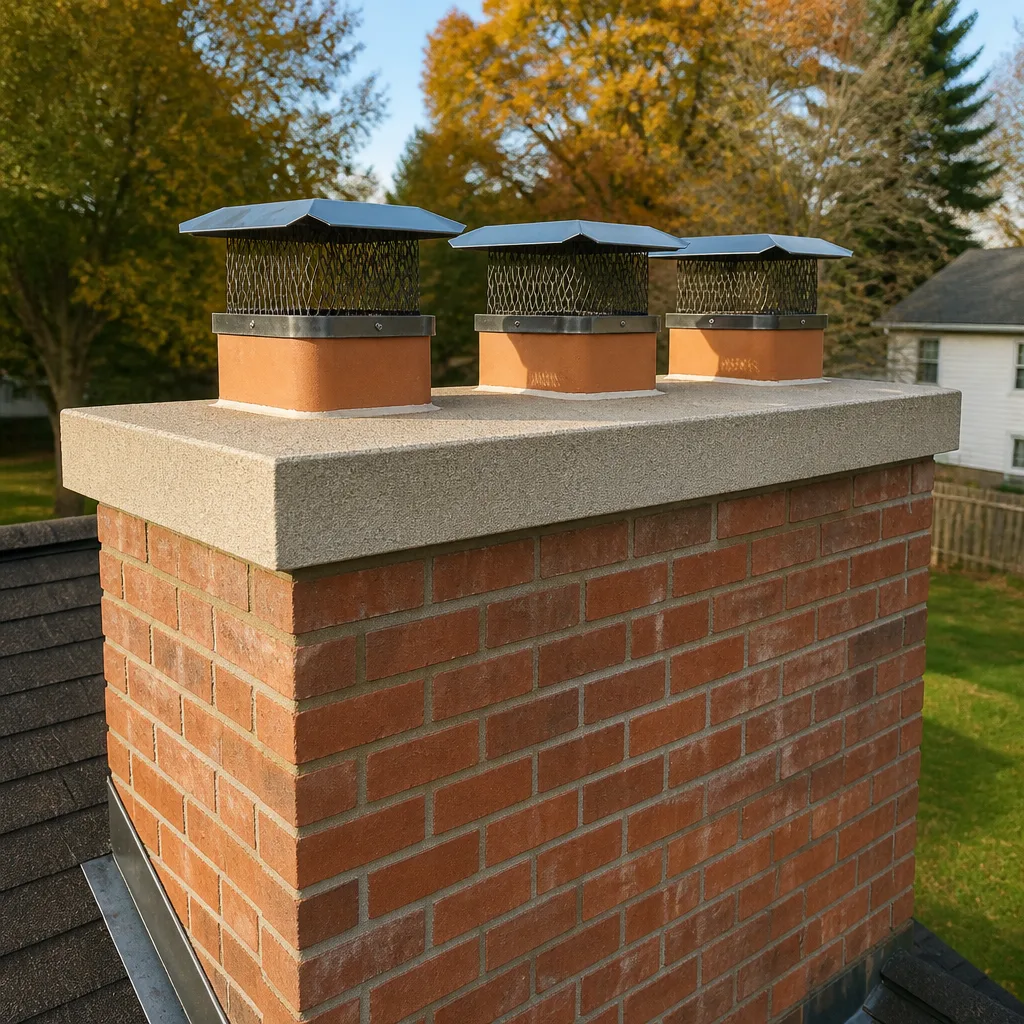
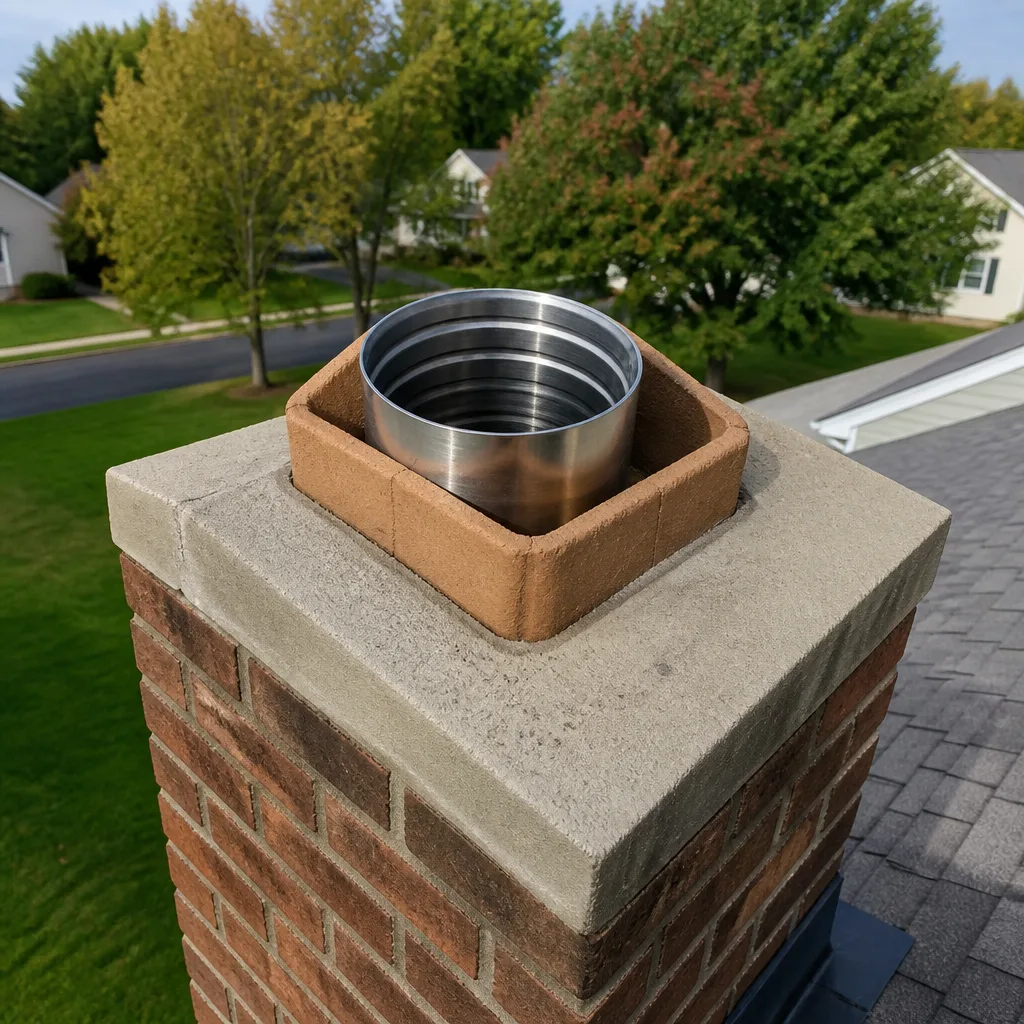
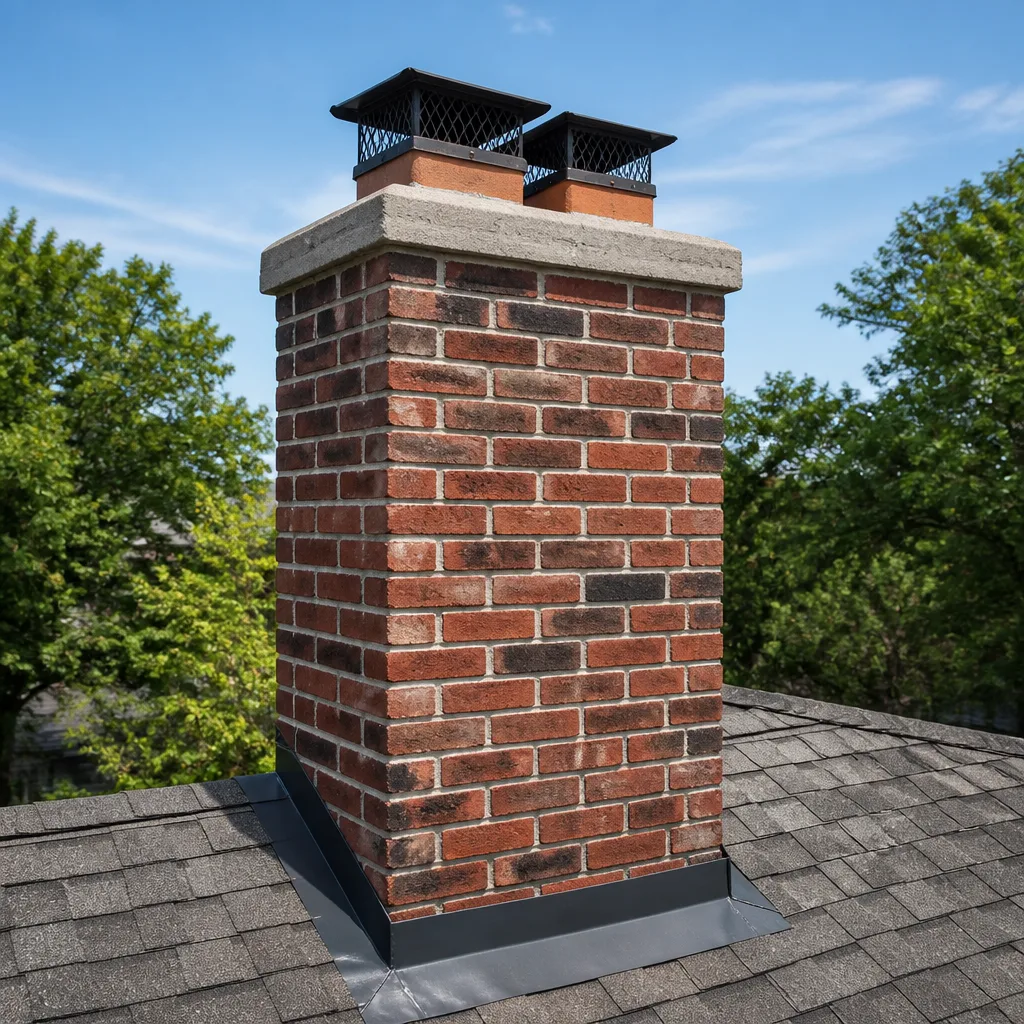
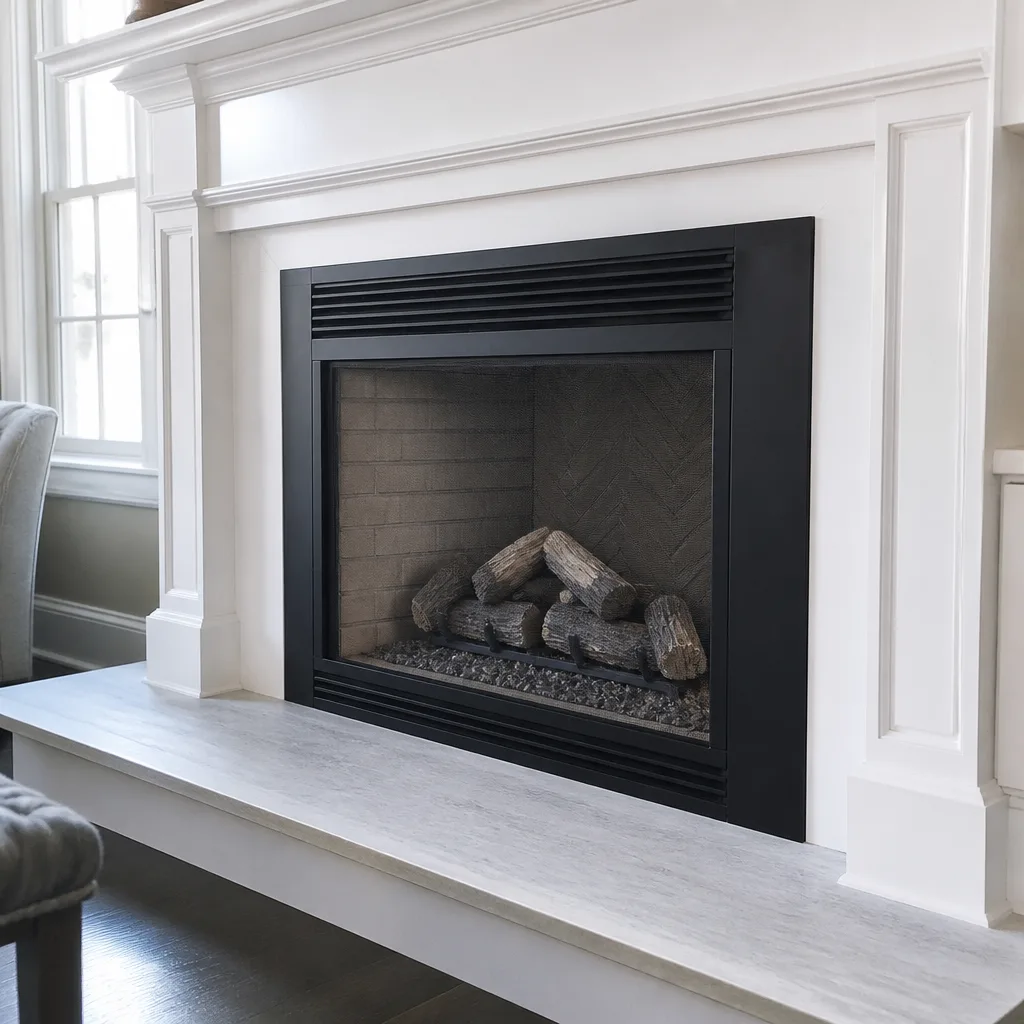
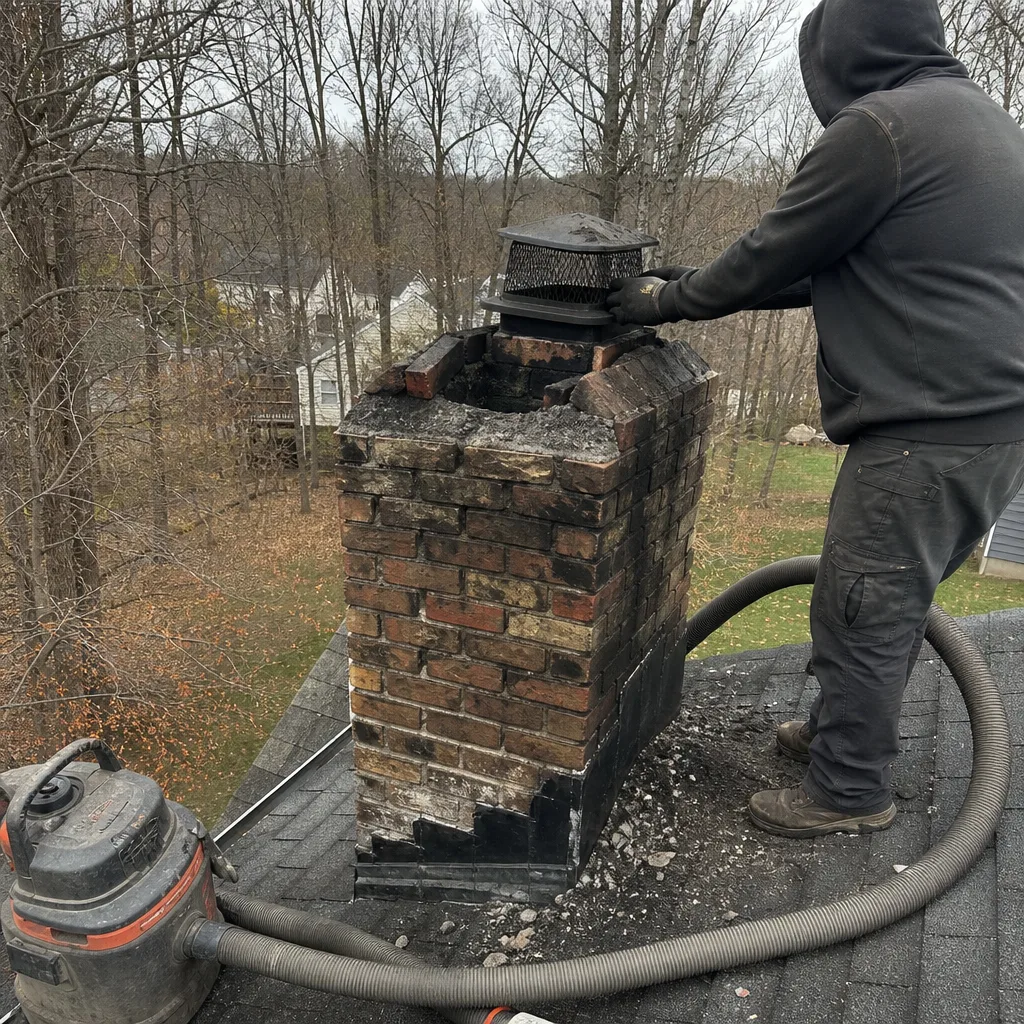 Before
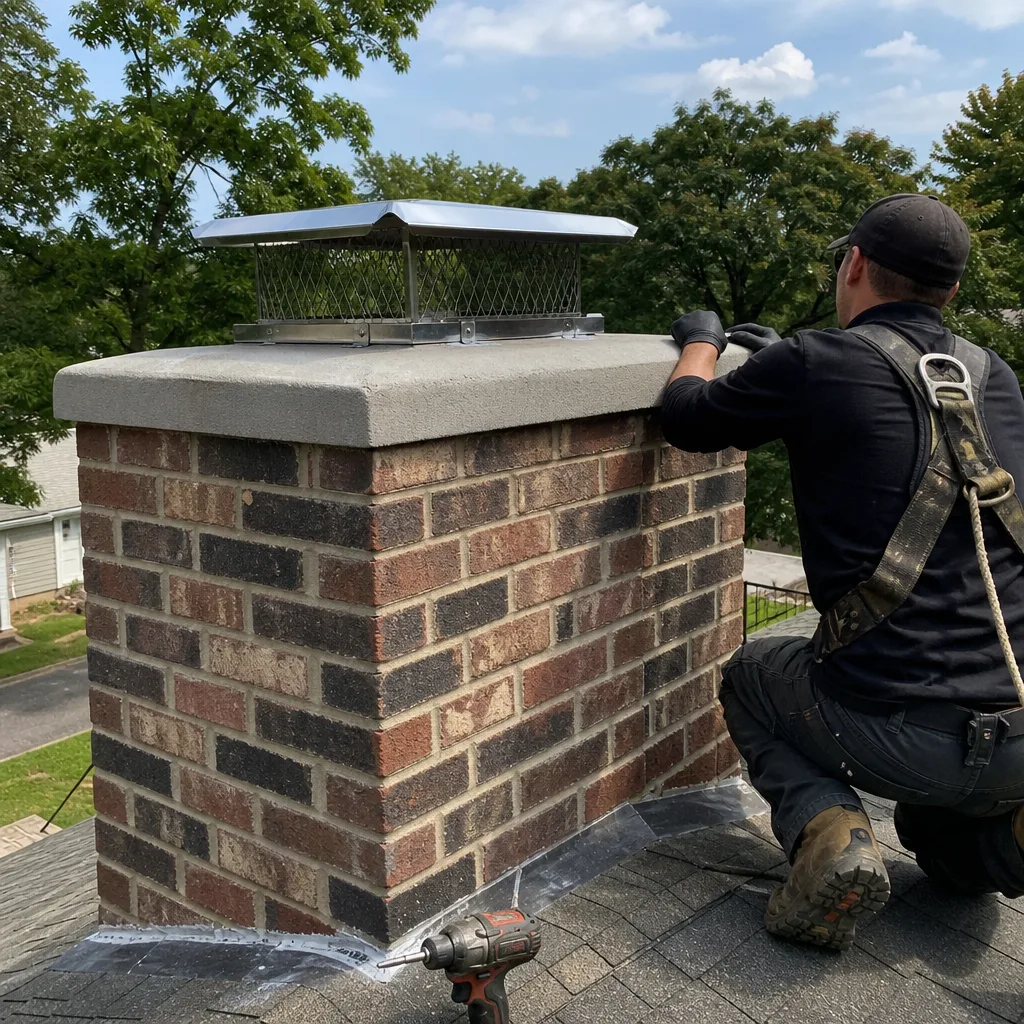 After
After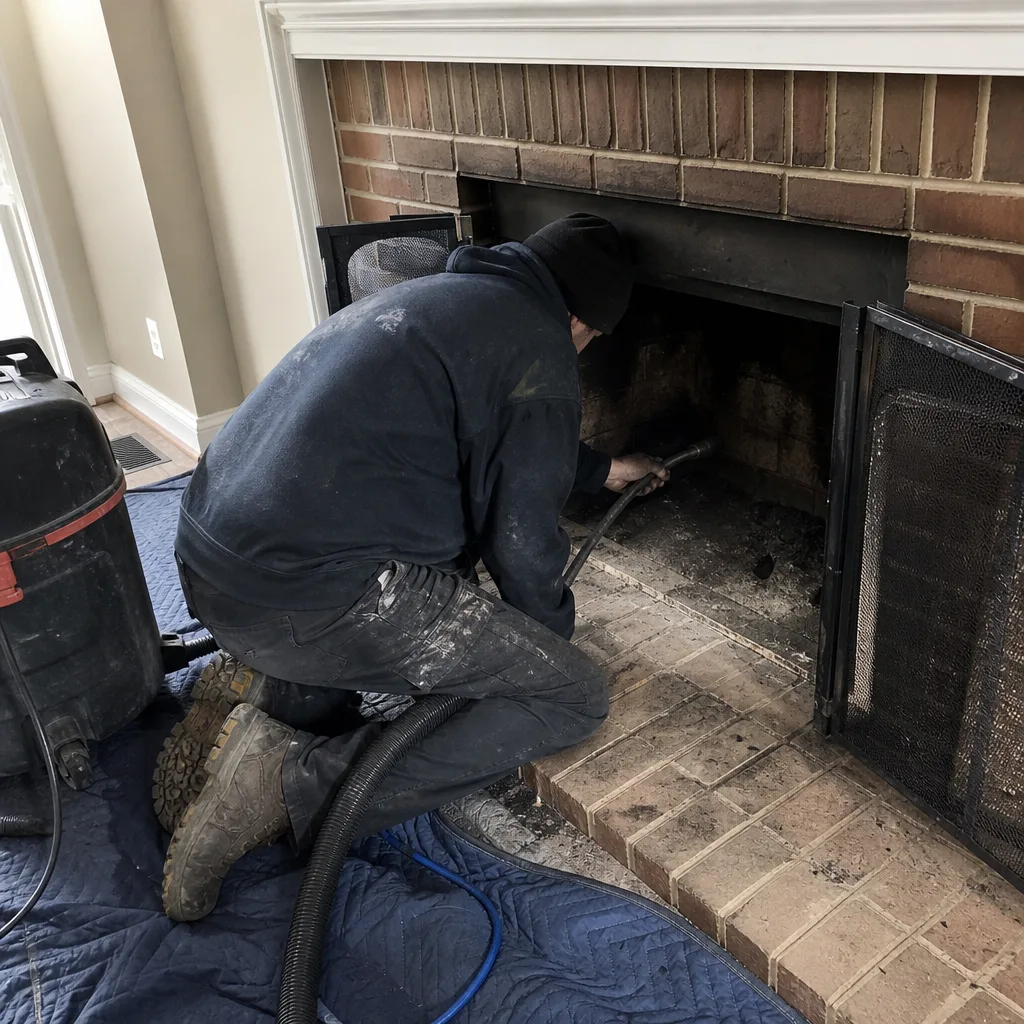 Before
 After
After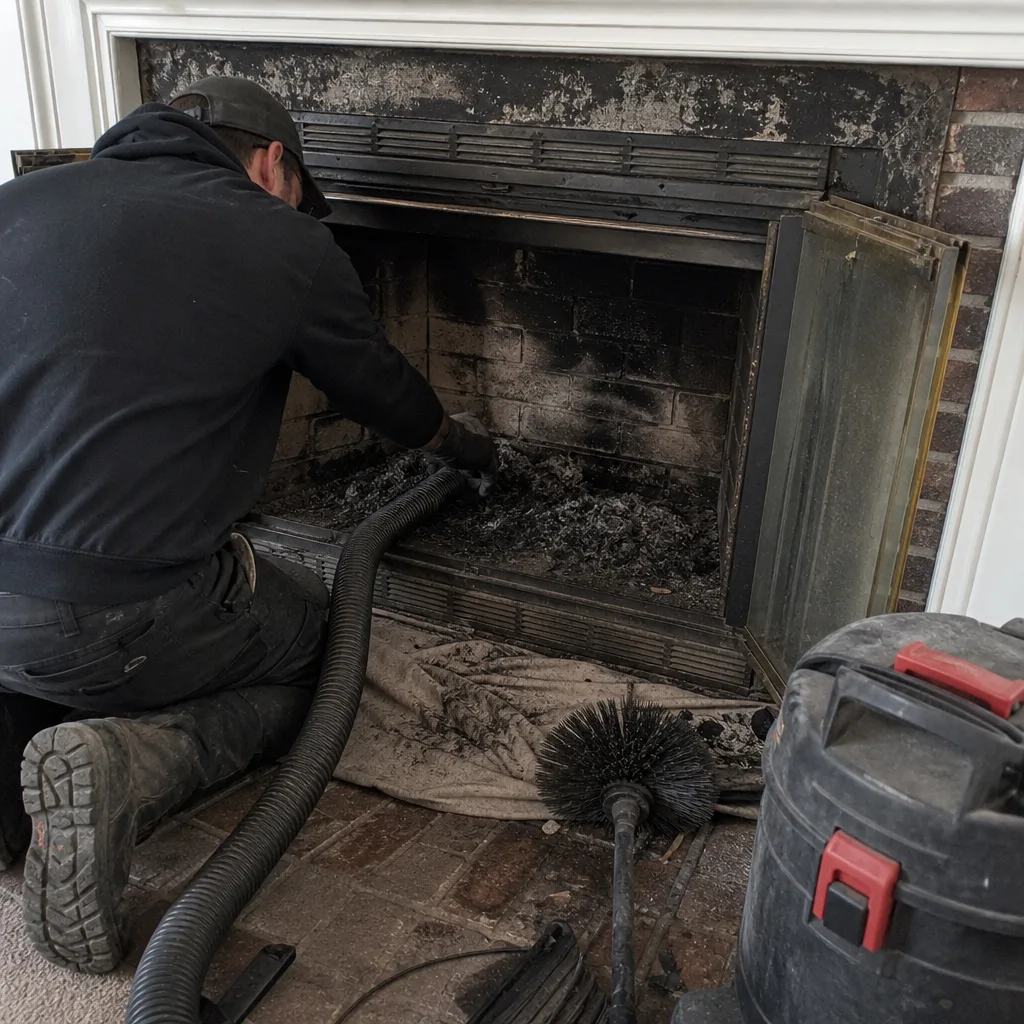 Before
 After
AfterChimney Cleaning Permits, Codes & Inspections in VA: What You Need to Know
Virginia does not require a permit to clean a chimney. That single sentence surprises most homeowners in Manassas, but it hides a much more consequential problem: your insurance policy almost certainly holds you to a stricter standard than the state code does. A routine sweep receipt proves you cleaned the flue. It does not prove the flue was safe to use at the time of a fire. This guide to chimney cleaning in Manassas explains what Virginia code actually mandates, when a Level 2 inspection becomes legally required, and what paperwork you need to keep so an insurance claim doesn’t die on a technicality.
Quick Answer
Chimney cleaning in Virginia requires no permit, no license-specific filing, and no municipal inspection under the Virginia Statewide Fire Prevention Code. However, NFPA 211, adopted by reference by Virginia, legally mandates a Level 2 inspection after specific trigger events: property sale, fuel type change, chimney fire, or seismic activity. Documentation of that inspection, not a cleaning receipt, is what insurers typically demand after a loss.
Table of Contents
- Virginia Statewide Fire Prevention Code: What Actually Applies to Chimneys
- When NFPA 211 Legally Requires a Level 2 Inspection
- Permits for Chimney Repair vs. Cleaning: Two Different Worlds
- Insurance Policy Language vs. Virginia Code Minimums
- What Documentation You Need to Retain After Any Chimney Service
- Manassas-Specific Considerations: Climate, Housing Stock, and Local Enforcement
- Step-by-Step: The 5-Document Standard That Satisfies Code and Insurance
- Common Mistakes to Avoid
- When to Call a Professional
- Frequently Asked Questions
- The Bottom Line
BeforeAfterVirginia Statewide Fire Prevention Code: What Actually Applies to Chimneys
The Virginia Statewide Fire Prevention Code (SFPC) is the document that governs fire safety in the Commonwealth. It incorporates the International Fire Code (IFC) with Virginia-specific amendments. Chimney and fireplace provisions live in Section 603 of the IFC, and Virginia adopts them with no meaningful softening. The key language says chimneys, fireplaces, and vents must be maintained in a safe condition. That is the code’s entire operational requirement for an existing chimney: keep it safe. It does not prescribe how often to clean, how to inspect, or what documentation to keep.
Where the code gains teeth is the phrase “maintained in a safe condition.” That is a performance requirement, not a prescription, and it puts the burden on the homeowner. If a chimney fire occurs and the fire marshal determines the flue had not been maintained, the homeowner is on the wrong side of a code violation. The code does not say a professional sweep is required. It says the chimney must be safe, and you, the owner, are responsible for proving it was.
Local fire marshals in Prince William County and Manassas City enforce the SFPC. In practice, enforcement is reactive: after a fire, not before. A fire marshal will not knock on your door to ask about your last sweep. But after a chimney fire in a Manassas neighborhood like Point of Woods or Sudley, the fire investigation report frequently includes a note on flue condition, and that note is what your insurer reads.
The SFPC also incorporates NFPA 211 by reference for inspection methodology and trigger events. That adoption is what turns NFPA 211 from a trade standard into a legal requirement in Virginia. When code officials, insurance adjusters, or attorneys need to define what “maintained in a safe condition” means, they default to NFPA 211. That is the standard that defines Level 1 and Level 2 inspections, and it is the standard that determines whether a homeowner did enough.
When NFPA 211 Legally Requires a Level 2 Inspection
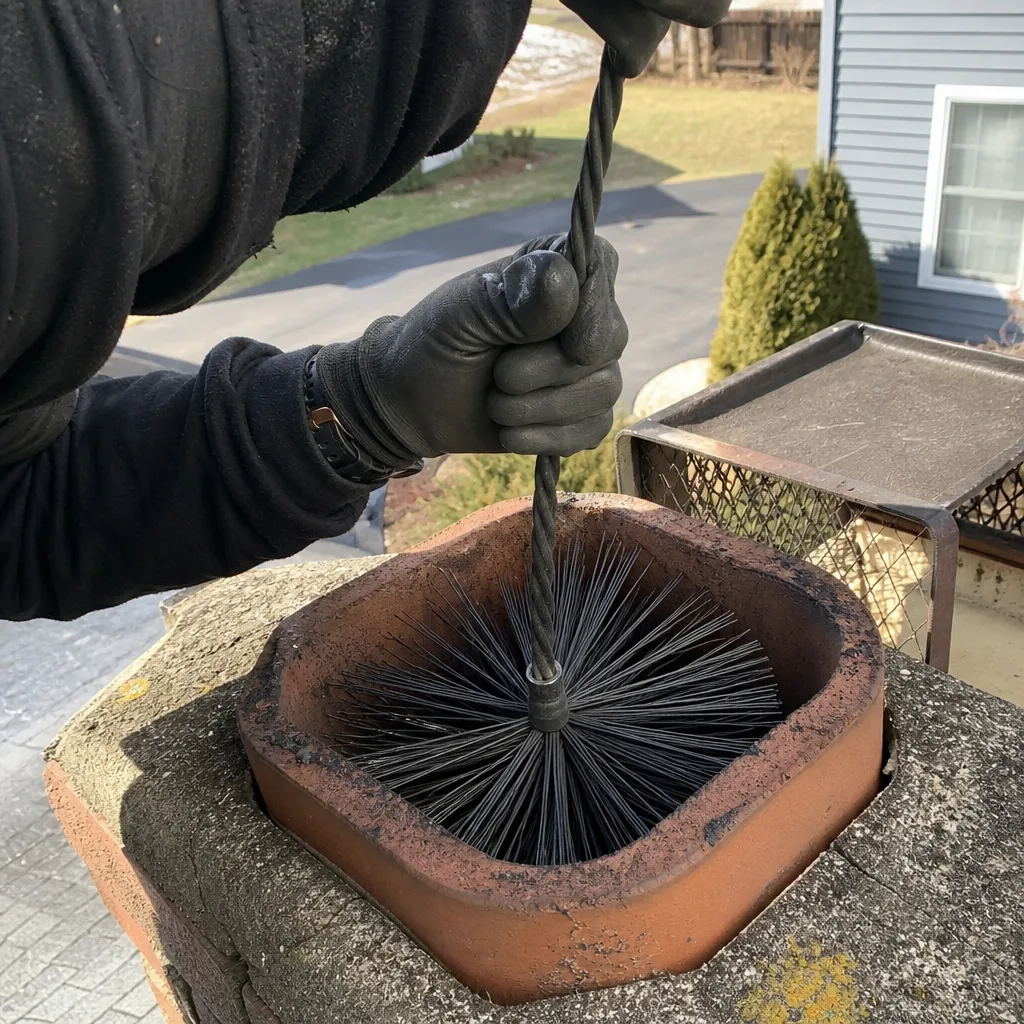
NFPA 211, the Standard for Chimneys, Fireplaces, Vents, and Solid Fuel-Burning Appliances, defines two inspection tiers. A Level 1 inspection is what happens during a routine cleaning: the readily accessible portions of the chimney are examined with basic tools. A Level 2 inspection adds video scanning of the flue interior and examination of accessible attics, crawl spaces, and basements. The distinction matters because NFPA 211 specifies exactly when a Level 2 is required, not suggested, and Virginia’s adoption of the standard makes those triggers binding.
The four trigger events are:
- Property sale or transfer. Any time a home changes hands, NFPA 211 requires a Level 2 inspection before the chimney is used. If you bought a home in Manassas between 2015 and 2025 and your home inspector did a visual-only check, that was not a Level 2. A camera scan is the defining requirement.
- Change of fuel type. Converting a wood-burning fireplace to gas, or switching from one fuel to another, legally triggers a Level 2. The flue was sized and lined for one combustion profile; changing the fuel changes the exhaust chemistry and temperature.
- After any chimney fire or building fire. A chimney fire can damage a flue liner in ways invisible from the top or bottom. The thermal shock alone can crack a clay tile liner. After any fire, even a small one that burned itself out, a camera inspection is legally required before reuse.
- After seismic or significant weather events. An earthquake, a major wind event, or a lightning strike near the chimney can shift masonry or damage the liner. NFPA 211 treats these as inspection triggers. In Northern Virginia, we see this most often after severe derecho winds or the rare tremors that reach the Manassas area.
Here is what most homeowners in Manassas do not know: a Level 1 cleaning inspection does not satisfy these triggers. You cannot clean your way out of a Level 2 requirement. If you moved into a 1990s colonial off Sudley Road and have used the fireplace for five years with only routine sweeps, you have been operating outside NFPA 211 on paper. Most people get away with it. The liability shows up when a claim is filed and the insurer asks for the post-sale inspection record that does not exist.
Permits for Chimney Repair vs. Cleaning: Two Different Worlds
Cleaning requires no permit anywhere in Virginia. Full stop. No municipality in Prince William County or Manassas City requires a building permit for a chimney sweep, a flue brushing, or a camera inspection. The work is maintenance, not construction, and the code treats it accordingly.
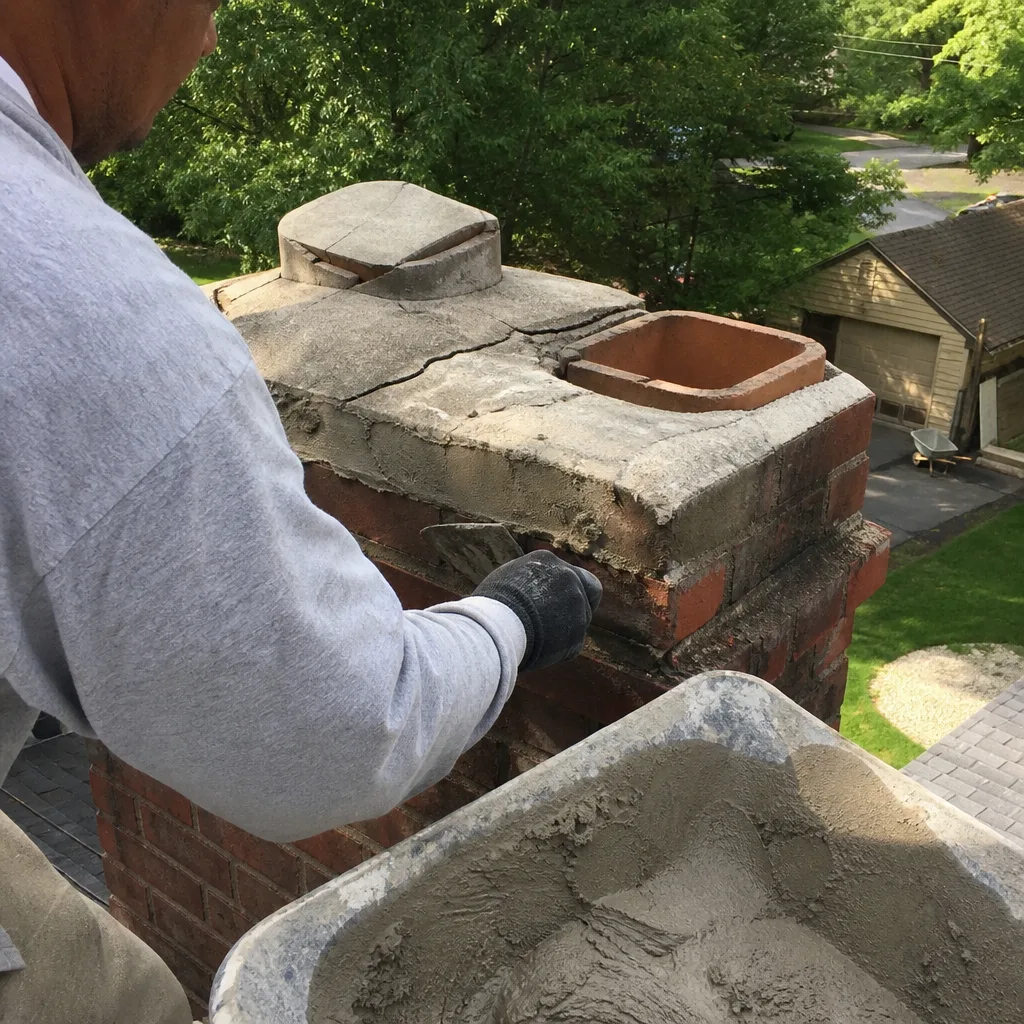
Repair work is a different universe. Prince William County and Manassas City building departments require permits for structural chimney work: rebuilding a crown, repointing masonry, relining a flue, or rebuilding a firebox. The trigger is structural alteration. If a sweep tells you the flue liner needs to be replaced, that is a permitted job in Manassas, and the contractor should pull the permit, not you. Any contractor who offers to do structural chimney work without a permit in Prince William County is asking you to absorb the liability for unpermitted work.
The conflation happens constantly. Homeowners hear “chimney work” and assume a permit applies. Sweeps who want to downplay the scope tell clients a permit is not needed. The accurate sentence is: cleaning, no permit. Inspection, no permit. Liner replacement, crown rebuild, masonry repair, firebox reconstruction, permit required. If you are not sure which category your job falls into, ask the contractor to write it down. A contractor who will not name the permit trigger in writing is not worth hiring.
For chimney cleaning and sweeping in Manassas, permits never enter the conversation. That is the service category, and it remains unregulated by building departments. For chimney repair in Manassas, the permit requirement is real, and we advise every client to verify the permit status before structural work begins. No reputable contractor objects to a homeowner asking.
Insurance Policy Language vs. Virginia Code Minimums
Your homeowners insurance policy contains language about maintenance duties. Most policies include a clause requiring the homeowner to maintain the property in a condition that prevents loss, and many specifically address chimneys. The policy language typically says something close to: the homeowner must perform reasonable and prudent maintenance on the chimney and retain records of such maintenance. That is not Virginia code. That is contract law, and it is stricter than code because it attaches a documentation requirement.
Here is the divergence that matters. Virginia code says maintain the chimney in a safe condition. It does not say document anything. Your insurance policy says maintain the chimney and keep records. After a chimney fire, the insurer will ask for evidence of maintenance. If you have cleaning receipts, you can show the flue was brushed. If you have a Level 2 camera inspection report, you can show the flue was structurally intact as of a specific date. The difference between those two documents is the difference between a paid claim and a long, unpleasant conversation with an adjuster.
We have seen this in Manassas. A homeowner in the Wellington area had a chimney fire in 2023. The cleaning had been done annually. The claim was initially denied because the insurer argued the fire was caused by a pre-existing liner crack that annual cleaning should have caught. The homeowner had no camera inspection record. We did the post-fire Level 2, documented the damage, and the claim was eventually paid after significant back-and-forth. Had the homeowner had a documented Level 2 before the fire, the entire dispute would have been avoided. The lesson: a cleaning receipt proves you maintained the chimney. It does not prove the chimney was safe.
Insurers in Virginia also look for the phrase “inspection included” versus “cleaning only.” A receipt that says “swept flue” is weak. A report that says “Level 2 inspection performed, video scan archived, liner condition documented” is strong. When we finish a job, the homeowner walks away with both: the cleaning record and the inspection record, separate documents, each serving a different function. Level Two Chimney Manassas has operated this way since 2009, before insurers began routinely asking for camera documentation.
What Documentation You Need to Retain After Any Chimney Service
Most homeowners treat a chimney service receipt like a grocery receipt: glance at it, file it somewhere, forget it. After a fire, that filing system is your entire defense. The documentation standard that satisfies both Virginia code and insurance policy language is specific. It is not a receipt. It is a record.
A compliant post-service record includes:
- A written scope of work, priced, before the job starts. This proves what was agreed to and what was excluded. It is the difference between “we cleaned the flue” and “we cleaned the flue and noted a crack that the homeowner declined to address.”
- The inspection tier performed (Level 1 or Level 2). This tells the insurer whether the service met the NFPA 211 trigger requirement. After a sale or fire, only a Level 2 record satisfies the standard.
- Camera scan images or video access. A documented photo record of the flue interior on the day of service. This is the evidence that the chimney was in a specific condition at a specific time. Clause 4 of the Haven Standard requires this photo record on every job, and we have maintained that archive since 2009.
- A written condition assessment, in plain terms. “Liner intact, no cracks visible” or “Clay tile liner shows spalling at the 12-foot mark.” What was found, not what the tech felt about it.
- A written warranty or guarantee for any repair performed. The 365-Day Done Right Promise is stamped on every job under the Haven Standard. If it is not done right, we make it right. That is a written promise, not a verbal one.
Retain these records for as long as you own the home, and transfer them when you sell. In Manassas, with its high turnover of housing stock and large number of homes bought between 2015 and 2025, the transfer is where documentation gaps appear. The buyer’s inspector does a visual check, the seller produces a cleaning receipt, and nobody realizes NFPA 211 requires a Level 2 at sale. The new owner fires up the fireplace in November, and a liner problem that a camera would have caught in September becomes a February chimney fire.
Manassas-Specific Considerations: Climate, Housing Stock, and Local Enforcement
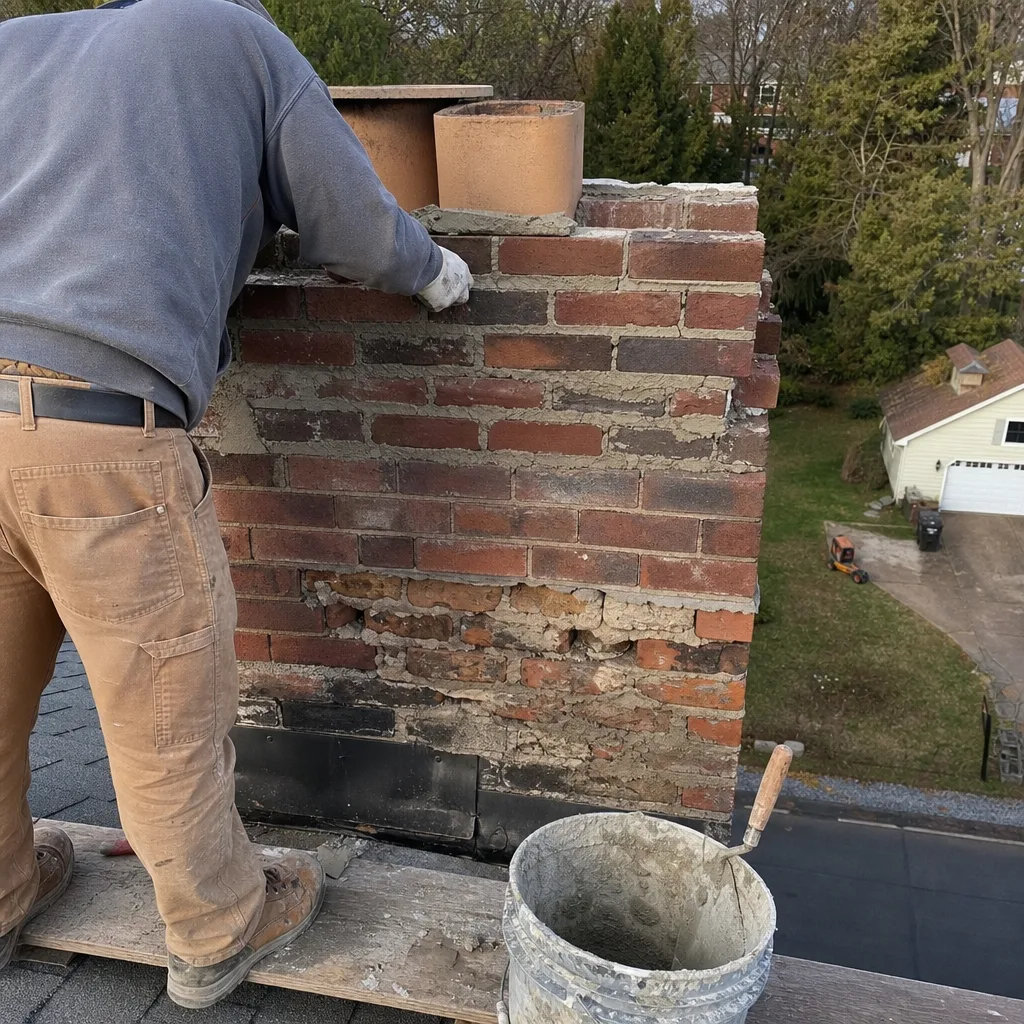
Manassas sits in a climate zone that punishes chimneys. Freeze-thaw cycles in Northern Virginia winter temperatures cause masonry spalling, crown cracking, and liner deterioration faster than in milder climates. A brick chimney in the Sudley area or off Liberia Avenue goes through dozens of freeze-thaw events every winter. Water seeps into hairline cracks, freezes, expands, and widens the crack. The result is a chimney that degrades on a predictable schedule, and a cleaning-only maintenance plan will not catch it.
The housing stock compounds the problem. Much of Manassas’s suburban housing was built between the 1970s and the early 2000s. Chimneys from that era commonly have clay tile liners, which crack under thermal stress. Newer homes in developments like Bradley Square or the homes near the Manassas Airport often have prefabricated chimneys that age differently but still require regular inspection. Neither type is immune. The specific failure mode differs, but the need for camera documentation is identical.
Local enforcement is reactive, not proactive. The Manassas City Fire Marshal’s office and Prince William County Fire Marshal’s office respond to fires; they do not conduct residential chimney inspections. That means the homeowner is the enforcement mechanism. The code says maintain safe condition. Nobody is checking until something goes wrong, and then the record becomes the defense.
We have inspected and cleaned more than 38,000 chimneys since 2009, every one with a written price before work started and a documented record when it was done. What we see in Manassas matches the national pattern: the homes with the worst undocumented liner damage are the homes where the previous owner handed over a cleaning receipt and called it an inspection. The gap is not the cleaning. The gap is the documentation tier. This is why our fireplace services in Manassas always include the camera scan as standard, not as an add-on.
Step-by-Step: The 5-Document Standard That Satisfies Code and Insurance
If you own a fireplace in Manassas and want to be defensible after a fire, here is the process we recommend. It is not complicated. It is specific.
- Obtain a Level 2 camera inspection before the first fire of the season, especially if you have not used the fireplace since buying the home. This establishes a documented baseline of liner condition. Without a baseline, every future claim is an argument about pre-existing conditions.
- Keep the inspection report, the camera images, and the written condition assessment in one file, digital and physical. The report names the liner type (clay tile, stainless steel, or poured), its condition, and any recommended follow-up. Plain terms, not trade jargon.
- Perform annual cleaning with a documented Level 1 inspection. The cleaning removes creosote; the Level 1 verifies accessible components. Both should be documented. The cleaning receipt alone is not enough.
- After any trigger event (sale, fuel change, fire, seismic), perform a new Level 2 before any further use. This is not a suggestion. NFPA 211, adopted by Virginia, makes it a requirement.
- If any repair is recommended, get a written quote with a written scope and written warranty before work begins. A contractor who says “we will sort out the details after we get in there” is inviting a dispute. The price, the scope, and the warranty should be in writing first. That is Clause 1 of the Haven Standard, and it exists to protect you, not the contractor.
This five-step process exceeds Virginia code minimums because it treats documentation as a primary output, not an afterthought. It is the same standard we use on every job in Manassas, and it is the reason our clients can produce a record that an adjuster has no room to dispute.
Common Mistakes to Avoid
- Confusing a cleaning receipt with an inspection report. A sweep receipt shows brushing occurred. It says nothing about liner condition. Your insurer knows the difference, and after a fire, so will you.
- Skipping the Level 2 after purchasing a home. If you bought in Manassas between 2015 and 2025 and only have a home inspector’s visual note, you have not met the NFPA 211 sale trigger. The inspection was not a Level 2.
- Assuming a permit is required for everything. Cleaning and inspection require no permit in Virginia. Structural repair does. Conflating the two leads to either unnecessary anxiety or unpermitted work.
- Accepting a verbal quote for repair work. If the price, scope, and warranty are not in writing before work starts, you have no contract and no leverage. Written first, always.
- Trusting a contractor who will not show you the camera footage. Clause 4 of the Haven Standard requires a documented photo record on every job. If a sweep charges for a camera inspection and then shows you nothing, you paid for theater.
- Using the fireplace after a chimney fire, even a small one, without a new Level 2. Thermal shock can crack a liner invisibly. The next fire is the one your insurer will scrutinize most closely.
- Discarding service records when moving. In Manassas’s active resale market, the transfer of chimney documentation is where most gaps appear. The new owner’s claim becomes a dispute that traces back to your missing records.
When to Call a Professional
If you have moved into a home in Manassas and do not have a Level 2 camera inspection record, call a professional before the next fire. If you smell smoke when the fireplace is not in use, see white staining on the exterior brick, or hear dripping in the chimney during rain, those are chimney warning signs Manassas homeowners should know, signaling crown or liner damage that warrants a camera scan. If you have had a chimney fire of any size, do not use the fireplace again until a Level 2 has been completed. If your current sweep cannot produce camera footage or a written condition report, you are not getting an inspection; you are getting a brushing. Level Two Chimney Manassas offers free estimates in Manassas. Call (571) 946-2300.
Frequently Asked Questions
No. Chimney cleaning requires no permit anywhere in Virginia, including Manassas City and Prince William County. The Virginia Statewide Fire Prevention Code does not classify routine cleaning or inspection as permitted work. Permits are required for structural repairs such as liner replacement, crown rebuild, or masonry reconstruction.
NFPA 211 recommends cleaning at least once per year for wood-burning fireplaces that see regular use. In Manassas, where winter burns are common and freeze-thaw cycles accelerate masonry wear, an annual cleaning with a documented Level 1 inspection is the defensible standard; see our Chimney Cleaning & Sweep Maintenance Checklist for Manassas Homeowners for details. Homes that burn more than two cords of wood per season may need mid-season attention. Call (571) 946-2300 for a written quote.
Your insurance policy almost certainly requires regular maintenance and documentation of that maintenance. The policy language typically does not specify a Level 2 by name, but after a chimney fire, an adjuster will ask for evidence that the chimney was maintained in a safe condition. A Level 2 camera inspection report is the strongest evidence you can produce, and a cleaning receipt alone is frequently insufficient.
A Level 1 inspection examines the readily accessible portions of the chimney using basic tools and is typically performed during a routine cleaning. A Level 2 inspection adds a video scan of the flue interior and an examination of accessible attics, crawl spaces, and basements. NFPA 211 requires a Level 2 after property sale, fuel type change, chimney fire, or seismic event. Virginia adopts NFPA 211 by reference, making those triggers legally binding.
Yes. A standard home inspection is a visual check of accessible components. It does not include a video scan of the flue interior, which is the defining requirement of a Level 2 inspection under NFPA 211. If you bought a home in Manassas and the seller did not provide a dated, documented Level 2 report, you have not met the standard. We recommend a Level 2 camera scan before the first fire in a new home.
You should receive, at minimum: a written scope of work, a receipt for the cleaning, a documentation of the inspection tier performed, camera images or access to video from the flue scan, a written condition assessment in plain language, and a written warranty for any repair performed. Clause 4 of the Haven Standard requires a documented photo record on every job. If you did not receive these documents, ask for them. Call (571) 946-2300 for an exact quote. Estimates are free.
The Bottom Line
Virginia code draws a clean line: cleaning requires no permit, structural repair does. But the code’s simplicity hides the real liability. Your insurance policy demands documentation that most cleaning receipts never provide. A Level 2 camera inspection with a written condition report and archived footage is the document that satisfies both the code and the insurer. In Manassas, with its freeze-thaw winters, aging chimney stock, and active resale market, the homeowners who keep these records are the ones whose claims are paid without a fight. The gap between a cleaning and an inspection is the gap between a file you can defend and a claim you cannot. For more guides & resources, visit our blog.
Written by Corrine Halstead, Owner at Level Two Chimney Manassas, serving Manassas since 2009.