
Last updated September 20, 2026
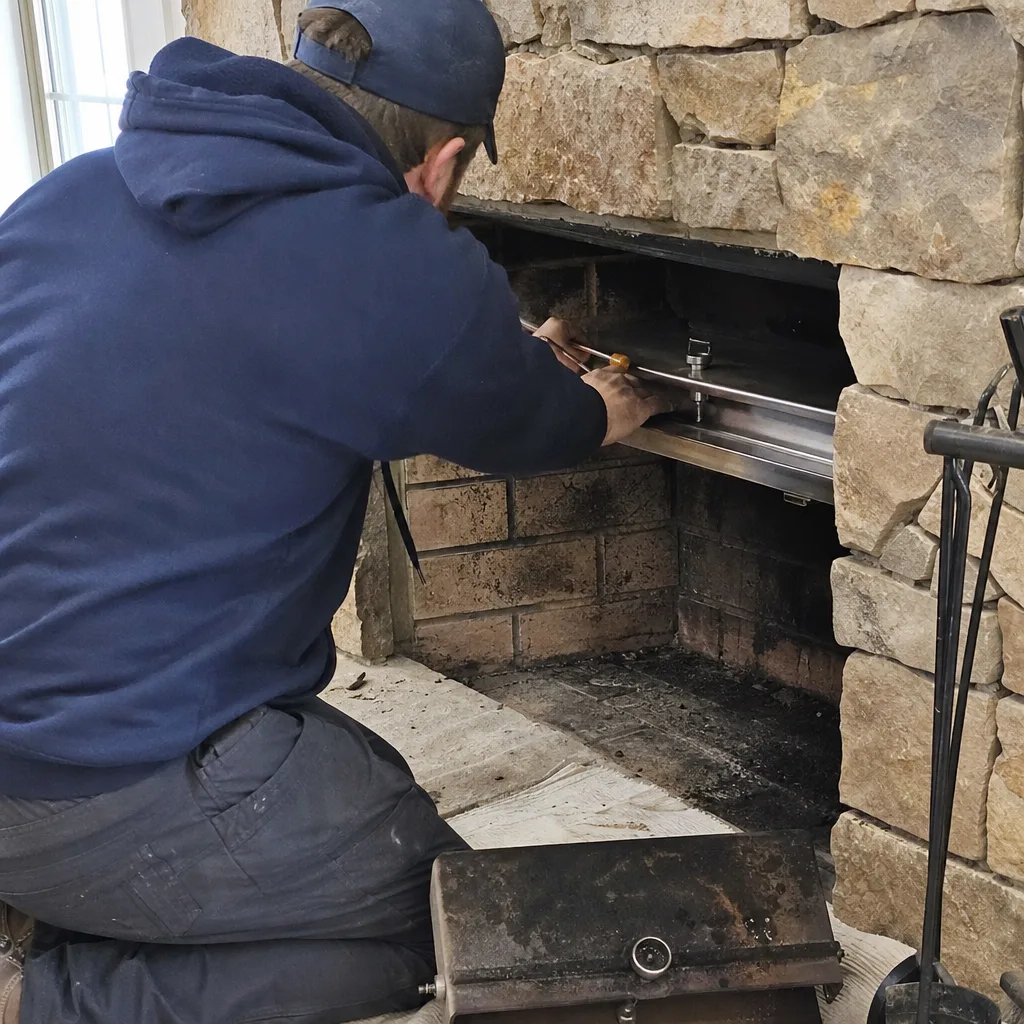
Level 1 sweep and inspection to the NFPA 211 annual standard - flue, crown, cap, and flashing checked and photographed
Chimney sweep logs do not sweep chimneys. They loosen some creosote - which then falls where a brush and vacuum still have to collect it.
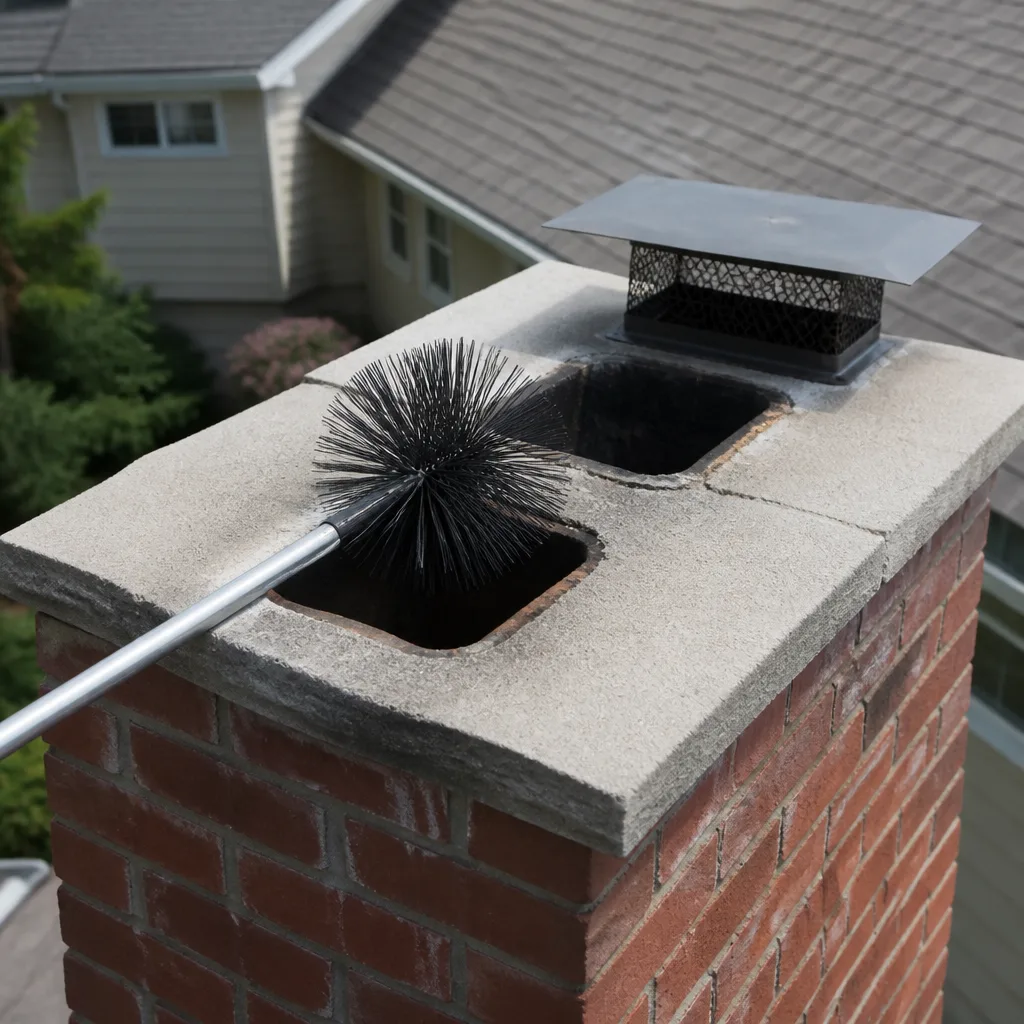
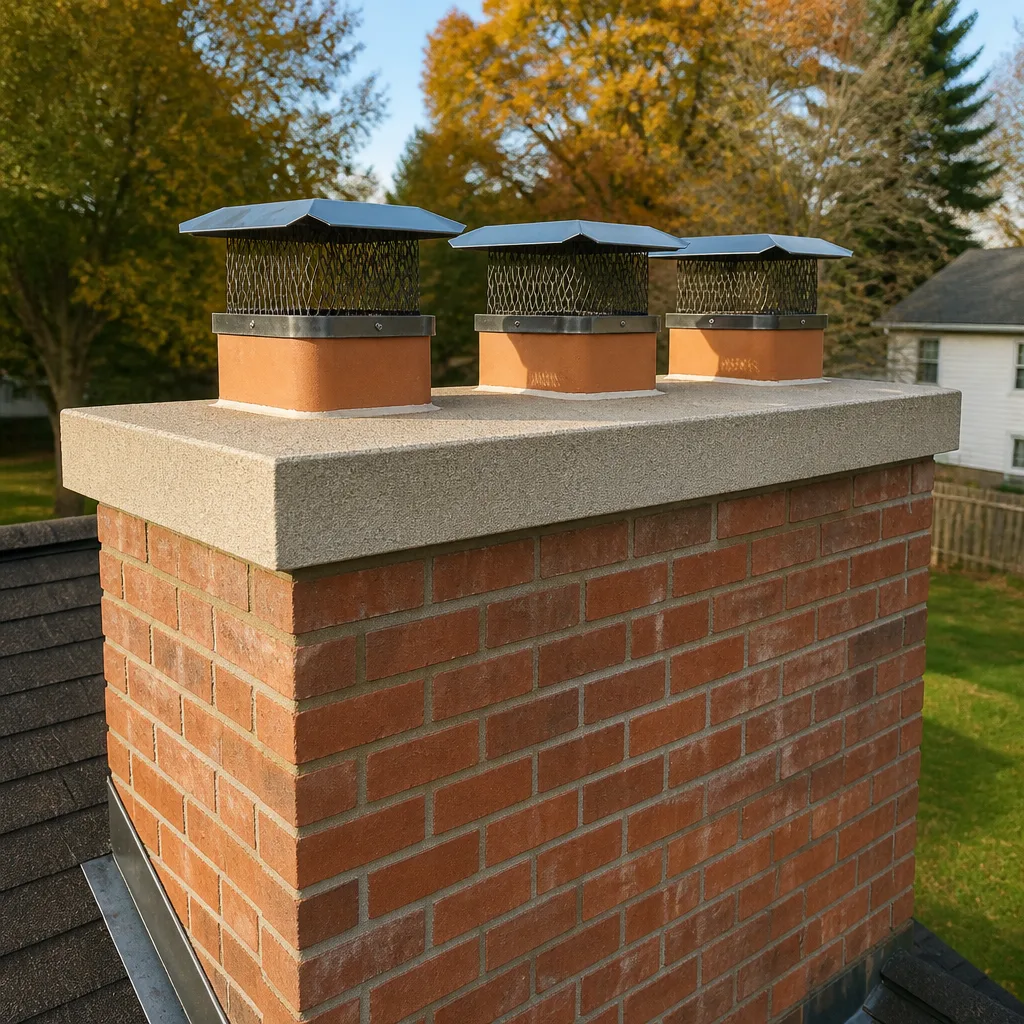
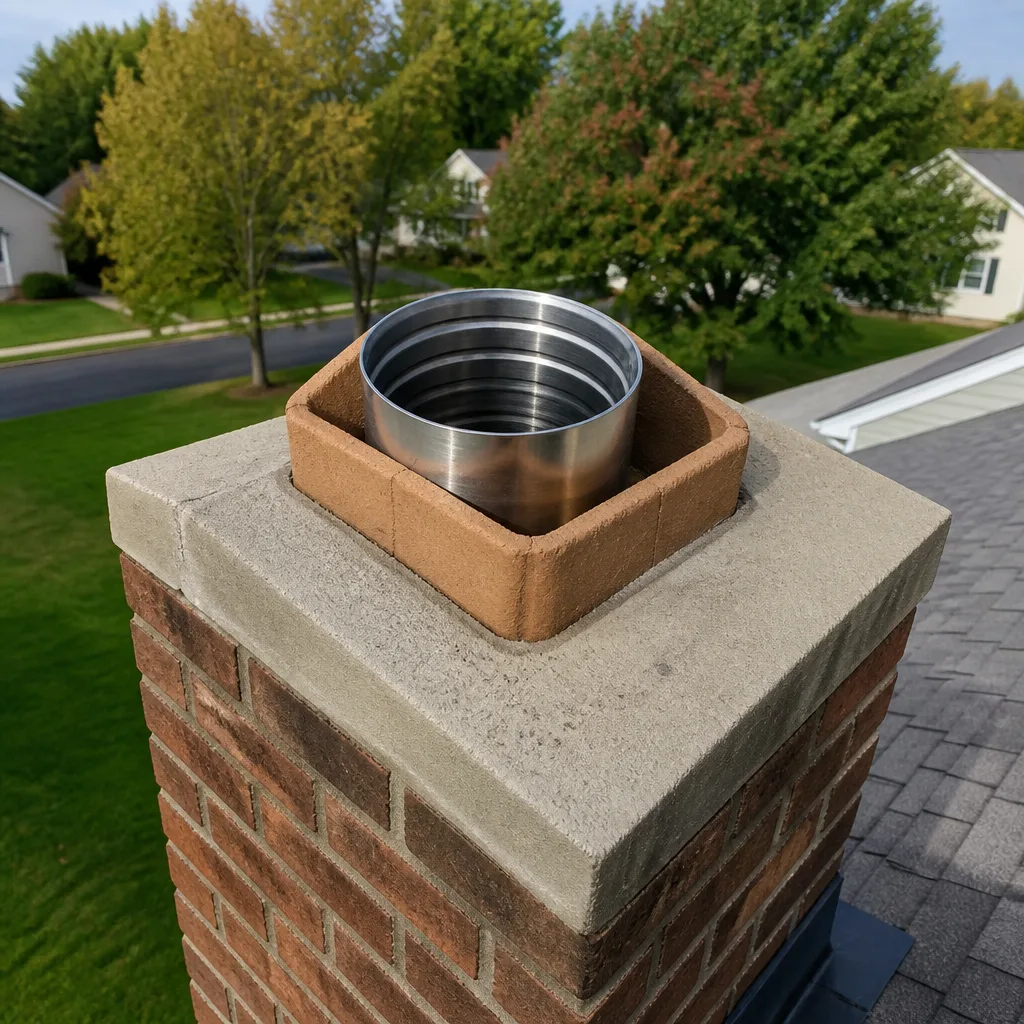
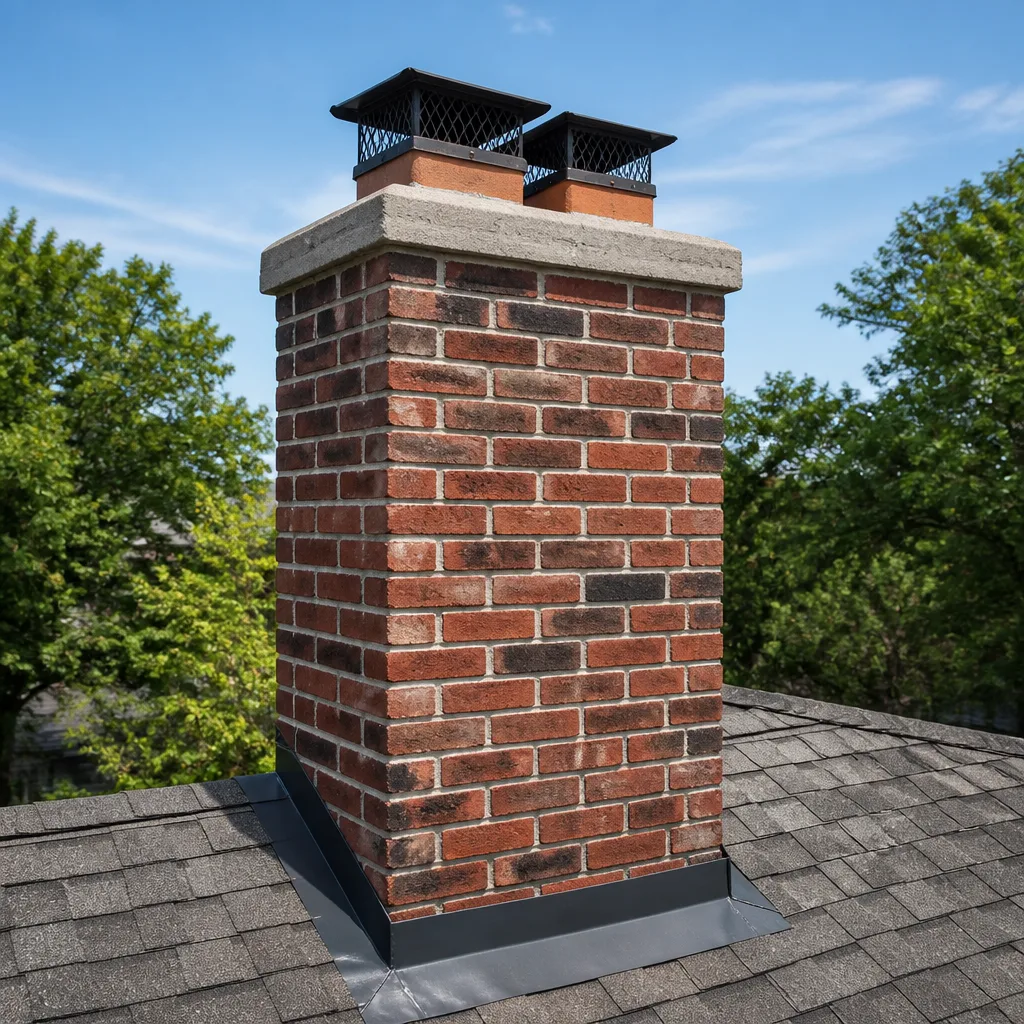
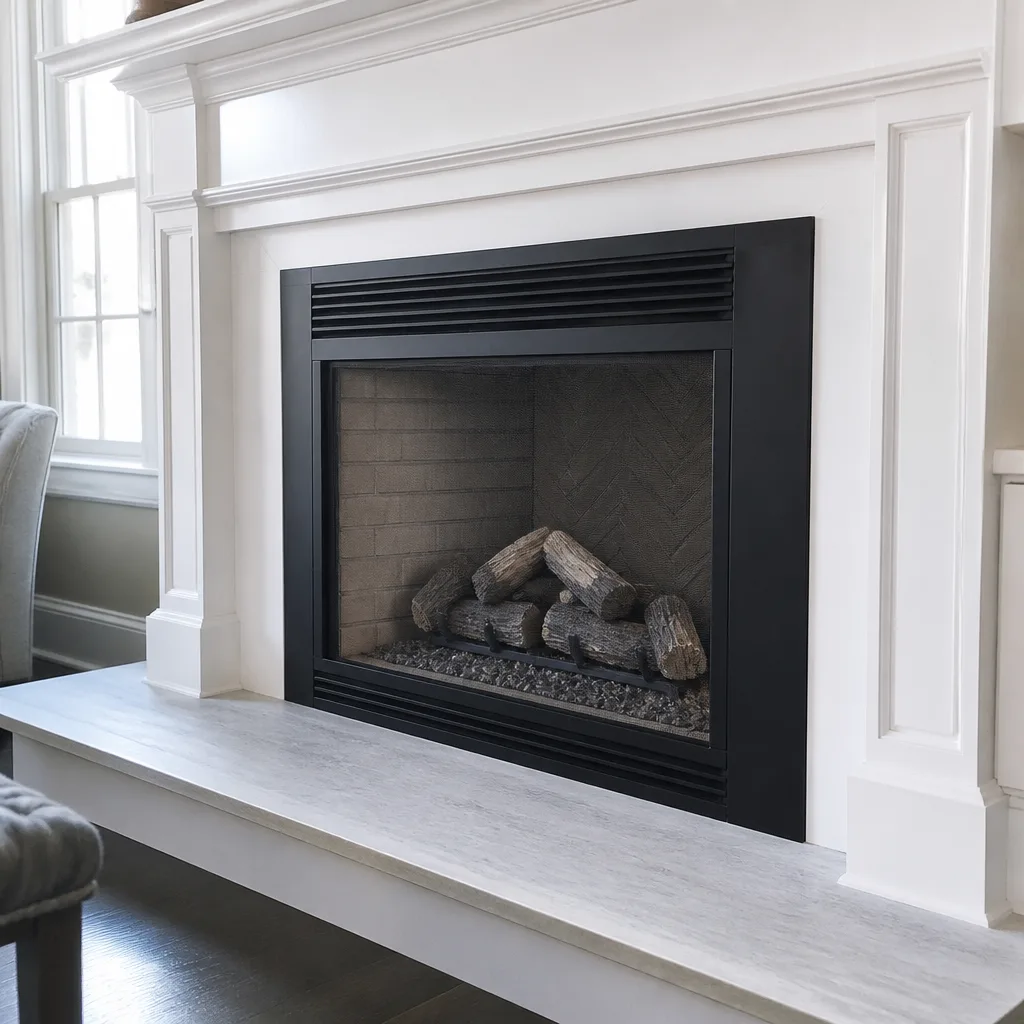
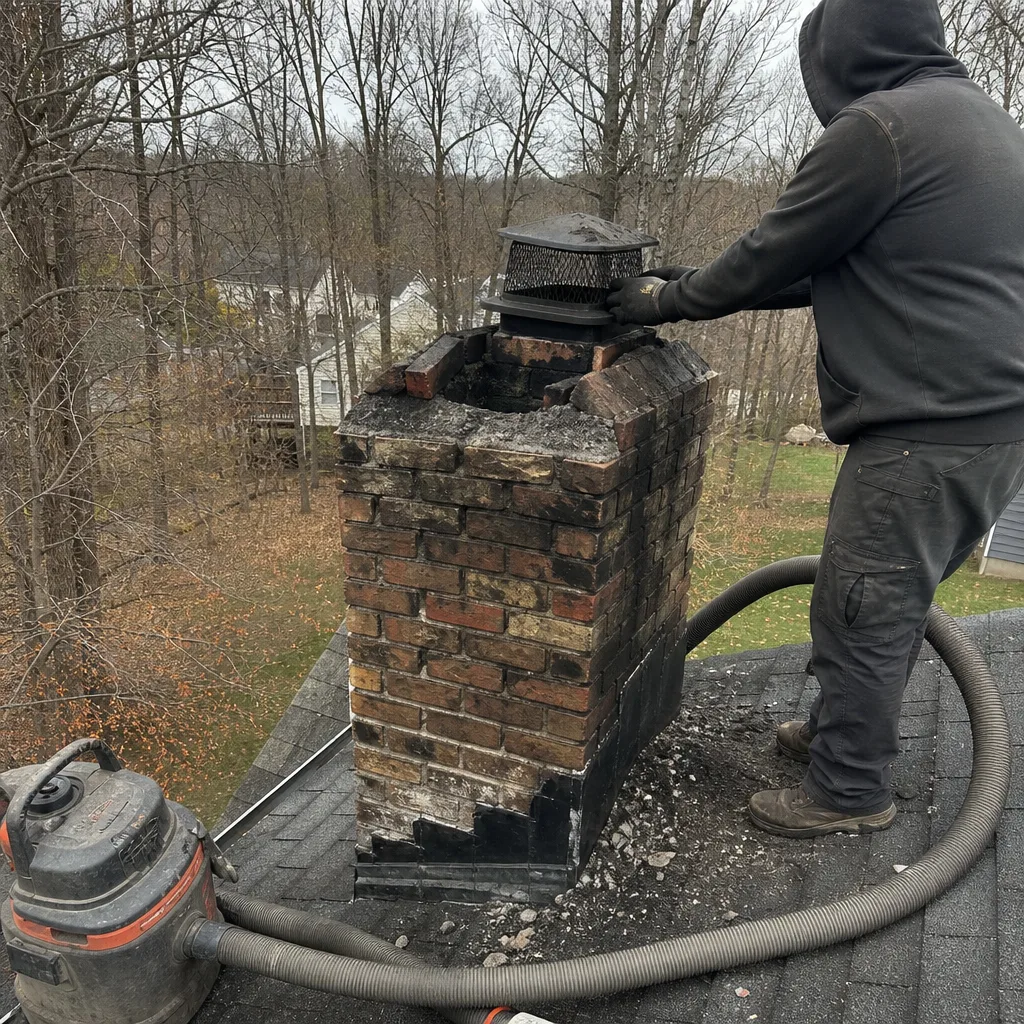 Before
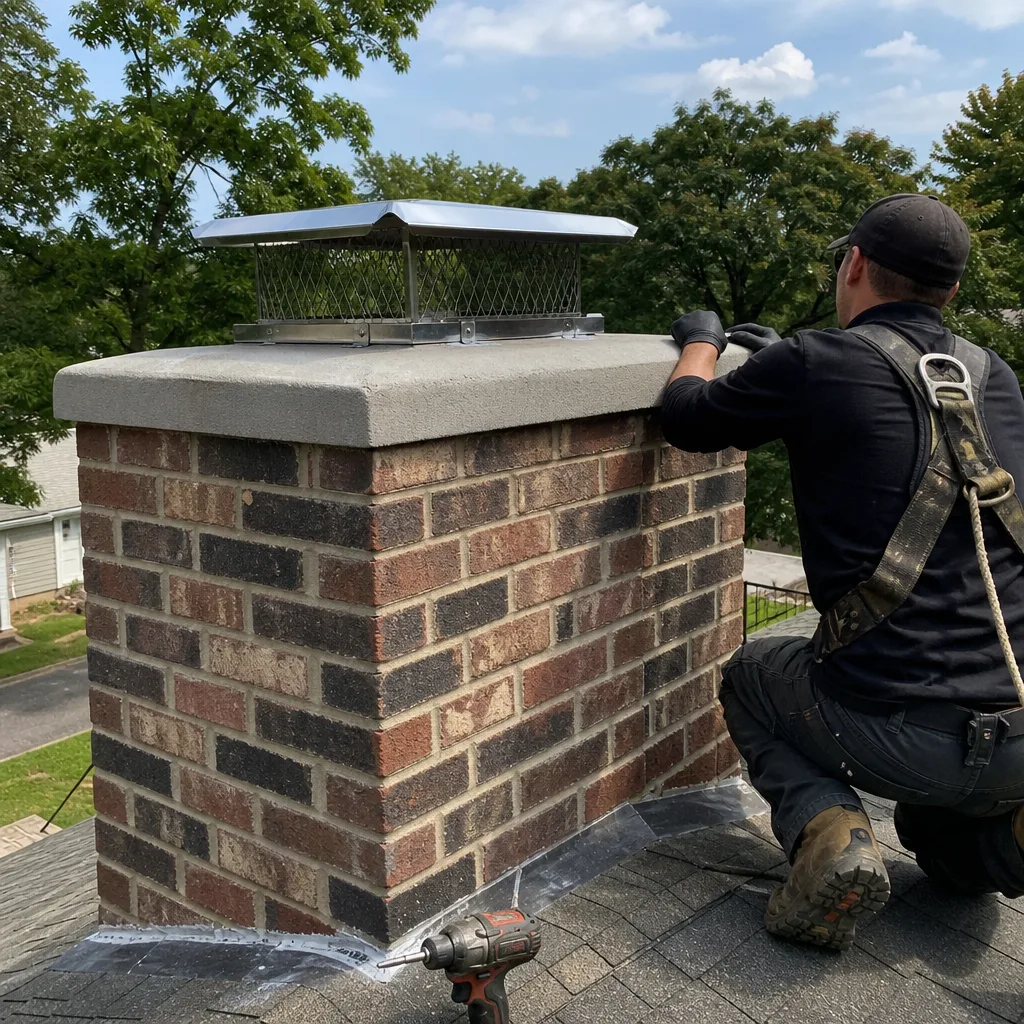 After
After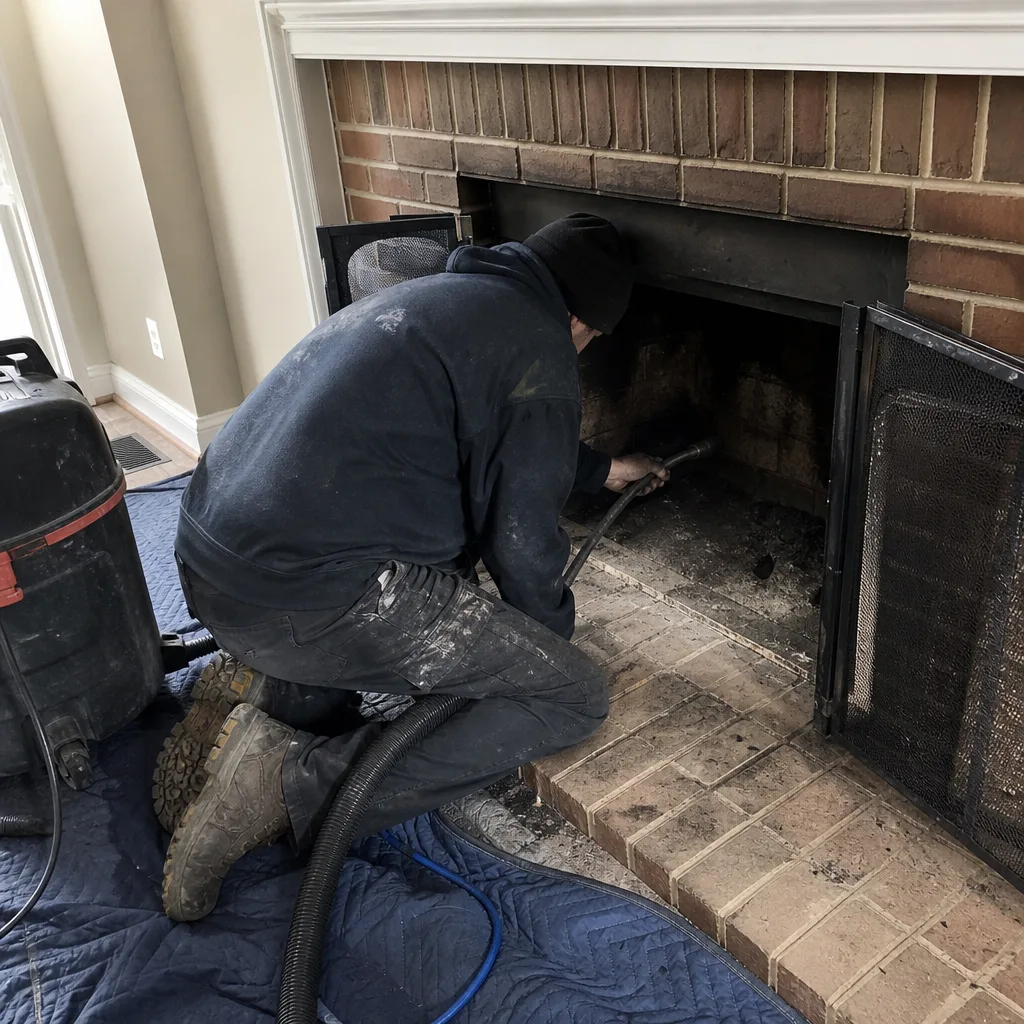 Before
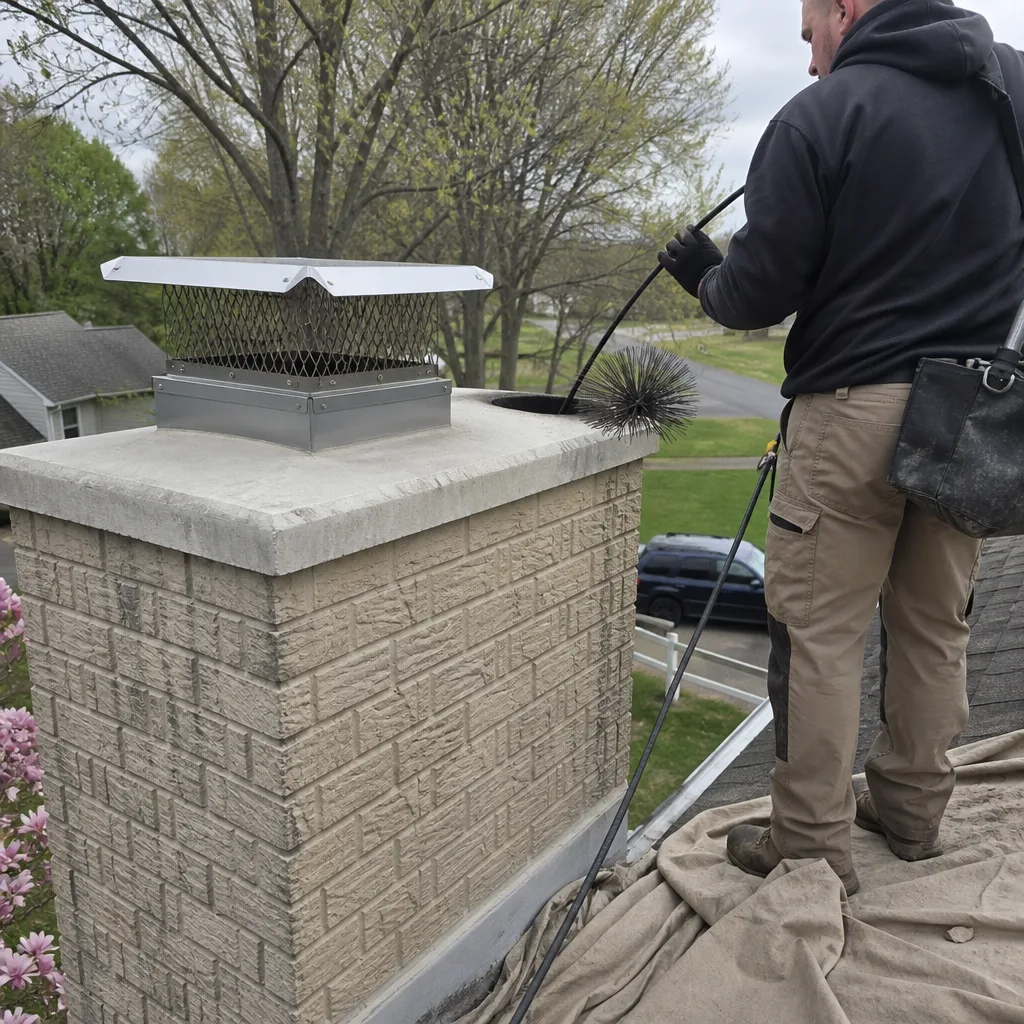 After
After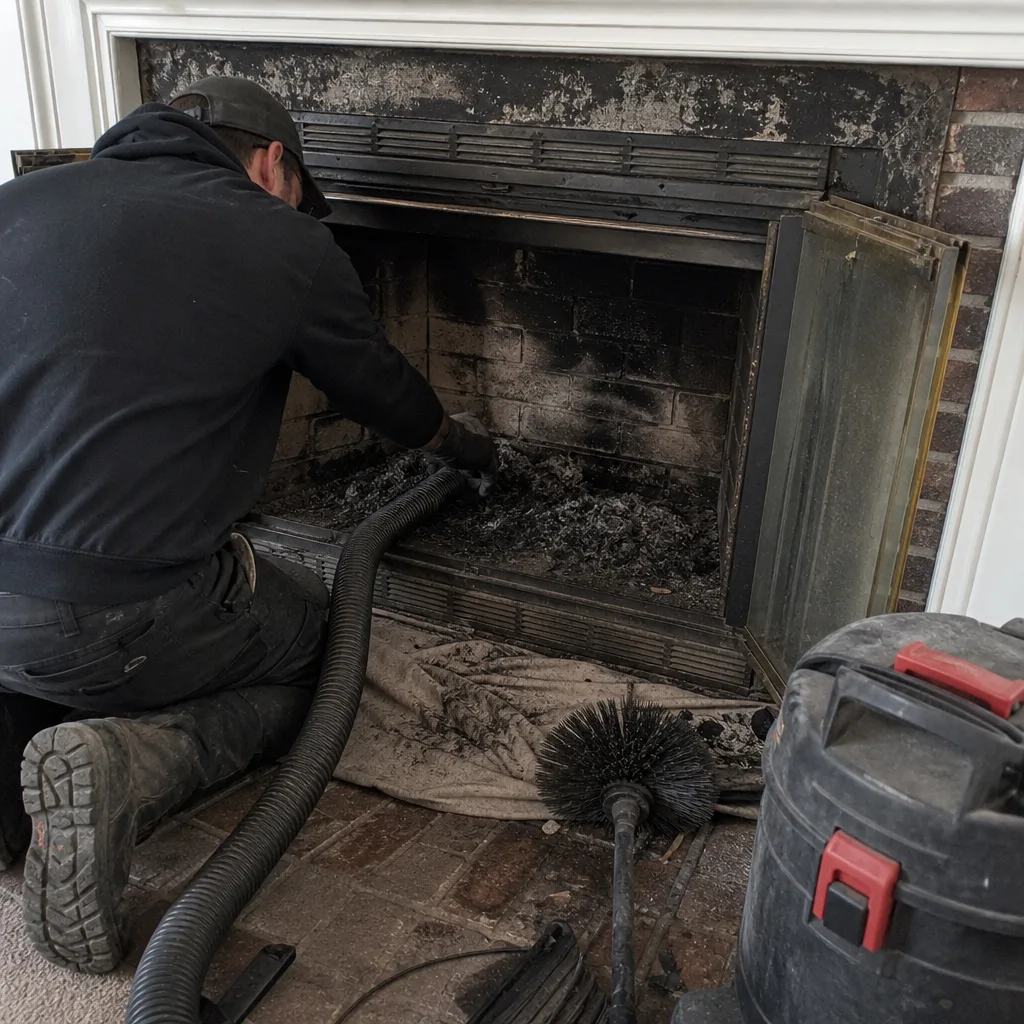 Before
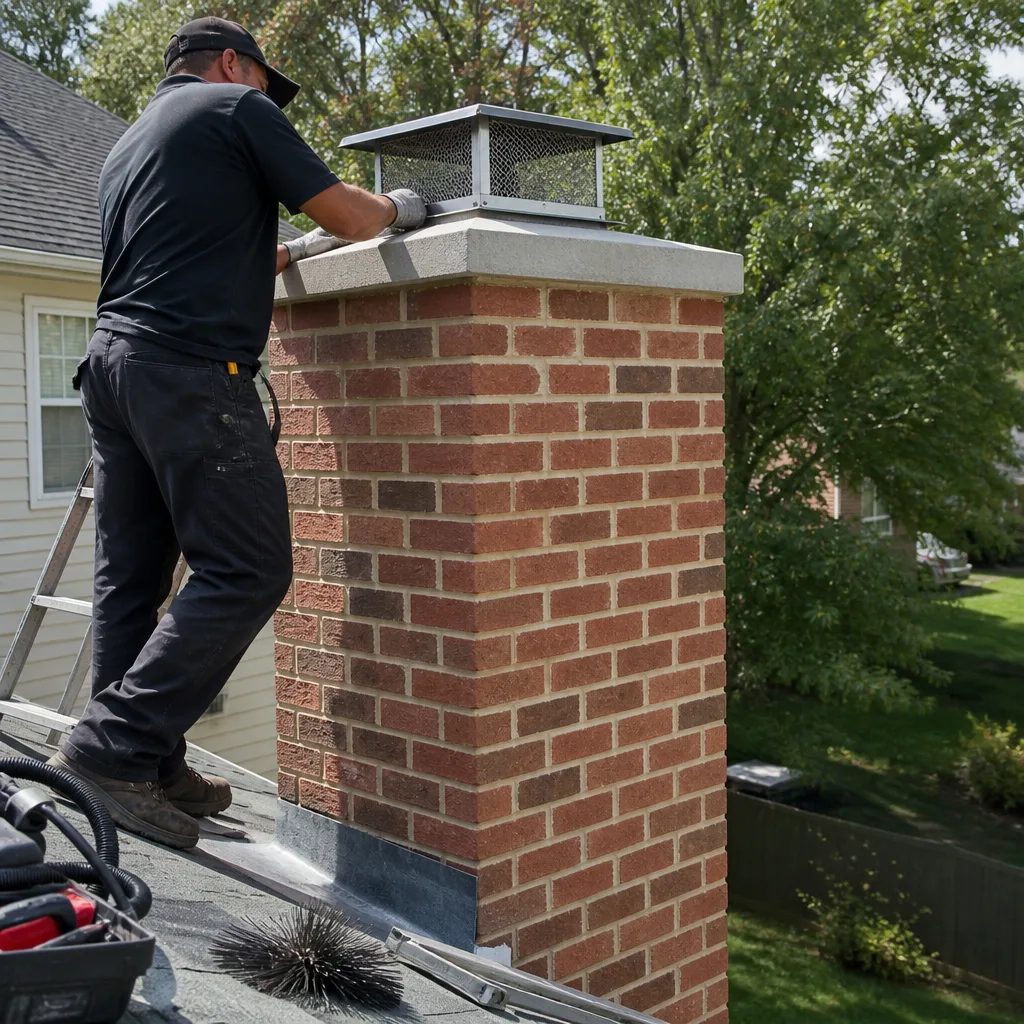 After
AfterChimney Cleaning Warning Signs: A Manassas Homeowner’s Reference Guide
Most chimney warning-sign lists start with smoke pouring into the living room or a smell that hits you in August. Those aren’t warning signs. They’re the aftermath. A chimney fire can burn at 2,000 degrees Fahrenheit inside your flue, and the first hint a homeowner gets is often the sound of a freight train behind the drywall. Our Complete Guide to Chimney Cleaning in Manassas works backward from those emergencies to the earlier, quieter indicators that catchable problems produce weeks or months before they turn into insurance claims. If you own a home in Manassas, your chimney has specific vulnerabilities tied to our freeze-thaw cycles, our housing stock, and the way we burn. We’ll walk through all of it, starting with what the camera sees before you smell anything.
Quick Answer
The earliest warning signs a chimney needs cleaning in Manassas are almost never smells; they’re visual and structural. Look for dark, shiny tar-like glaze on the flue walls (Stage 2 creosote), white mineral staining on the brick exterior, or a floppy disconnected cap visible from the roof. By the time you smell a campfire smell indoors during humid weather, you’re already at Stage 2 or Stage 3 creosote, which costs $450 to $1,200 or more to remediate versus roughly $190 to $275 for a standard cleaning at Stage 1.
Table of Contents
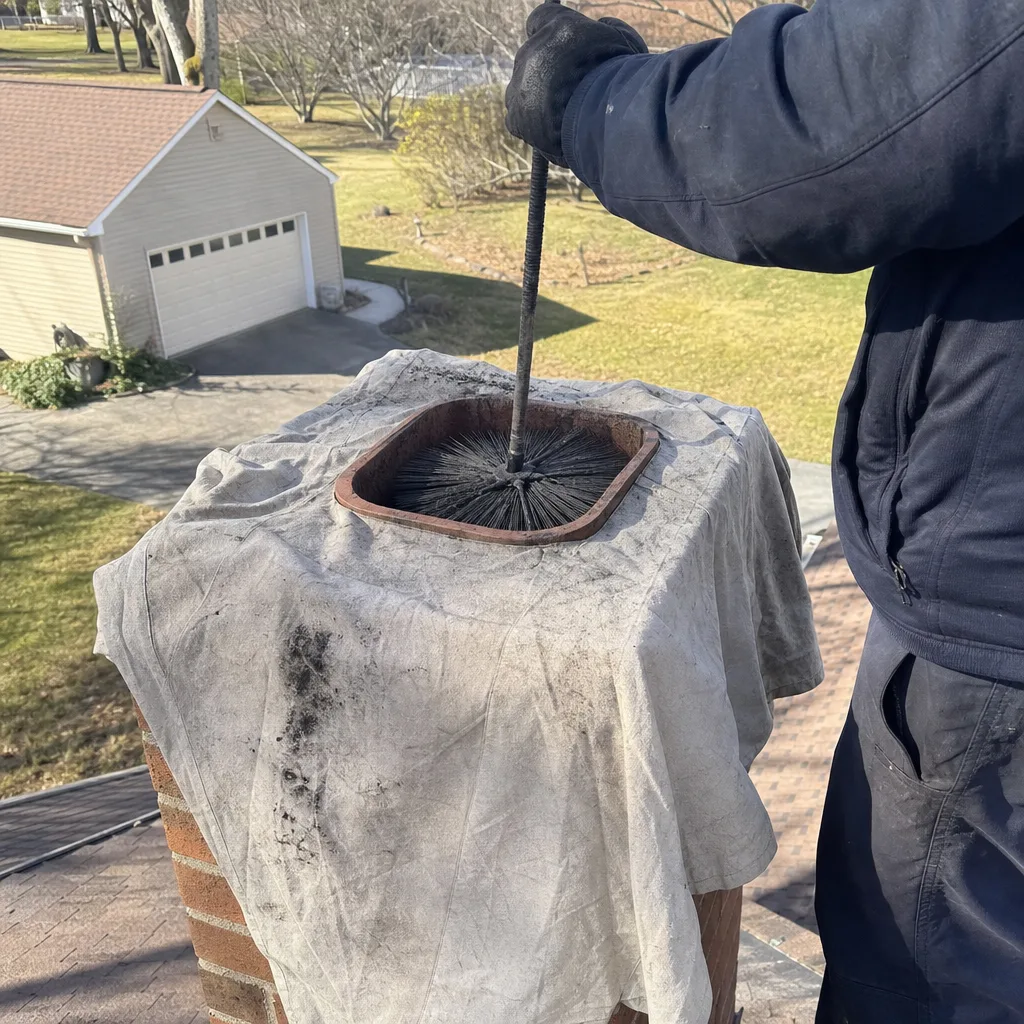
- Warning Signs Visible from Inside the Home
- Warning Signs Visible from the Roofline
- Camera-Only Warning Signs: What a Level 2 Inspection Finds
- The Three Stages of Creosote: What Each Looks Like and Costs
- Manassas-Specific Warning Signs Tied to Local Housing Stock
- What Spalling Sounds Actually Mean (and Why You’re Misreading Them)
- The Decision Threshold: Call This Week vs. Stop Burning Now
- Common Mistakes to Avoid
- When to Call a Professional
- Frequently Asked Questions
BeforeAfterWarning Signs Visible from Inside the Home
These are the signals you can catch without climbing a ladder. Most of them appear in the firebox or on the damper before anything serious happens upstream in the flue. As a Level Two Chimney Manassas home inspection standard, we treat everything visible at the firebox level as preliminary evidence, not a diagnosis. But it tells you when to act.
- A dark brown or black accumulation on the damper plate. Run your finger along the damper (when the fireplace is cold). If it comes back with a flaky black residue, that’s Stage 1 creosote. It’s not dangerous yet, but it’s fuel. Left ignored through one more burning season, it consolidates into Stage 2.
- Gritty soot falling into the firebox between fires. This often means creosote higher in the flue is loosening and dropping. It’s a sign the accumulated layer has built enough mass to shed. In older Manassas homes with unlined or clay-tile-lined flues, the rough tile surface catches more of this than smooth stainless steel liners do.
- A crackling or ticking sound during cooldown. This is not popping embers. It’s the chimney structure contracting after heat cycles, and it can indicate gaps between clay tiles. More on this in the spalling section below.
- White or gray staining on the fireplace surround or nearby walls. Water is getting in somewhere above. That moisture mixes with creosote and produces an acidic slurry that eats mortar joints. The drip line on the wall is usually the last place it shows up.
- Small pieces of tile or brick in the firebox that you didn’t put there. Flue tiles show up in the firebox when the crown or chimney cap has failed above them. We see this in Manassas every spring after hard freeze cycles.
None of these signals mean the chimney is about to fail. They mean the chimney is no longer just dirty. Something is changing, and the next step is finding out whether it’s isolated to the first few feet of the flue or extends upward.
Warning Signs Visible from the Roofline
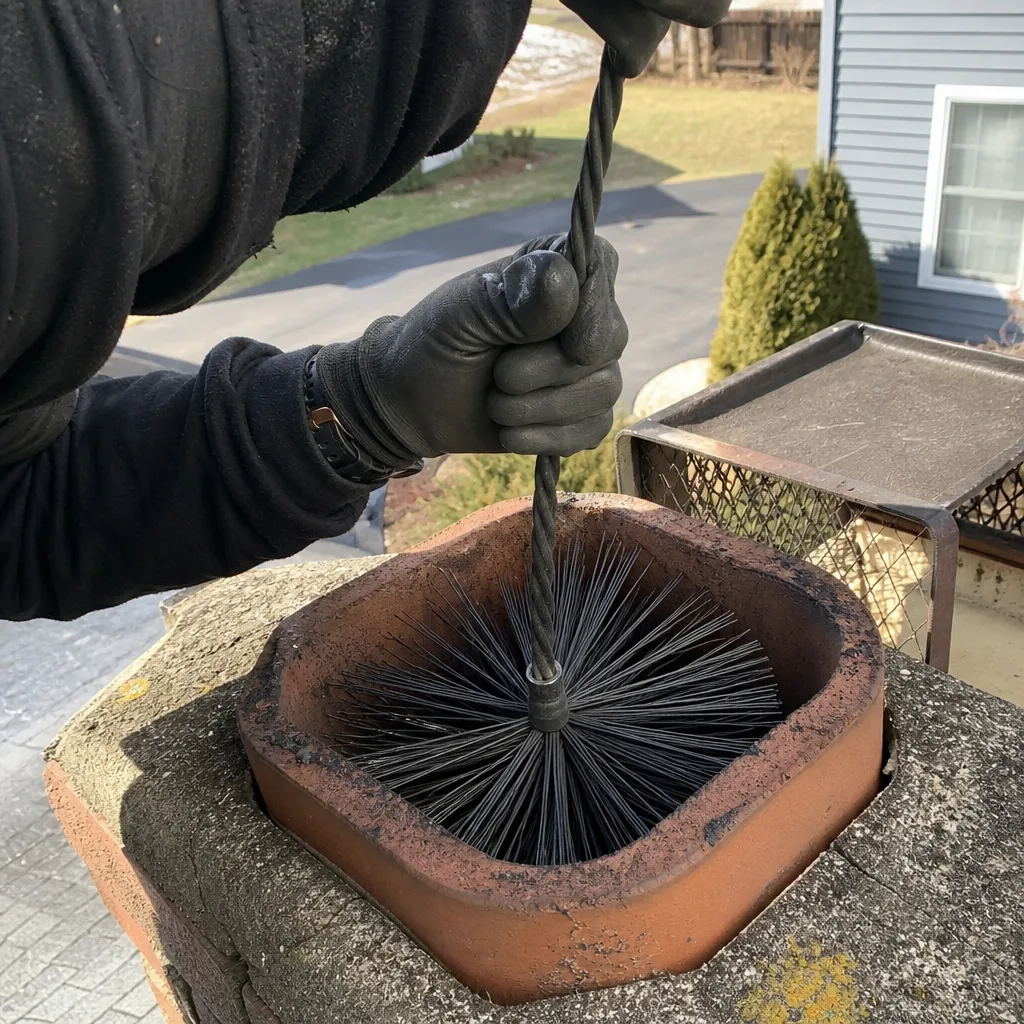
You don’t need to get onto the roof to spot these, but you do need to look at the chimney as a structure, not a backdrop. From the yard, from a second-story window, or from the curb with binoculars, you can see five things that matter.
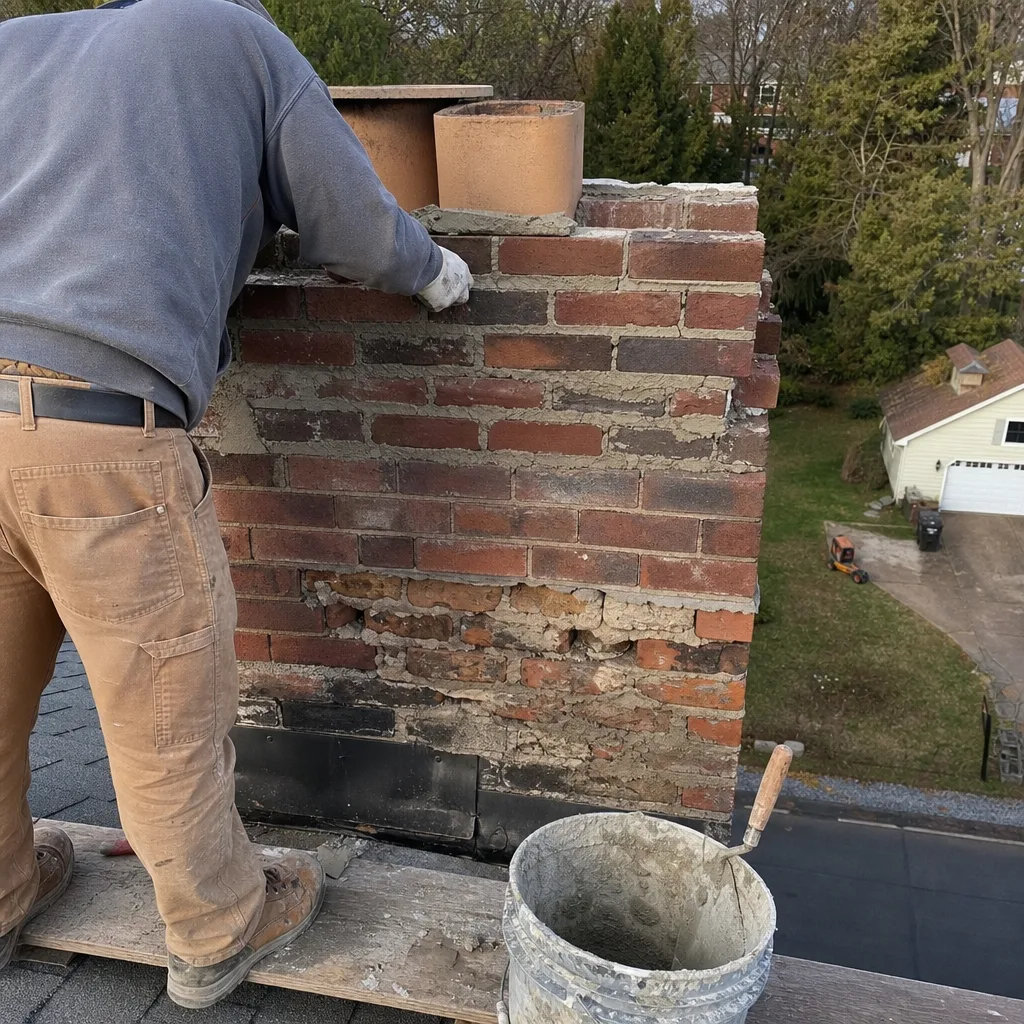
- White, chalky mineral stains spreading across the brick face. This is efflorescence, and in Manassas it is one of the most common early warnings we document. Freeze-thaw cycles force water into the brick’s pore structure. When that water evaporates, it leaves soluble salts behind as a white bloom. If you see it creeping down one side of the chimney, water is getting in, and where water travels through brick, it freezes, expands, and pops the masonry face off over time.
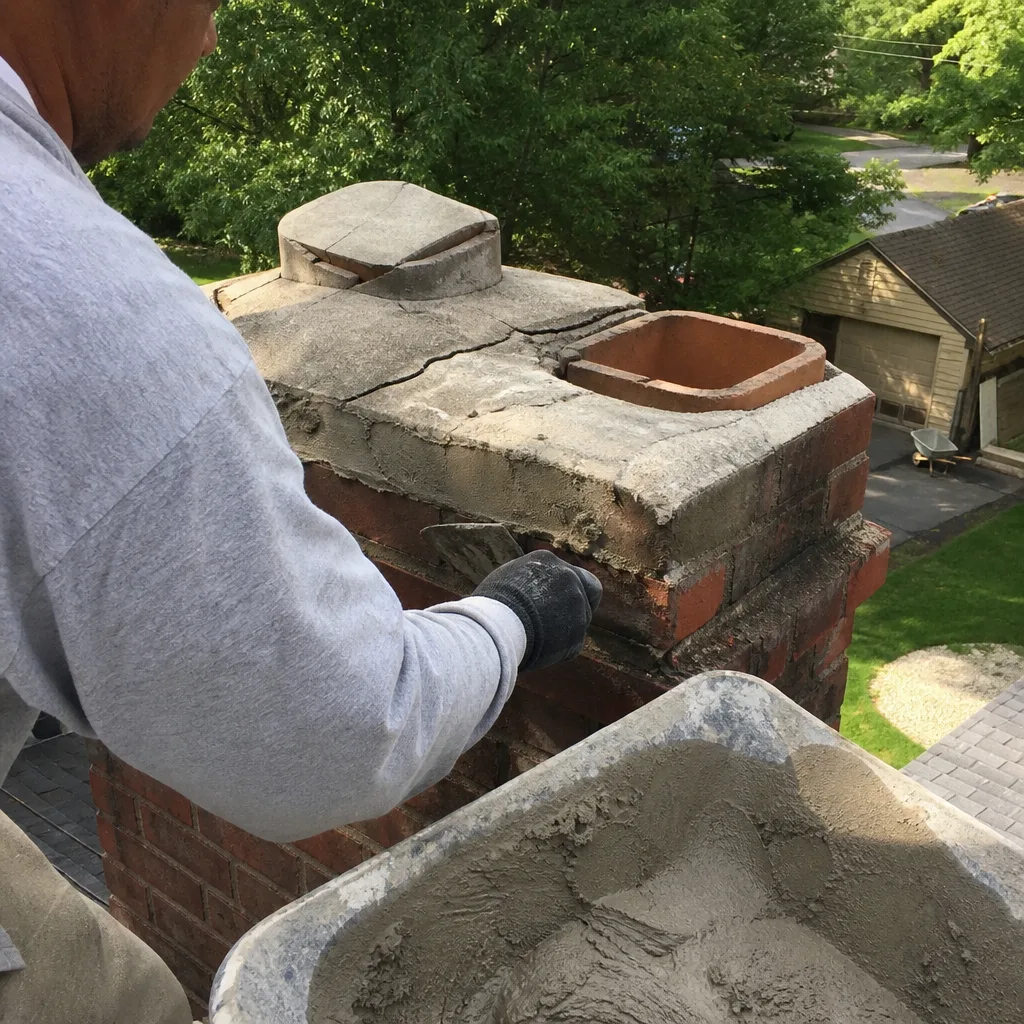
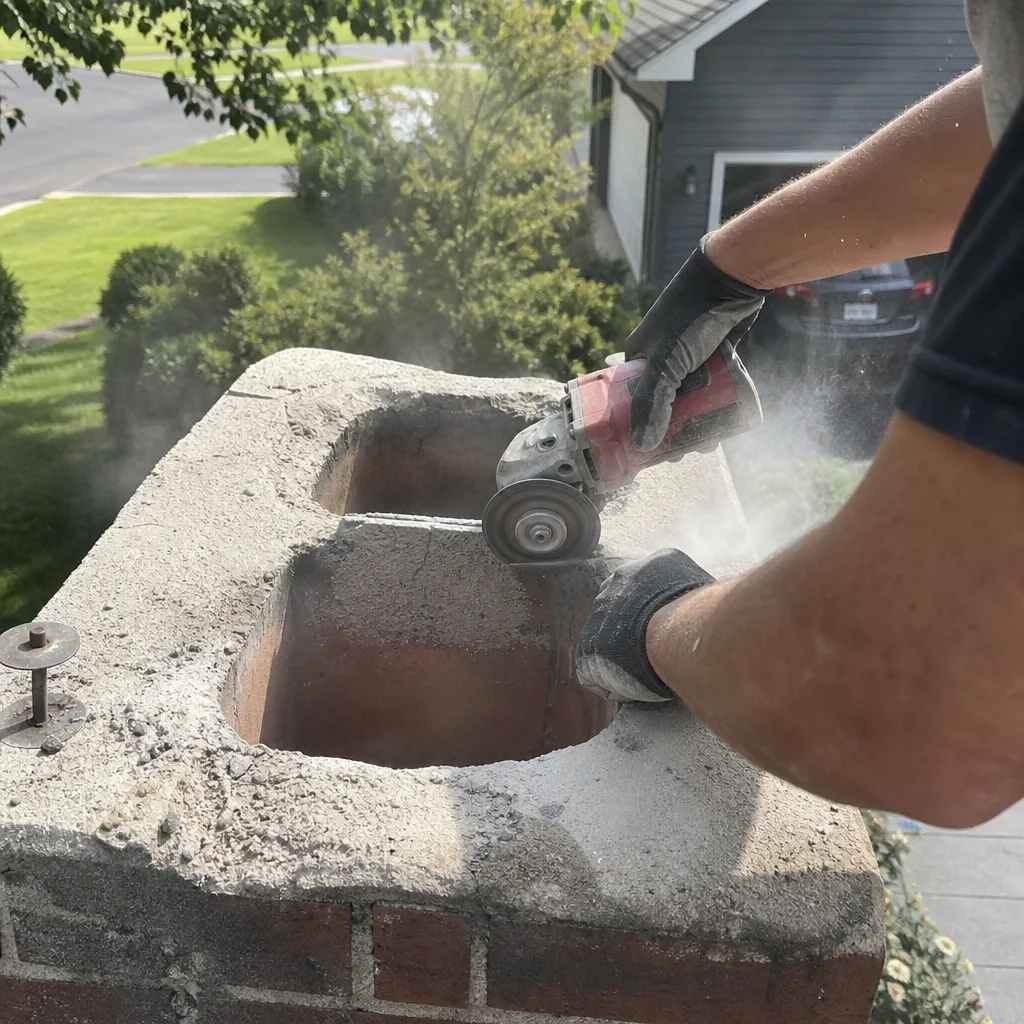
- A missing or tilted chimney cap. From the ground, a cap that’s shifted off-center is visible. A missing cap allows rain directly into the flue, where it hits creosote and turns it into a corrosive paste that etches clay liners. In Manassas, where annual rainfall averages around 42 inches, we see surprising amounts of internal damage from uncapped or poorly fitted caps.
- Dark vertical streaks near the top of the chimney. This is stained moisture, not soot. It indicates a failed crown or missing cap allowing condensate to run down the exterior face. The stains deepen over seasons and signal that the crown is no longer shedding water.
- Brick faces that appear flaked, pitted, or peeling. This is spalling, a masonry term that means the brick surface is physically separating from the body. It starts as small blisters and ends with entire face-plates falling off. By the time you can see spalling from the ground, the crown and the cap are usually well past their service life.
- Sections of brick pushed visibly outward or a slight lean change. In older Manassas chimneys that were built without a proper cricket or with weak side ties, freeze-thaw, and thermal expansion slowly rack the upper section. A structural shift of even half an inch in a 12-foot run is worth a Level 2 inspection immediately.
Camera-Only Warning Signs: What a Level 2 Inspection Finds
Here’s the uncomfortable truth. The most serious warning signs in a chimney produce no visible evidence in the living room and no smell on a damp July afternoon. They live in the flue itself, and the only way to see them is to put a camera down the chimney. Since 2009, we’ve made camera documentation standard on every inspection we perform, and that practice became Clause 4 of the Haven Standard. An inspection that doesn’t include a recorded pass through the flue, tile by tile, isn’t telling you what’s actually there.
A camera scan finds signs that the open-fireplace checklist cannot. These are the signals we document every week in Manassas homes:
- Vertical cracks running between clay tiles. A hairline crack in a clay liner is a direct channel for heat, creosote vapor, and eventually flame to reach the brick shell, combustible framing, or a shared wall. We see these in 1980s-era homes throughout the city, especially along the Dominion Valley and Sudley corridors where the original clay tile liners were installed without enough expansion clearance.
- Tar-glazed creosote that is smooth, shiny, and hardened. When creosote turns from flakes into a black patent-leather coating, you’re looking at Stage 2 or Stage 3. This is the point where a brush sweep no longer removes it. It requires chemical treatment or mechanical rotary cleaning, and we quote it differently because it is a different job.
- Offset flues with an accumulation pattern concentrated at the bend. Many 1970s and 1980s Prince William County ranch homes used offset flues to route around framing. That elbow is where creosote and animal nests collect. A standard brush passes over the bend without cleaning it. The camera catches it immediately because the light pattern changes.
- Missing mortar between tiles, called a voided joint. When the mortar at a tile gap is gone, the next tile sits loose. Loose tiles can dislodge during cleaning or during a chimney fire, collapsing the flue from the inside. On video, we see this as a dark gap between tile segments, sometimes with tile fragments resting at the bottom.
- Animal nesting material or a dead raccoon, squirrel, or bird at the smoke shelf. Animals in chimneys are common, and the debris they leave is far more dangerous than the animal. Nesting material is typically fine, dry twigs and fluff that ignites instantly. A camera pass reveals exactly where the nest sits and whether it’s blocking the flue or just loose debris.
None of these findings are visible from the fireplace opening. All of them are discoverable only with a borescope or chimney camera, and every one of them changes the job from a $190 cleaning to a repair question.
The Three Stages of Creosote: What Each Looks Like and Costs
Creosote is not a single substance. It’s a class of combustion byproducts that condenses on flue walls in three distinct states. Understanding what stage you have matters because it determines what you’ll pay. Here is what each stage looks like on camera footage and what it costs to address in Manassas.
Stage 1: Flaky Soot (Prevention Window)
On camera, Stage 1 creosote appears as a fine, dusty black film or scattered flakes. It looks like barbecue ash stuck to a wall. It’s dry, not sticky.
Cost to remediate: $190 to $275 for a standard Level 2 chimney cleaning, which includes a full camera inspection before and after, a written price before work starts, and a documented photo record. This is the cheapest possible intervention, and it is the stage where we prefer to meet every chimney in Manassas.
Stage 2: Hard, Shiny, Tar-Like Glaze (Early Warning, Usually Still Preventable)
On camera, Stage 2 looks like the inside of a cast-iron skillet that hasn’t been scrubbed in a decade. It is smooth, reflective, and dark brown to black. It resists a standard wire brush. It is fuel, and it burns at high heat if ignited.
Cost to remediate: $450 to $900, depending on flue length and the degree of glazing. This usually requires rotary mechanical cleaning with nylon or steel chains, or a chemical treatment such as a PCR or ACS conversion followed by mechanical removal. If Stage 2 has begun to etch a clay liner, we may recommend a HeatShield resurfacing or a stainless liner from DuraFlex or Olympia Chimney, which changes the job from a cleaning to a repair.
Stage 3: Crystallized, Hardened Tar (Fire Hazard, Requires Specialized Removal)
On camera, Stage 3 looks like black rock candy that has grown in place. It is brittle to the point of cracking under the camera’s push, but it is thick and structurally adherent. It typically forms when a homeowner burns unseasoned wood for multiple seasons or burns soft pine consistently. It is concentrated fuel.
Cost to remediate: $900 to $1,400 or more, sometimes requiring multiple chemical treatment passes and rotary removal over two sessions. In many cases, Stage 3 creosote has already compromised the clay liner behind it, and the recommendation shifts to a stainless steel liner installation, which in Manassas typically runs $3,400 to $6,500 depending on chimney height, access, and whether a new cap and crown are included.
If any of this sounds alarmist, we’d rather you understand the numbers than see them for the first time on an emergency invoice.
Manassas-Specific Warning Signs Tied to Local Housing Stock
Not all chimney warning signs show up in generic checklists. Some are specific to what Manassas homes were built with, and when.
- White efflorescence staining on older brick chimneys in Old Town and West Gate. We already covered the mechanism. But what’s specific to Manassas is the age and composition of the brick. Homes built before the 1960s often used softer, low-fired brick that absorbs water aggressively. The same freeze-thaw cycle that produces efflorescence also causes face spalling in these older units faster than in modern brick veneer. If you own a prewar or early postwar home in Manassas and see a chalky bloom forming, treat it as a countdown, not a cosmetic issue.
- Offset-flue draft problems in 1970s and 1980s Prince William County ranch homes. The split-level and ranch homes that dominate Sudley, Yorkshire, and the neighborhoods along Route 28 frequently used offset flues to bypass framing members. These bends collect creosote at the elbow and produce weak draft that homeowners feel as smoke lingering near the firebox on cold starts. If your house was built between 1972 and 1988 and the fireplace has always been “lazy” on startup, the flue bend is almost certainly the reason. Camera documentation makes this visible in seconds.
- Chimney cap failure from ice damming. Manassas sits in a climate zone where snow melts and refreezes along roof edges. On chimneys that penetrate near the eaves, ice can form a dam at the cap’s lower edge and wrench the cap plate loose when the freeze expands. We see cap failures every March and April. The initial warning is a loose, rattling cap in wind, or a sudden water drip in the firebox after the first thaw.
If you’re seeing any of these and you live in Manassas, the chimney is not misbehaving randomly. It is responding to the exact conditions our housing stock was built through.
What Spalling Sounds Actually Mean (and Why You’re Misreading Them)
During a fire, most homeowners hear a range of noises from the firebox and flue. Popping, creaking, ticking. The instinct is to attribute all of it to the wood and the metal expanding. But spalling has a signature, and once you’ve heard it on a recorded flue, you learn to separate it.
Spalling refers to the flaking or breaking off of masonry surfaces. Inside a chimney, it happens to the clay liner tiles or the brick shell when water has penetrated and frozen, or when thermal cycling has exceeded the material’s tolerance. What you hear during burning is not the wood. It is the sound of small pieces of clay or brick releasing from the liner and falling into the flue, or the sound of a cracked tile face shifting slightly as it heats. On camera, we see this as missing tile faces, fractured segments, and loose pieces at the smoke shelf.
The structural significance is simple. A spalling liner is no longer a continuous fire barrier. The gaps expose the brick shell, and the brick shell exposes whatever is behind it, which in many Manassas townhomes and knock-downs is framing and insulation. We don’t describe this to scare anyone. We describe it because the only way to know whether the sound you’re hearing is cosmetic or structural is to put a camera through the flue and look at the tile surfaces.
If you hear a sharp, irregular tick or a brief crunch during a fire, and you can’t reproduce it with the damper closed, stop burning for the evening and schedule a Level 2 inspection. Same week, not same month.
The Decision Threshold: Call This Week vs. Stop Burning Now
Here is the line we draw for our own customers in Manassas. Use it as a triage guide.
Call this week for a cleaning or Level 2 inspection if:
- You see dark flaky buildup on the damper or a black film around the firebox opening, but no odor and no visible damage.
- You notice minor efflorescence starting on the chimney exterior but no flaking brick.
- The fireplace has burned more than 60 times since its last cleaning and you honestly can’t remember the last time anyone looked at it.
- You’ve moved into a Manassas home built before 1990 and have no record of the previous owner’s chimney service history. The Chimney Cleaning & Sweep in Manassas page explains what a standard cleaning includes and what we document.
- You saw a small animal on the roof near the chimney or heard scratching in the flue on two or more mornings.
Stop burning immediately and schedule a Level 2 inspection before the next fire if:
- You smell creosote indoors in humid weather when the fireplace is cold. That odor means Stage 2 or Stage 3 creosote has built enough mass to off-gas. The brush will not fix it.
- You hear a deep rumble or freight-train sound while the fire is burning. That’s a chimney fire in progress. Evacuate and call 911 first, then call us. A professional inspection is required before the chimney is used again.
- You see pieces of tile, brick, or mortar in the firebox.
- Smoke rolls back into the room on a consistent basis, not just a single cold-start puff.
- You see a crack running through the chimney’s exterior brick face from ground to crown, or a visible lean.
- Water is dripping or weeping through the fireplace after rain.
Stopping a fire is free. Burning one more load through a structurally damaged flue is the expensive version of a warning sign.
Common Mistakes to Avoid
- Using a garbage bag and a broom to “sweep” from the firebox upward. Every year we see homeowners who tried to clean their flue from the bottom with improvised tools. The result is creosote dumped into the smoke chamber and a false sense that the chimney is clean. The camera still shows heavy buildup above the reach point.
- Burning a “creosote log” as a substitute for an actual cleaning. Creosote removal logs soften Stage 1 buildup in some cases. They do not remove Stage 2 or Stage 3 glaze, and they do not repair a cracked liner or a spalling tile. In Manassas, where seasonal humidity accelerates creosote absorption, we treat these logs as a maintenance aid between professional cleanings, not a replacement for one.
- Assuming a home inspection at purchase counts as a chimney inspection. Most real estate home inspectors do not run a camera through the flue. They note what is visible from the roof or the firebox. A Level 2 inspection is a different service with different documentation standards.
- Ignoring a water problem in the chimney because the fireplace “still works fine.” Water is the single largest contributor to masonry failures and liner cracking in Manassas. The fire can work perfectly for years while water does the real damage silently.
- Burning unseasoned wood because “everyone does it.” Wet wood cools the flue gases and condenses creosote at a much faster rate. Our camera footage from Manassas homes that burn green wood is consistently worse at the same fire count than homes that burn properly seasoned hardwood.
- Waiting to replace a failed chimney cap until the next cleaning. A cap that has come loose is actively admitting water every time it rains. The damage compounds weekly. Call now, not later. The Chimney Repair in Manassas page covers what a cap and crown repair actually involves and what we charge.
When to Call a Professional
A professional chimney company should be called whenever you’ve seen any of the warning signs above and want to know whether what you’re looking at is Stage 1 creosote or a structural failure; see our step-by-step guide to hiring a chimney cleaning contractor in Manassas for what to ask before you book. The standard is a camera scan, not a flashlight from the roof. If a company quotes a price without mentioning camera documentation, ask why. Level Two Chimney Manassas includes a camera inspection and a documented photo record on every visit, with a written price before anyone starts. We follow NFPA 211 Level 2 standards on every inspection we perform, and we operate under the Haven Standard, which requires the written price and written scope before work begins. Level Two Chimney Manassas offers free estimates in Manassas, call (571) 946-2300.
Frequently Asked Questions
A standard chimney cleaning in Manassas typically costs between $190 and $275, which includes a camera scan before and after, a written price before work starts, and a photo record when the job is done. That price assumes Stage 1 creosote and a flue without structural surprises. If the camera finds Stage 2 or Stage 3 buildup, the job becomes a mechanical or chemical cleaning and the price shifts to the $450 to $1,400 range. We always show you the footage before we quote anything, so you can see exactly what we’re charging to remove. Call (571) 946-2300 for an exact written quote, and remember that Level Two always provides a written price before work begins.
The National Fire Protection Association says chimneys should be swept when there is 1/8 inch of creosote buildup, but functionally, most Manassas homeowners burn often enough that an annual cleaning is the right interval. If you burn more than 60 fires per season, or you burn any amount of pine or unseasoned wood, you may need twice a year. The only way to know is a camera inspection, not a guess from the firebox.
You are rolling the dice that the creosote buildup stays below the burn threshold. If it doesn’t, a chimney fire can crack the liner, warp the damper, and spread into surrounding framing before you can react. We see homes in Manassas every year where a skipped cleaning turned a $200 job into a $4,000 liner replacement. The damage compounds the longer you wait, because creosote absorbs moisture from the air and turns acidic against clay liners even when the fireplace isn’t being used.
You can photograph the firebox and the damper with a phone, but you cannot see more than the first few feet of flue that way, which is why we covered DIY vs professional chimney cleaning for Manassas homeowners in a separate guide. The average flue in a Manassas two-story home runs 15 to 25 feet, with bends, offsets, and a smoke chamber behind the damper. A proper Level 2 inspection uses a rigid or semi-rigid camera system designed to pass through the entire flue and record the tile surfaces continuously. The distinction matters because most of the damage we find is in the upper third of the flue, beyond any homemade inspection’s reach.
Creosote sweeping logs are a maintenance product, not a cleaning method. They can loosen Stage 1 flaky creosote so that it falls to the smoke shelf, but they do not remove Stage 2 or Stage 3 glaze, they do not replace a professional sweeping, and they do not detect a cracked liner. If you use one, make sure a professional cleaning follows within the month, since loosened creosote at the smoke shelf is still fuel.
A Level 2 inspection is the standard defined by NFPA 211 for any chimney that has changed ownership, changed fuel type, suffered a chimney fire, or not been inspected in years. It includes everything in a Level 1 visual check plus a camera scan of the flue interior, an assessment of the crown and cap, and documentation. At Level Two Chimney Manassas, this camera scan has been standard since 2009, and Clause 4 of the Haven Standard requires a documented photo record on every job. It is not an add-on; it’s the only way we work. Fireplace Services in Manassas may be relevant if the inspection extends to the firebox, dampers, or gas logs.
The Bottom Line
A chimney that “works fine” is not the same thing as a chimney that is safe. Warning signs operate on a spectrum from visible to invisible, and the invisible ones are the expensive ones. In Manassas, your chimney faces specific threats from freeze-thaw cycles, older brick, offset flues in ranch-era homes, and seasonal burning habits that accelerate creosote formation. The dividing line is a camera. Level Two Chimney Manassas has been running camera scans on every chimney since 2009, and we quote in writing before work starts. If you’ve seen any of the signs in this guide, or you can’t remember when your chimney was last looked at, explore our more guides & resources or call (571) 946-2300. The estimate is free, and the footage is yours to keep.
Written by Corrine Halstead, Owner at Level Two Chimney Manassas, serving Manassas since 2009.