
Last updated September 20, 2026
Level 1 sweep and inspection to the NFPA 211 annual standard - flue, crown, cap, and flashing checked and photographed
Chimney sweep logs do not sweep chimneys. They loosen some creosote - which then falls where a brush and vacuum still have to collect it.
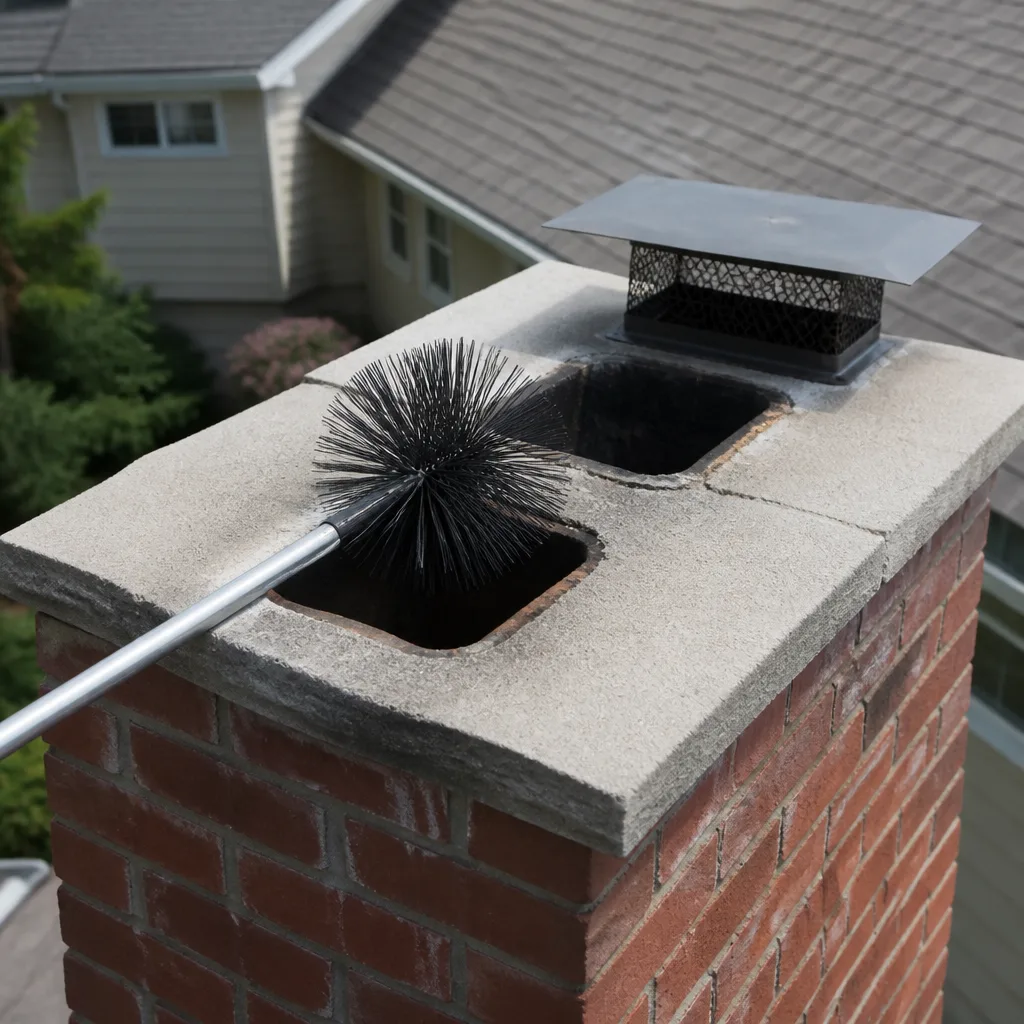
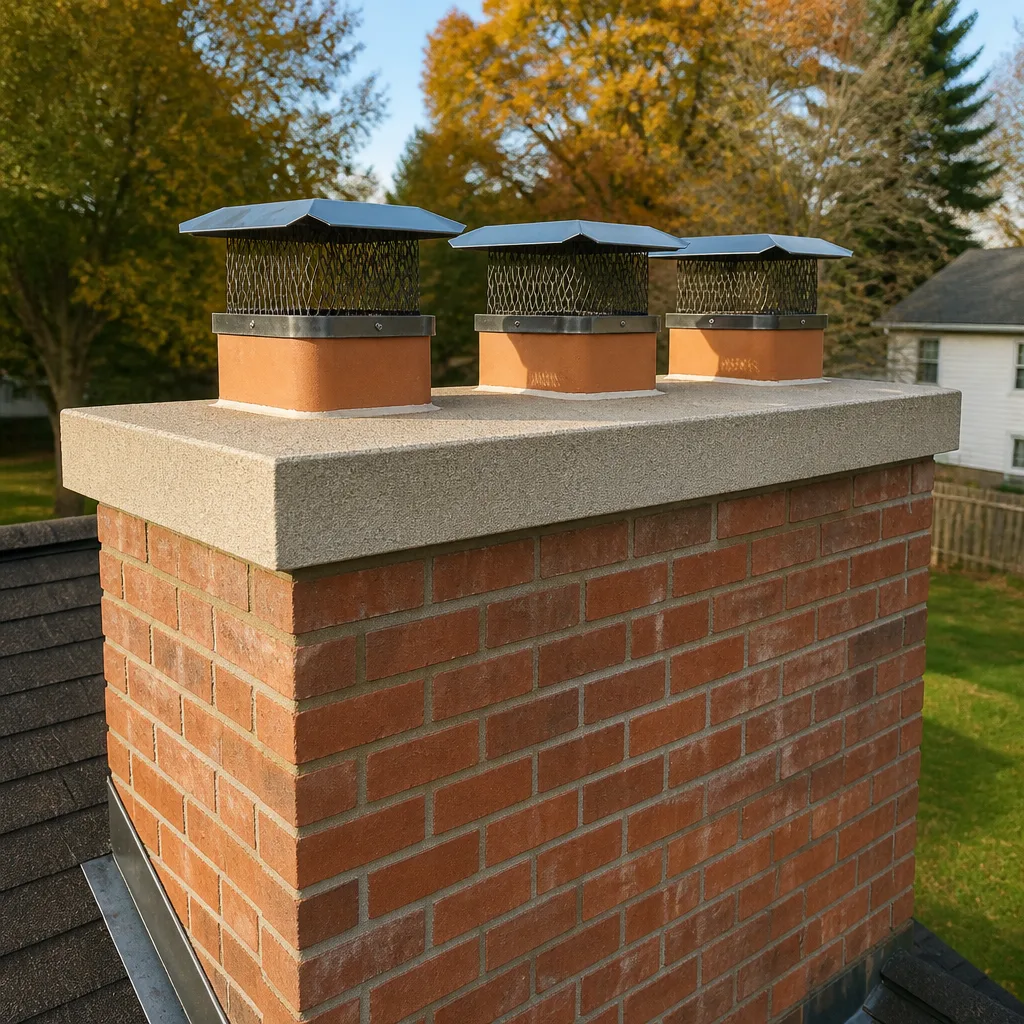
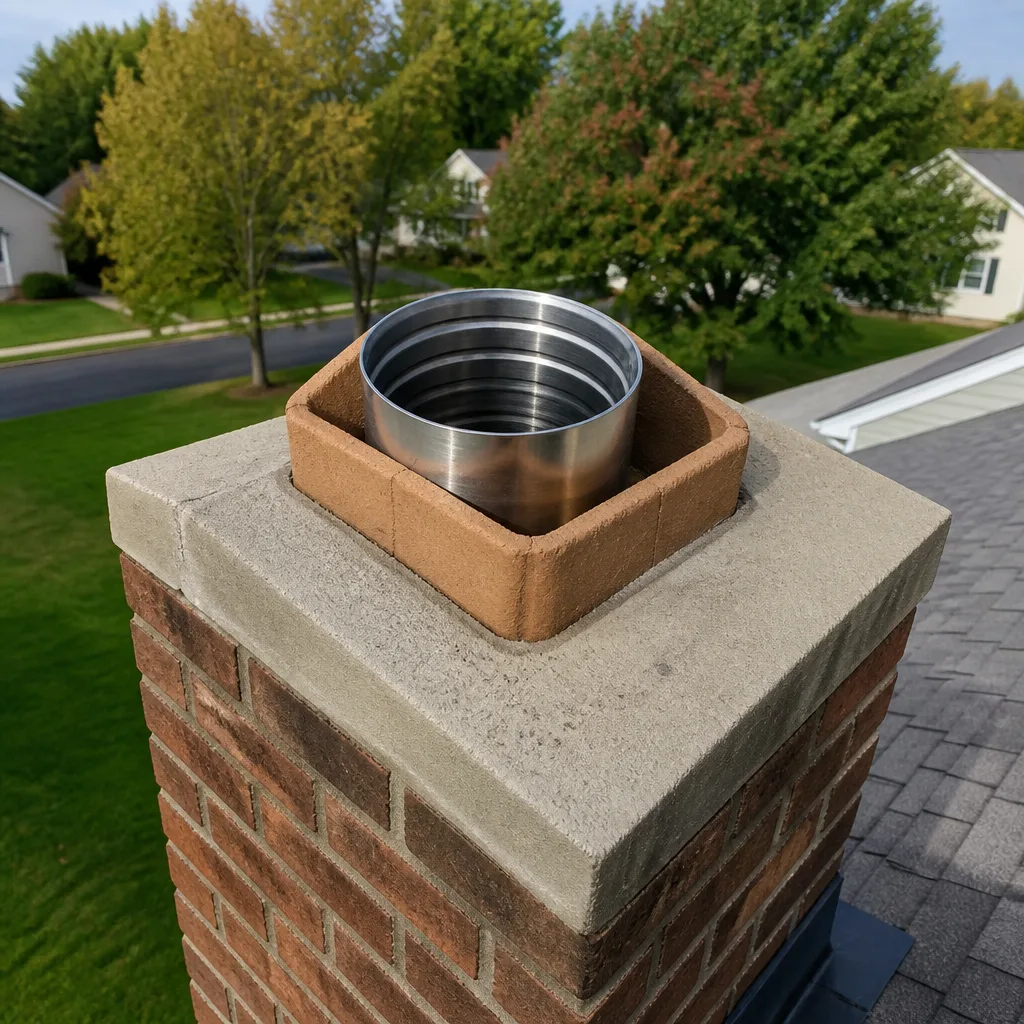
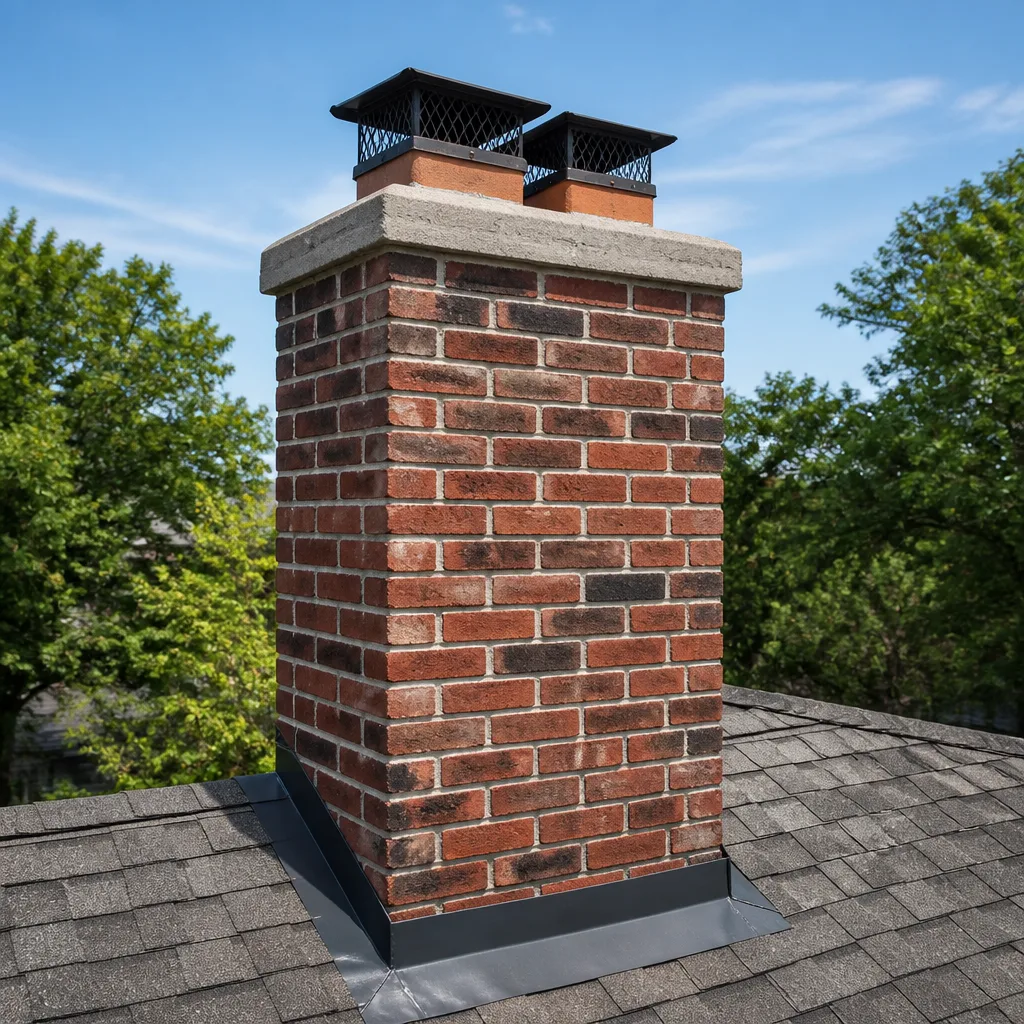
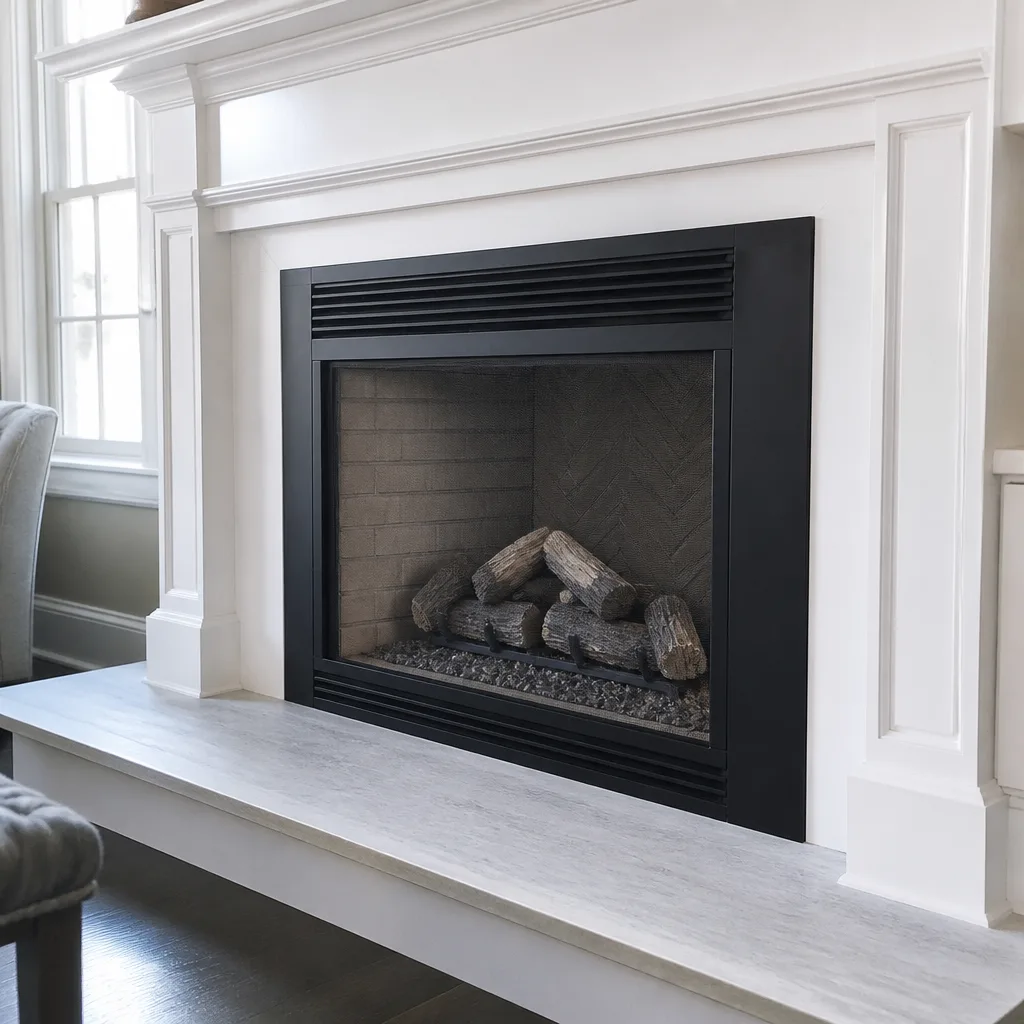
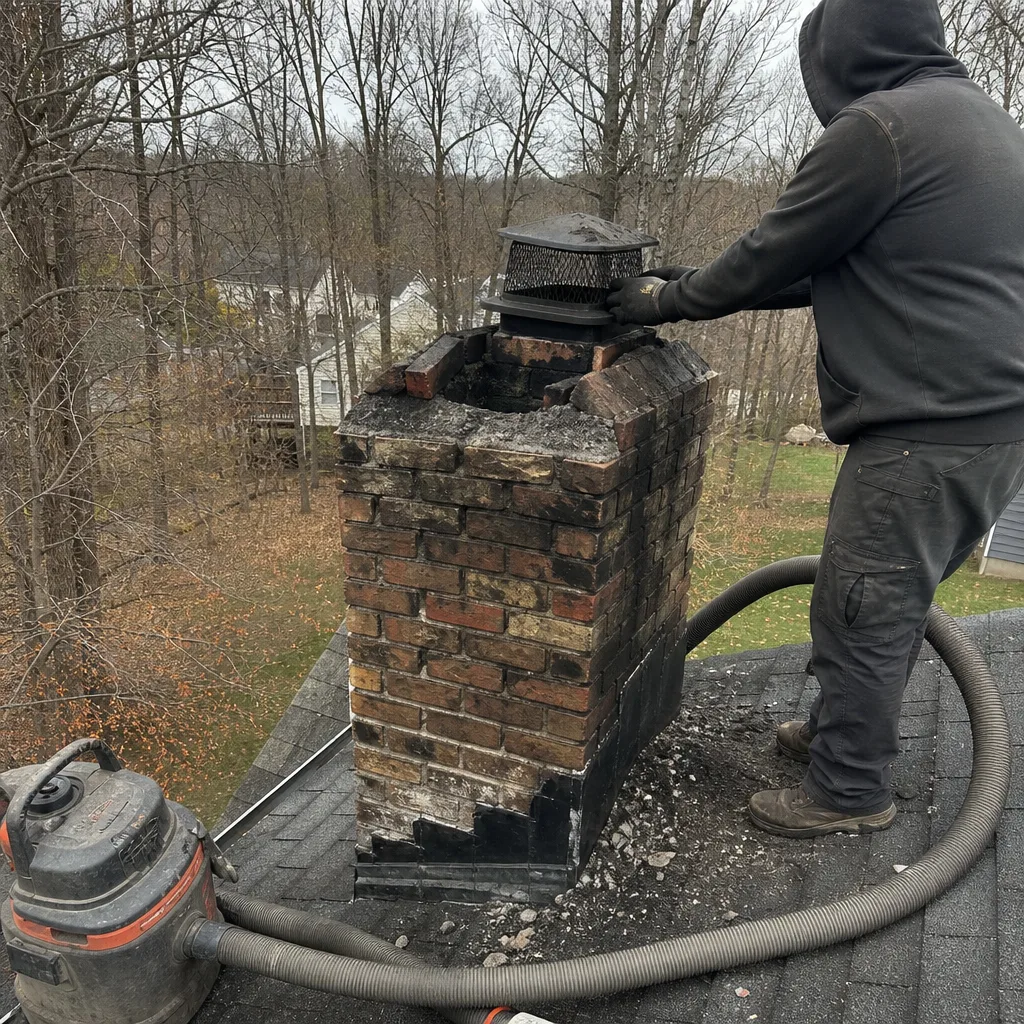 Before
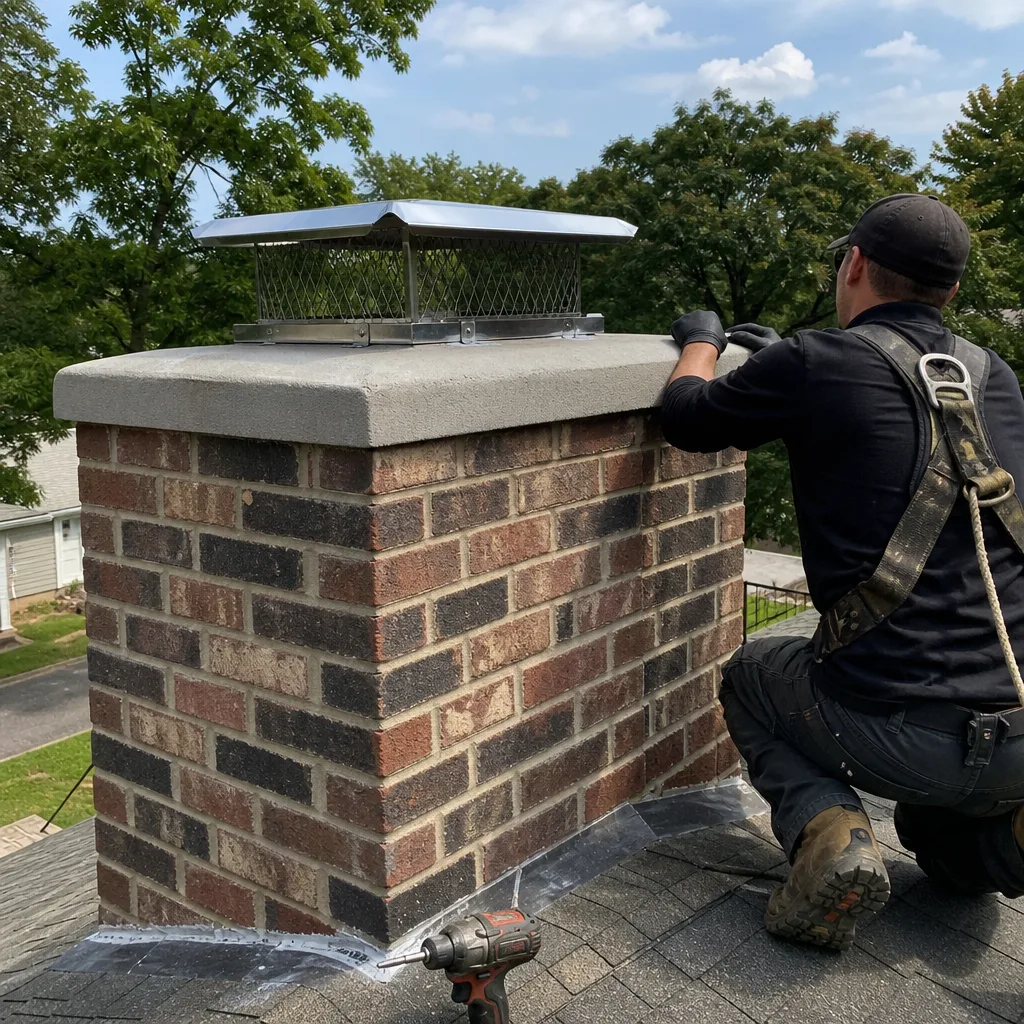 After
After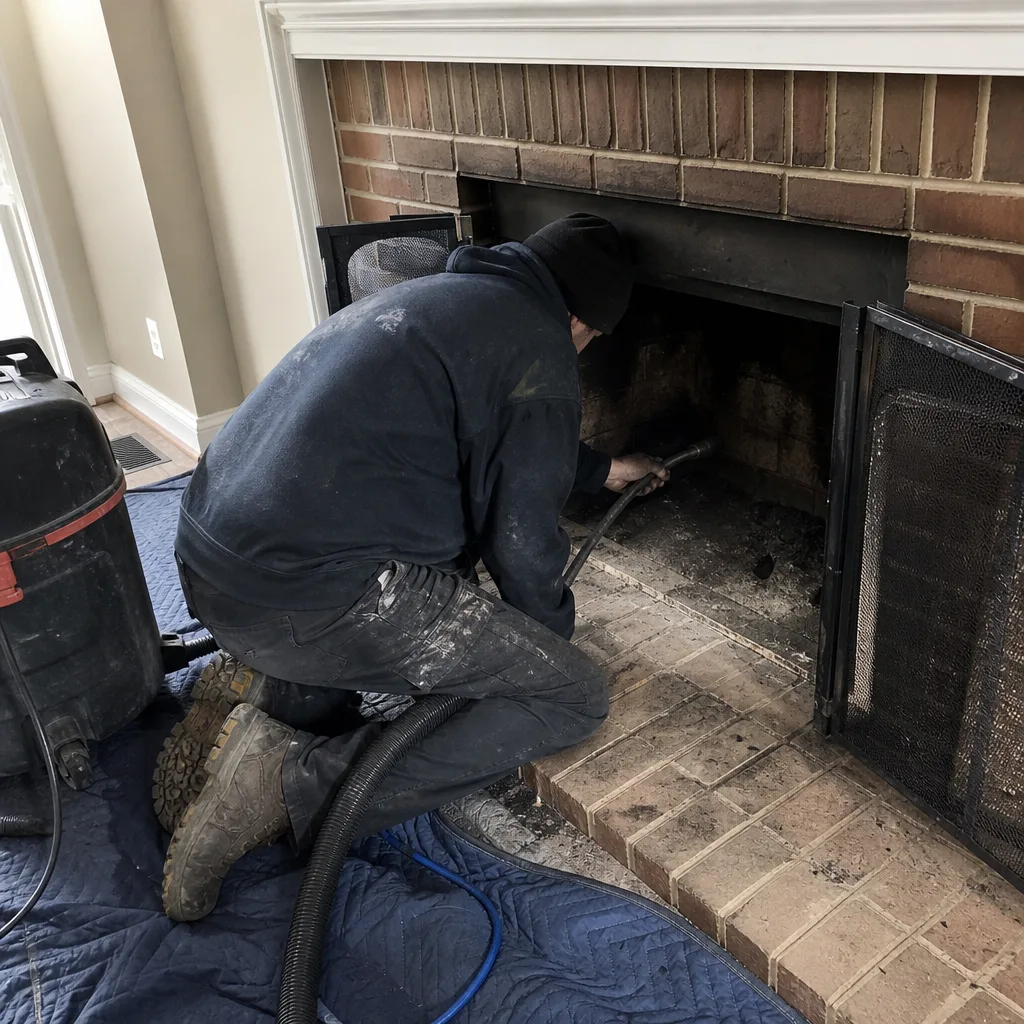 Before
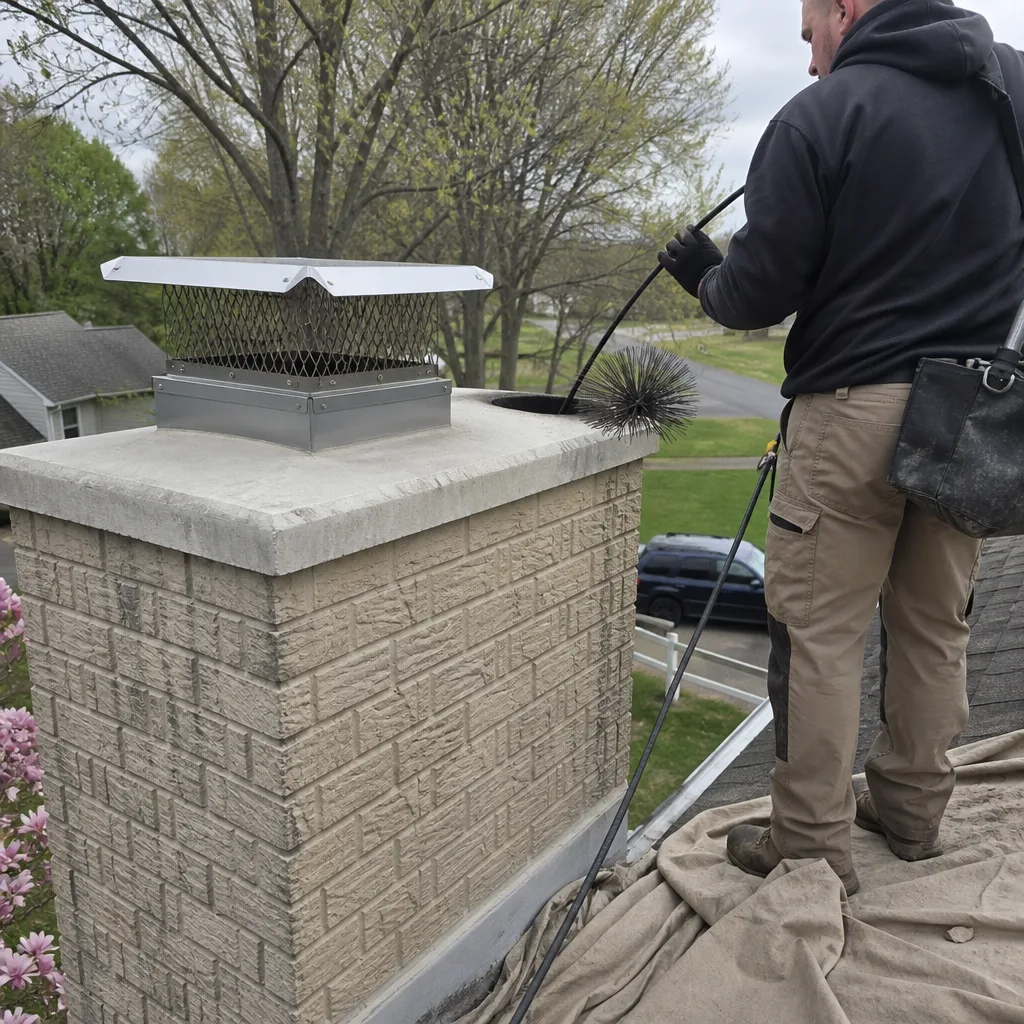 After
After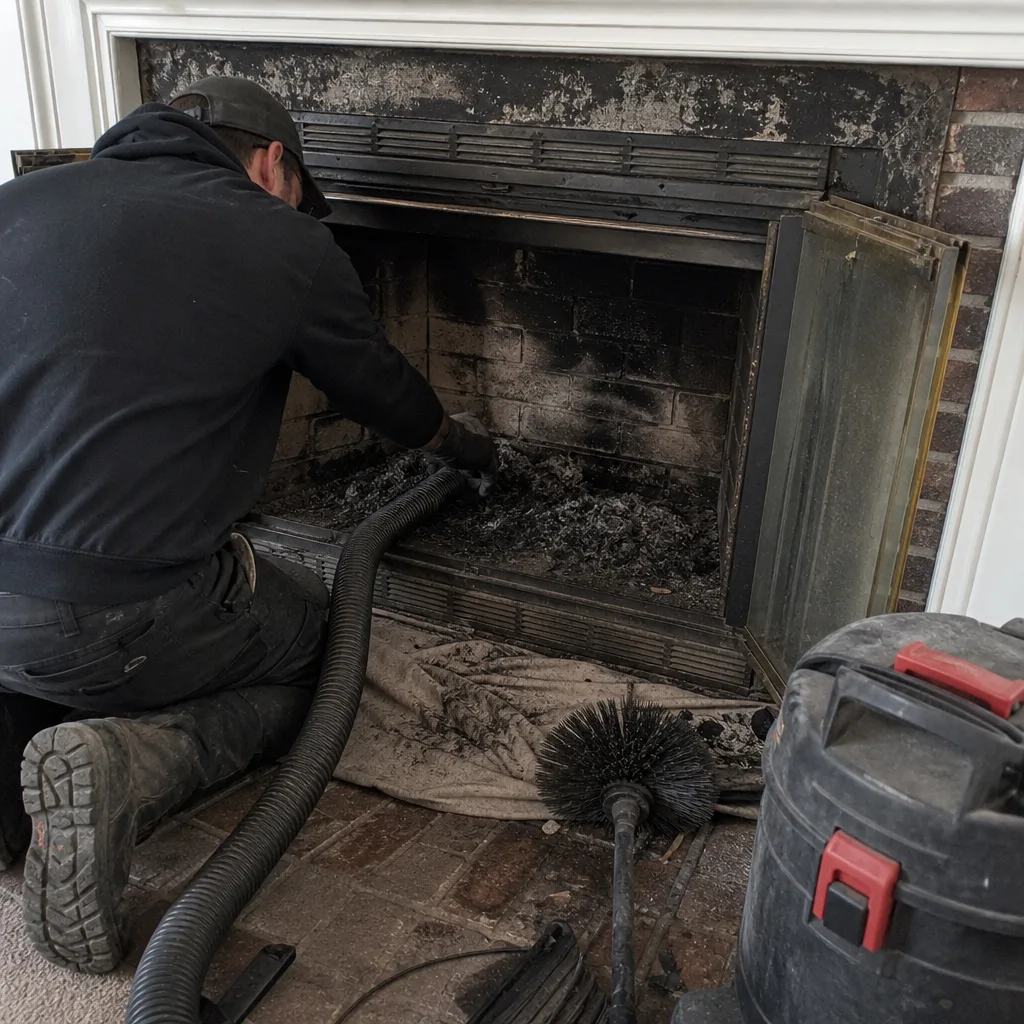 Before
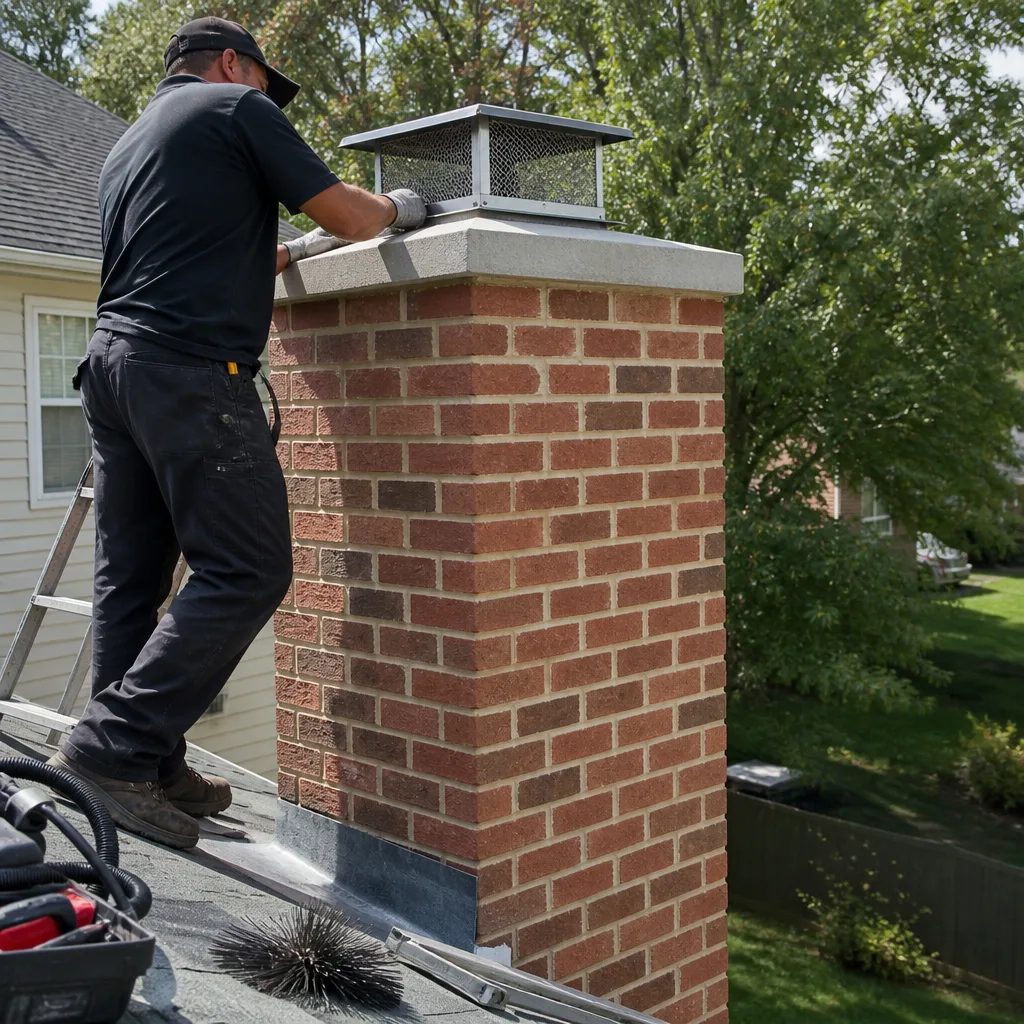 After
AfterHow to Hire a Chimney Cleaning Contractor in Manassas: A Step-by-Step Guide
CSIA certification tells you a sweep passed a test. It doesn’t tell you whether they’ll put a camera down your flue or hand you a written price before they touch a brush. In Manassas, where creosote builds faster in older flues and winter burns start in November, the difference between a brushed flue and a documented one shows up as a chimney fire, a cracked tile you never knew about, or a $4,000 liner quote that arrives without a single photo to justify it. This guide walks through the hiring process the way an inspector would: what to ask, what to watch for, what evasive answers signal, and what written documentation you should walk away with. By the end, you’ll know how to separate a sweep who documents from one who just sweeps.
Quick Answer
To hire a chimney cleaning contractor in Manassas, you need to verify four things before booking: that the company performs a camera-scan inspection (NFPA 211 Level 2), that the price is written before work begins, that the tech is background-checked and licensed, and that you’ll receive a documented photo record of the condition of the flue when the job is done. Ask direct questions about camera footage and written scope. If the answers are vague, move on. A proper sweep in Manassas with a camera inspection typically runs $229-$399 depending on flue height and creosote stage; brushing-only visits cost less but leave you without evidence of what was or wasn’t cleaned.
Table of Contents
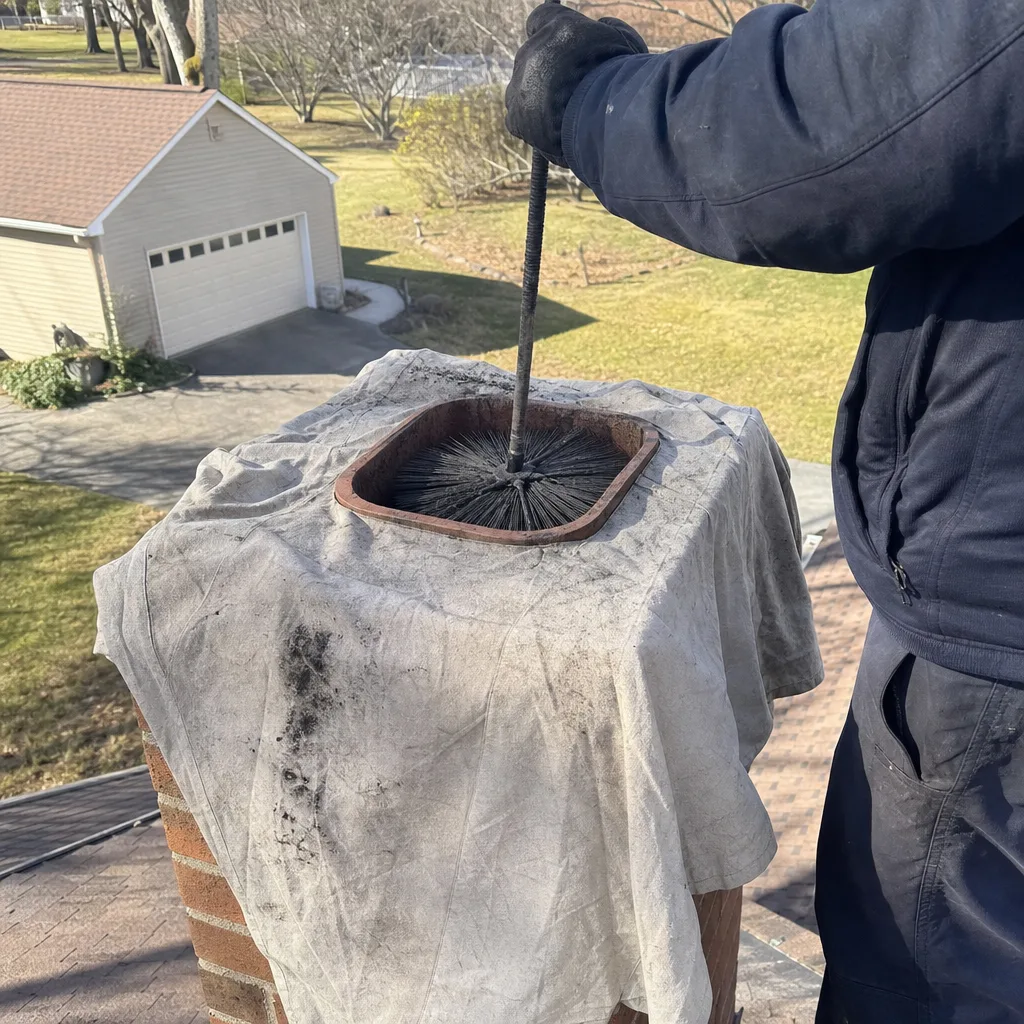
- Why Hiring a Chimney Sweep in Manassas Is Different
- The Five Questions to Ask Before You Book
- What a Written Scope of Work Must Name
- Red Flags in Quotes and Phone Estimates
- What Happens at a Level 2 Inspection Visit (Step by Step)
- Why the Lowest Bid Is Usually a Brushing-Only Visit
- What Chimney Cleaning Costs in Manassas
- The Hiring Process, Step by Step
- Common Mistakes to Avoid
- When to Call a Professional
- Frequently Asked Questions
- The Bottom Line
BeforeAfterWhy Hiring a Chimney Sweep in Manassas Is Different
Manassas sits in a climate belt where humid summers and freeze-thaw winters work against masonry. Brick chimneys here absorb moisture from summer rain and humid air, then crack when that moisture freezes and expands in January. The result is a local pattern we see repeatedly: spalling brick faces on exterior chimneys, deteriorated mortar joints, and water-damaged flue tiles that wouldn’t show up on a standard visual inspection. Add to that the fact that many Manassas homes in neighborhoods like Old Town, Bull Run, and Sudley were built before modern flue liner standards took hold, and you have a market where the chimney’s actual condition rarely matches what a homeowner assumes it to be.
The local burning season is also compressed. Most Manassas homeowners don’t touch their fireplace between April and October, then start burning hard in November. That means creosote accumulates through the winter, sits through a humid summer (moisture makes it tackier and more corrosive), and greets the next burn season as a hardened, sometimes glazed deposit. A chimney that was “fine last year” can have a Class II creosote problem by Thanksgiving. This isn’t fear-mongering; it’s the seasonal reality of burning wood in Prince William County. That compressed season also means the best contractors in Manassas book out two to four weeks ahead in the fall. Hiring in late October for a pre-Thanksgiving sweep usually means settling for whoever has an opening, and that’s when homeowners accept verbal scopes and flashlight inspections they’d never tolerate in March.
Finally, local building patterns matter. Split-levels and colonials built in the 1970s and 1980s dominate parts of Manassas, and their chimneys often have shared flues serving a fireplace on one level and a furnace or water heater on another. Inspecting those properly requires a camera, not a mirror, because a cracked tile mid-flue can vent carbon monoxide into a bedroom wall cavity. That’s the inspection reality behind hiring a sweep in Manassas: the questions you ask determine whether the sweep sees what’s actually there or just sees what a flashlight can reach.
The Five Questions to Ask Before You Book
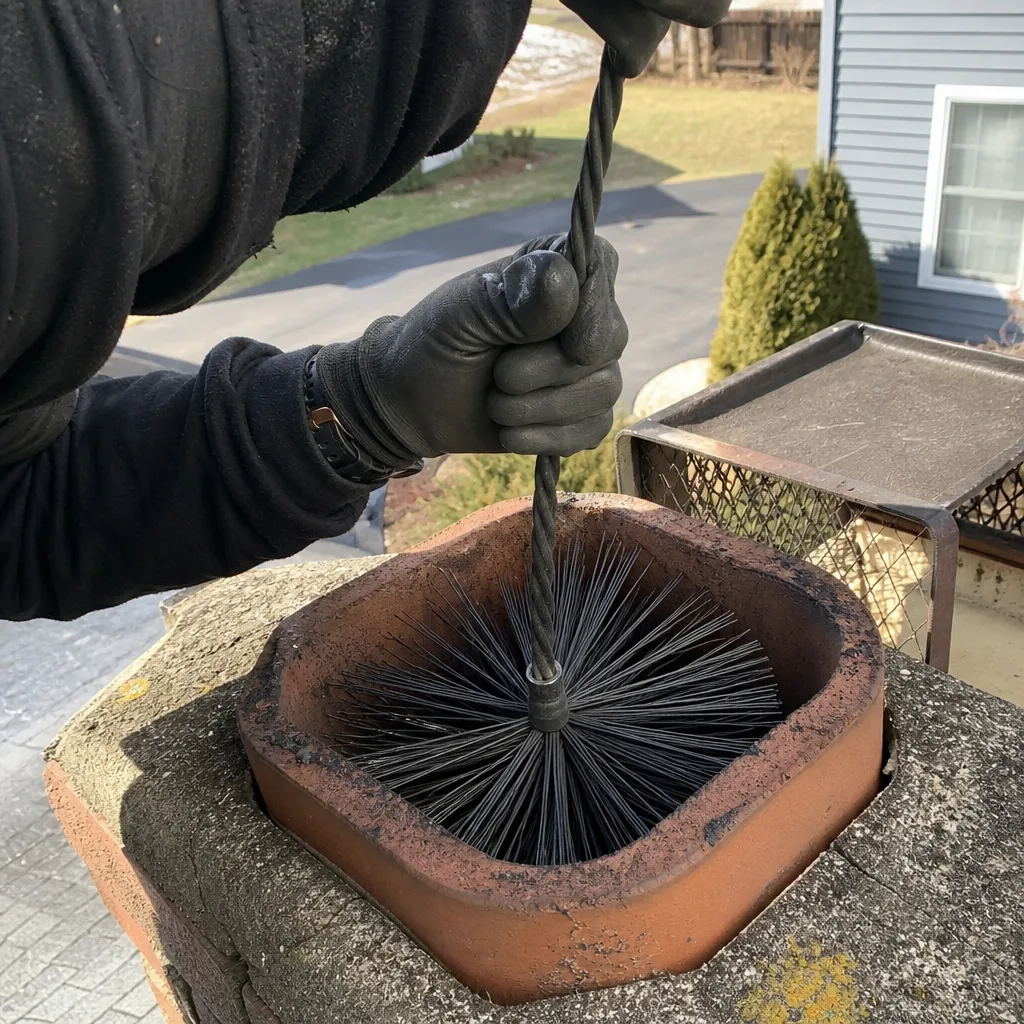
Here’s the thing about chimney sweeps: most of them are certified, and most of them are gone in 45 minutes. The certification isn’t the differentiator. The differentiator is what the tech is required to do and show you during that 45 minutes. These five questions separate the documenters from the brushers.
1. “Will I receive camera footage of the flue?”
This is the single most important question. A camera-scan inspection means the tech lowers a video camera down the flue and records the condition of the liner, the smoke chamber, and the crown from the inside. If the answer is “we’ll take a look” or “we use a mirror” or “we can do a camera for an additional fee,” that tells you the sweep’s default isn’t documentation. A proper chimney cleaning and sweep in Manassas should include camera inspection as the standard, not the upsell. When a sweep’s base price doesn’t include camera documentation, the price is really for labor only, and the inspection that justifies the work might never happen. What evasive answers signal: “We’ll show you photos if we find something” means the camera may only come out when the tech already knows there’s an upsell opportunity. You want a record regardless of what’s found, because the absence of damage is also information you should be able to see and keep.
2. “Is the price written before work begins?”
This question edges out every other one in importance because it changes the power dynamic of the visit. When a price is given verbally, it can change once the tech is inside your home. When it’s written and itemized before tools come out, the scope is fixed, and the tech needs your approval in writing to deviate from it. In our experience, homeowners who insist on a written price are the ones who never get surprised with a “while we’re in here, your cap needs replacing” add-on. What evasive answers signal: “We’ll see what it needs when we get there” or “I can give you a ballpark over the phone” means the pricing isn’t the point of the visit, the inspection is, and the inspection’s findings will be used to generate the real number. That’s fine if you want a sales call disguised as a cleaning, but you should know that’s what you’re booking. The Level Two Chimney Manassas home standard has always been simple: no tools come out of the truck until a written price is in the homeowner’s hand.
3. “Who is the technician, and has that person been background-checked?”
Chimney sweeping means sending a person into your home and onto your roof. You should know their name before they arrive and have confirmation that the company has run a background check. This isn’t a luxury; it’s the bare minimum for any home service in Manassas. What evasive answers signal: “Our team is fully vetted” without specificity, or a call center that can’t tell you who’s coming. A legitimate contractor assigns a named tech to the job and can tell you that person’s name when you book. If they can’t, you’re hiring a dispatch service, not a chimney company.
4. “What documentation do I walk away with when you’re done?”
The answer should include photos, a written report of what was found (including creosote class, liner condition, and any access notes), and a written record of what was done. If the answer is “a receipt” or “a clean chimney,” that’s a red flag. The documentation is the entire point of hiring a professional instead of renting a brush from a hardware store. A proper visit ends with evidence: camera stills timestamped to the visit, a written assessment, and a baseline photo record you can compare against next year’s visit. This photo-archive practice is what our company built its name on, and it’s Clause 4 of the Haven Standard: every job ends with a documented photo record, full stop.
5. “What does your warranty say, in writing?”
Ask this question and watch how the sweep answers. A confident contractor can email you the warranty language before the visit. An evasive one will say “we guarantee our work” or “you’ll be happy.” If the warranty doesn’t exist in writing, it doesn’t exist. We back every job with a 365-Day Done Right Promise that’s stamped on the written work order under the Haven Standard. If the work isn’t done right, it gets made right, and the promise is in the paperwork, not just in a sales pitch. Ask any contractor you’re considering for their warranty language in writing before you schedule. If they won’t send it, schedule someone else.
What a Written Scope of Work Must Name
A written scope of work isn’t a receipt. It’s the contract that defines what the tech is going to do, what they’ve observed, and what limits apply to the work. In Manassas, where chimney conditions vary wildly from mid-century bungalows to 1990s production builds, a vague scope is how homeowners end up paying for a cleaning that didn’t address the actual problem. Here’s what a legitimate written scope must name.
- Flue height. This is the linear feet from the firebox floor to the top of the flue. It determines the sweep’s labor, the length of the rods, and the time on site. A scope that doesn’t state flue height isn’t really scoping the job; it’s guessing.
- Liner material. Clay tile, stainless steel, cast-in-place, or unlined. The cleaning method and the risks change completely depending on what’s inside that chimney. A stainless liner (like those from DuraFlex) handles a rotary brush differently than a 60-year-old clay tile that’s already cracking.
- Access points. Where will the tech enter the flue: from the roof, from the firebox, from a cleanout door in the basement? This matters because it determines whether the job requires roof access (and the safety gear that goes with it) and whether a second person is needed on site.
- Creosote stage found. When a tech opens the damper and looks up, they should be able to identify the creosote class: Class I (dusty soot), Class II (brittle tar flakes), or Class III (hardened, glazed tar). The class determines whether a standard brush cleaning will work or a chemical treatment or rotary cleaning is required. A scope that doesn’t name the creosote class is a scope that didn’t really inspect.
- What the cleaning will address. “Cleaning of the flue” is not specific. The scope should say what’s being cleaned (flue, smoke chamber, firebox, damper) and what’s explicitly excluded (e.g., “crown repair is outside this scope” or “the smoke chamber shows parging deterioration and will be noted but not addressed in this visit”).
- What the cleaning will not address. This is where honest contractors separate themselves. A real professional writes down what they’re not doing, because they know the homeowner will hold that piece of paper next year when a problem is found. If a scope doesn’t mention limitations, it’s a sales brochure, not a work order.
When we write a scope for a Manassas homeowner, it reads like an inspection report with a price attached, because that’s what it is. The same discipline applies to chimney repair in Manassas and to every service we perform. A written scope is a promise you can hold. If a contractor can’t name these six things, they haven’t really looked at your chimney.
Red Flags in Quotes and Phone Estimates
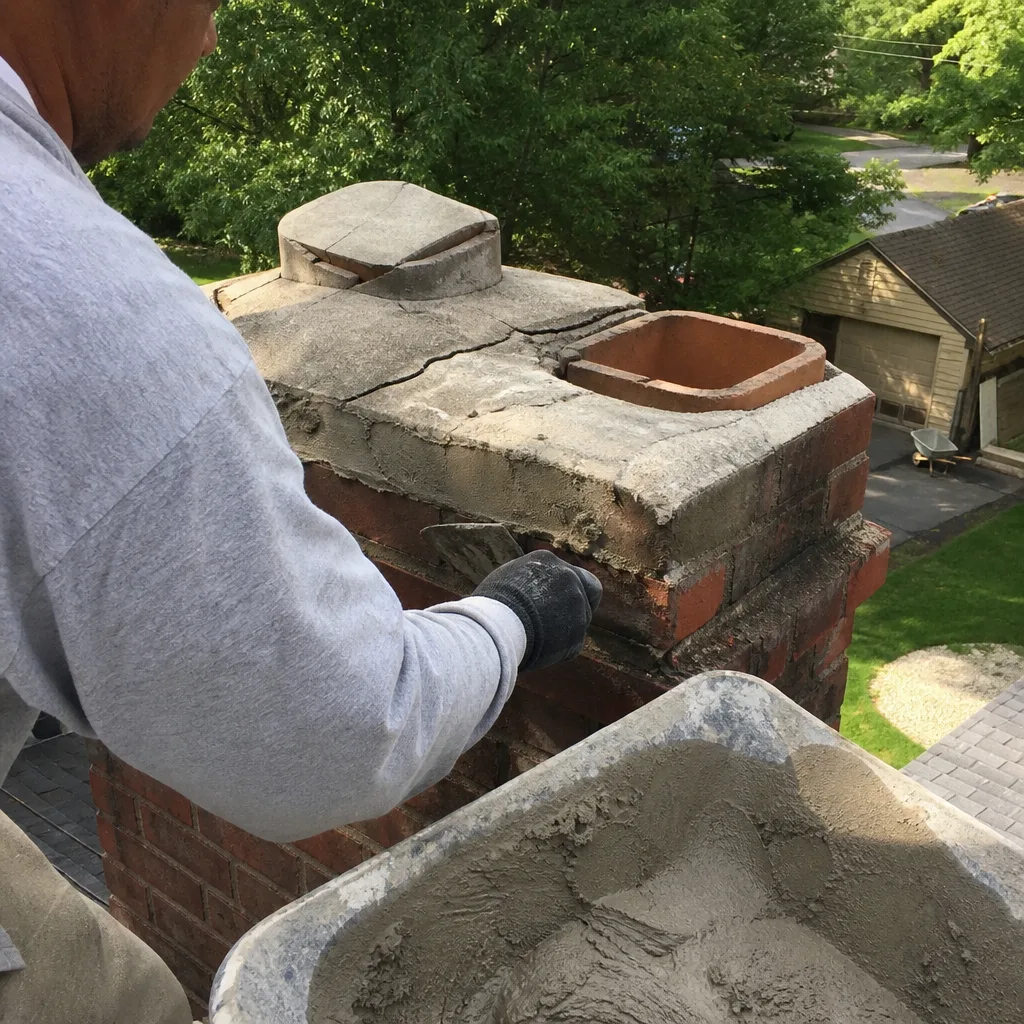
Most Manassas homeowners call two or three chimney companies, compare the numbers, and pick the middle one. What they miss is that the quote itself, whether by phone or from a simple web form, contains signals about how the company operates. Here are the red flags that show up in quotes and phone estimates from contractors who don’t deserve the job.
- The price quoted before anyone has seen the chimney. A company that quotes $149 over the phone without asking about flue height, liner material, or creosote history is selling a teaser rate. The real price will be discovered on site, after the tech has already set up. Legitimate contractors need information before they can price. A sweeping job on a 30-foot clay tile flue with Class III creosote is not the same job as a 15-foot stainless liner with light soot.
- The “free inspection” that isn’t free. Some Manassas chimney companies advertise a $49 or $79 inspection that turns into a cleaning plus repair pitch. That’s not an inspection; that’s a sales appointment. A real inspection requires time, a camera, and a written report, and a company that does it right charges for the service or bundles it into a cleaning at a transparent rate.
- “Bring your own liner” or “we’ll match any price.” A contractor who will match any price is telling you their first price wasn’t honest. Materials, labor, and the documentation standard are what they are. A match-any-price promise means the contractor’s costs are flexible, which means their scope is flexible, which means your written scope will shrink to fit the lower number.
- No mention of a camera, a written report, or documentation. If the phone person talks about “brushing the flue” and “cleaning the cap” but never mentions how the work is verified, you’re talking to a brushing-only operation. That’s not a chimney inspection by any meaningful standard. It’s labor without proof.
- The “we’re already in your neighborhood” line. This is a classic pressure tactic from fly-by-night operators and franchise-style sales teams. It implies a discount that isn’t real and urgency that isn’t warranted. In Manassas, the legitimate chimney companies book days or weeks out during burn season. They don’t happen to be passing by.
- Quotes that don’t specify what happens if the chimney needs more than a cleaning. A good contractor’s quote includes a sentence about how additional work will be priced: written, before it starts, with your approval required. A bad quote just covers the cleaning and leaves everything else ambiguous. You’ll find out on the visit that the “cleaning” turned into a “recommended liner replacement” that somehow already has a price.
The red flag list isn’t about manners or professionalism; it’s about proof. A quote that doesn’t name the chimney’s characteristics and doesn’t commit to written documentation is a quote designed to get a tech through your door, not to clean your chimney to a standard.
What Happens at a Level 2 Inspection Visit (Step by Step)
An NFPA 211 Level 2 inspection is the camera-down-the-flue standard. It’s what the fire safety code specifies when a property is changing hands, when the chimney system has changed, or when a home has experienced a chimney fire, weather event, or operating malfunction. But it’s also the right standard for any homeowner who wants an actual record of the condition of their flue, not a flashlight glance. Here’s what the visit should look like, step by step, and what to watch for if a step gets skipped.
- Arrival and setup. The tech arrives, introduces themselves, and lays down drop cloths in front of the fireplace. They should be in uniform, with company ID visible. Before any tools come out, you should receive a written scope of work and a written price. If tools start moving before paper is signed, stop the visit. That’s the line.
- Interior examination of the firebox. The tech inspects the firebox walls, the damper assembly, and the visible portion of the smoke chamber for cracks, gaps, and signs of water intrusion or previous fire damage. This is where spalling brick faces and deteriorated mortar joints get noted. The tech should be talking you through what they’re seeing in plain language, not just scribbling on a form.
- Camera scan of the flue. This is the core of the inspection. A camera on a flexible cable is lowered from the top of the flue (or pushed up from the firebox) and the entire length is recorded. You should see the monitor. The tech should narrate what the camera is seeing: tile joints, mortar wash, any cracking, any creosote buildup, and the condition of the flue liner. In Manassas, where older homes often have clay tile liners that are 40 to 60 years old, this is where hairline cracks get caught before they become structural failures.
- Exterior examination of the chimney and crown. The tech inspects the chimney chase, the brick or stone facing, the mortar joints, and the crown (the concrete cap that seals the top of the chimney). This is where freeze-thaw damage shows up: a cracked crown lets water into the flue system, and that water deteriorates the liner from the inside out. In Manassas, this is the single most common finding on exterior chimneys.
- Creosote classification and written assessment. After the camera scan and exterior check, the tech classifies the creosote (Class I, II, or III) and writes up an assessment that names: flue height, liner material, the condition of the liner, the crown, the damper, and the smoke chamber. You should receive a copy of this assessment, with photos, before the tech leaves. No assessment, no photos? That wasn’t a Level 2 inspection. That was a cleaning with extra steps.
- The cleaning itself (if scheduled). A proper cleaning follows the inspection: brushes sized to the flue dimensions, rods or a rotary system matched to the creosote class, and protective measures to keep soot out of your living space. The tech should vacuum continuously and clean the firebox, smoke chamber, damper, and visible flue surfaces. When the job is done, you should receive a documented photo record showing the flue before and after: Clause 4 of the Haven Standard, and the reason we’ve kept an unbroken photo archive since 2009.
If a step is skipped, ask. Specifically: if the camera never comes out, if the exterior chimney isn’t examined, or if no written assessment appears at the end, you haven’t received a Level 2 inspection. In Manassas, where chimney conditions are so variable block to block, the camera isn’t optional. It’s the entire basis of the credential.
Why the Lowest Bid Is Usually a Brushing-Only Visit
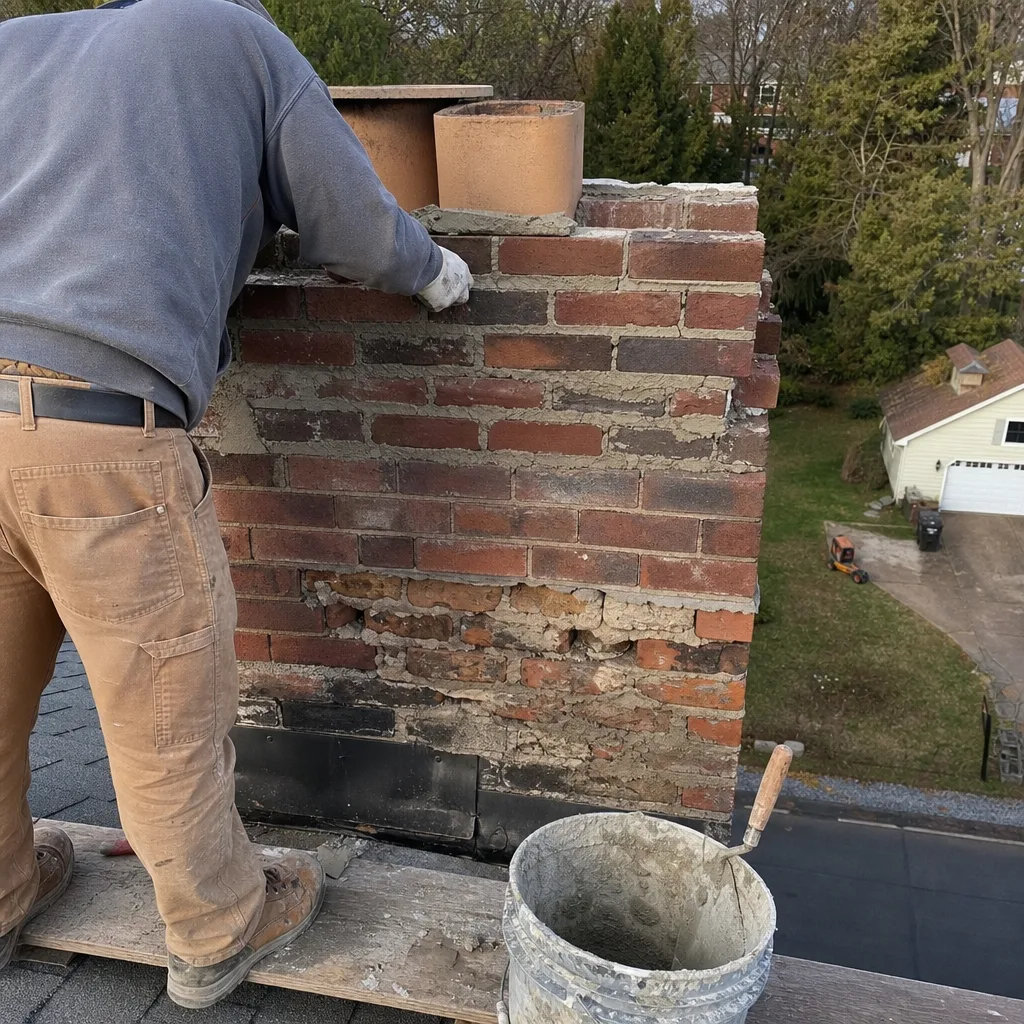
The temptation is real: one Manassas chimney company quotes $159 for a cleaning, another quotes $349, and the difference is invisible in a phone call. So you take the low bid. Here’s what that low bid usually represents.
A brushing-only visit includes labor and a brush. The tech runs a wire or poly brush up the flue, vacuums what falls into the firebox, and leaves. What it doesn’t include: a camera scan, a written assessment, a classification of the creosote, an exterior inspection of the crown and mortar joints, and any photographic record of what was actually cleaned. The flue might be clean, or it might still have a glazed creosote band at the top that the brush couldn’t reach, or a cracked tile behind a smoke shelf that the tech never saw because they never looked.
The economics explain the spread. A camera-scan inspection adds 20 to 30 minutes of time, requires a $3,000+ camera system, produces a written report, and creates a photo archive that the company must store and maintain. A brushing-only visit requires a brush, a few rods, and a vacuum. The $159 quote isn’t a bargain; it’s a different product entirely. It’s a chimney band-aid, and in Manassas, where the burning season is short and the stakes are high, it’s a band-aid on a system that vents fire and carbon monoxide out of your house.
We’ve also seen the low bid turn into the expensive bid, fast. The $159 brushing turns into a “your crown is cracked” pitch after 20 minutes, with a $2,800 repair quote that the tech can’t substantiate with a single photo. The homeowner, now with a partially cleaned chimney and a scary number in their ear, is in exactly the position they were trying to avoid by shopping on price. The written-price standard flips this dynamic: the price is named before tools come out, the work is documented in writing, and any additional work is priced in writing before it begins. If a Manassas chimney company can’t do that, the low bid is a risk, not a savings.
What Chimney Cleaning Costs in Manassas
Naming the price range matters. Homeowners in Manassas should expect to pay between $229 and $399 for a chimney cleaning that includes a camera-scan inspection and a written report. Here’s how that range breaks down.
| Service Level | Typical Manassas Price Range | What’s Included | What’s Not |
|---|---|---|---|
| Brushing-only visit | $129-$189 | Basic brush sweep of the flue, firebox vacuuming | No camera, no written report, no exterior inspection, no warranty |
| Standard sweep with visual inspection | $189-$249 | Brush sweep plus visual check of firebox and damper | No camera scan, limited exterior check, limited documentation |
| Camera-scan sweep (NFPA 211 Level 2 documentation) | $229-$399 | Full camera inspection, written assessment, creosote classification, photo record, written price before work | Excludes repair work beyond cleaning scope |
The spread within each tier depends on flue height (a 30-foot chimney costs more than a 12-foot one), liner material (stainless liners are easier to clean than old clay tile, which can be brittle), and creosote stage (Class III glazed creosote may require chemical treatment or rotary cleaning, which adds cost). In Manassas neighborhoods with older housing stock, like Old Town and the streets around Center Street, clay tile liners and higher creosote loads are more common, so the cost tends to run toward the upper end of the standard range.
A note on liner replacement, because it comes up constantly. If a camera inspection reveals a cracked or deteriorated flue liner, the repair is a separate job with a separate written quote. HeatShield and DuraFlex are the two liner systems we work with most in Manassas, and a resurfacing or relining job typically runs $2,500 to $6,000 depending on flue height and access. That’s a wide range, and that’s exactly why the camera documentation matters: a quote for a liner replacement should be attached to photos that show exactly what the camera saw. No photos, no quote. If a contractor can’t show you the damage, you shouldn’t pay for the repair. Our fireplace services in Manassas include this documentation standard by default.
The Hiring Process, Step by Step
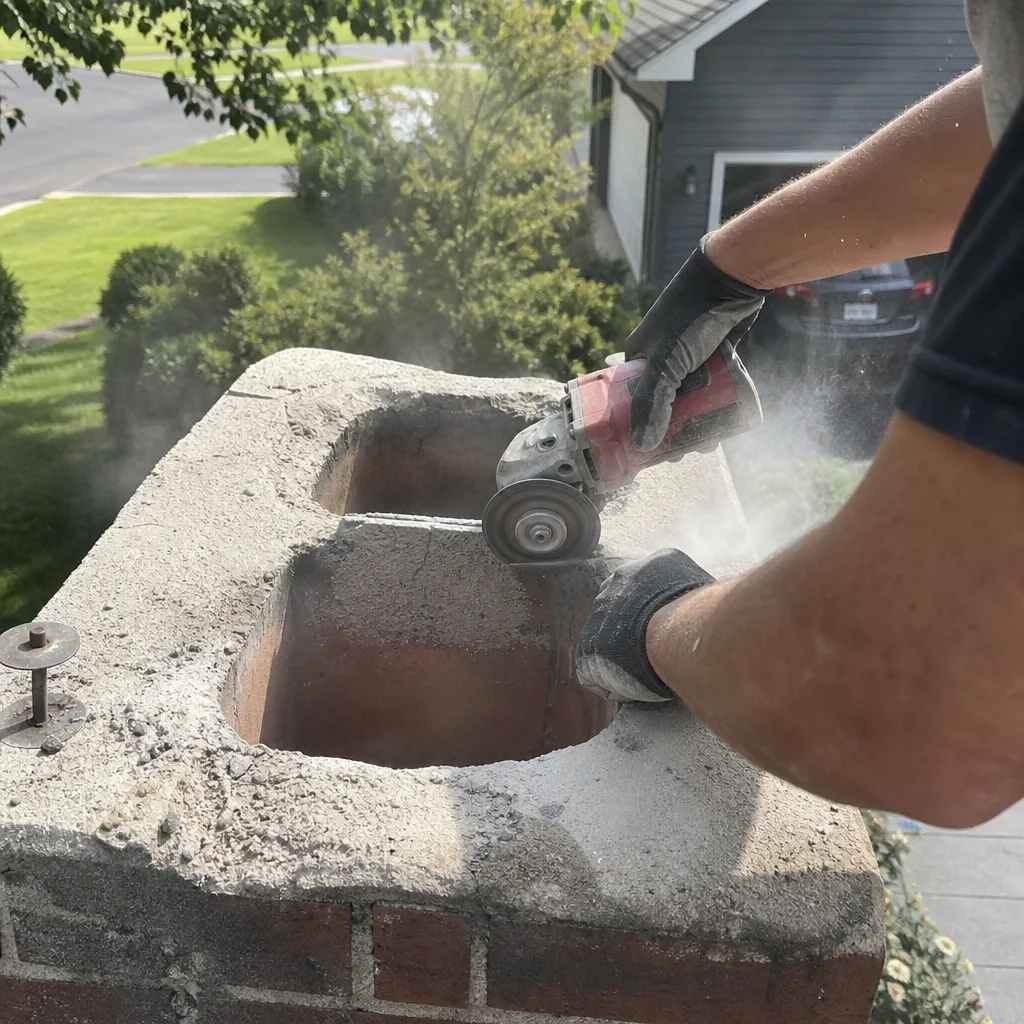
You’ve done the reading. You know the questions. Here’s the full hiring process, from first call to final handshake, structured so you can follow it without second-guessing yourself.
- Call the company during business hours. A live person should answer. If you get voicemail during business hours, that’s information: this is a company that doesn’t staff phones, and that’s not the contractor you want for a job where the tech is entering your home. At Level Two Chimney Manassas, a live person answers around the clock, because chimney issues don’t respect operating hours.
- Ask the five questions. Camera footage? Written price before work? Named tech and background check? Documentation at the end? Written warranty? Short, direct questions. If the answers are evasive or wordy without answering, hang up and move to the next name on your list. There’s no shortage of chimney companies in Prince William County, and the filter is doing the work for you.
- Request a written estimate in advance. Some companies will require a site visit first. That’s acceptable, but the estimate that follows the visit must be written, itemized, and specific. If the only number you ever get is verbal, you don’t have a price; you have a suggestion.
- Compare your estimates on documentation, not just price. The $249 camera-scan sweep and the $159 brushing-only visit are not the same product. Look at what’s listed under “included” on each written estimate. If one doesn’t mention a camera and the other does, you’re not comparison shopping. You’re choosing between two different services.
- Book with a date and time, and ask for the tech’s name. The company should be able to tell you who’s coming. A text notification on the day of service is a good sign. A nameless “technician slot” is not.
- Day of the visit: look at the paperwork before tools come out. The written scope and price should be in your hand before the tech moves a brush. If they’re not, say so. A professional will have the paperwork ready. An operator will stammer.
- Ask to see the camera monitor. You’re not just a recipient of the cleaning; you’re the person who has to live with the chimney. Watch the feed. Ask what you’re seeing. A good tech narrates the inspection because they want you to understand what they’re working with.
- Get the written record at the end. Photos, written assessment, and any warranty documentation should be delivered before the tech leaves or emailed shortly after. No record, no proof. And proof is the point.
Common Mistakes to Avoid
- Hiring on certification alone. CSIA certification is valuable, but it’s a test score, not a documentation standard. A certified sweep with a flashlight is still just a sweep with a flashlight. Ask about the camera and the written report.
- Accepting a verbal price. In Manassas, verbal pricing is how homeowners end up surprised at the end of a visit. Write it down, or make them write it down. If it’s not on paper, it’s not a price.
- Skipping the exterior inspection. Manassas freeze-thaw cycles damage crowns and mortar joints every winter. A chimney cleaning that skips the exterior check is only half an inspection.
- Booking the first company that answers the phone. The companies with open schedules in late October have open schedules for a reason. Shop before the burn season starts, and you’ll have leverage.
- Confusing “cleaning” with “inspection.” A brush removes creosote. An inspection tells you whether the chimney is safe to use at all. These are different services with different purposes, and a cheap cleaning is not a stand-in for a real inspection.
- Not asking for the tech’s name. You should know who’s coming into your home before they arrive. If a company can’t tell you, they’re dispatching unknown labor, and that’s a different business model than chimney cleaning.
- Paying for liner work without seeing the camera footage. In Manassas, we’ve seen too many homeowners get quoted for liner replacement based on a flashlight glance and a hunch. If there’s no camera footage showing the damage, don’t write the check. This sounds obvious, but it’s the most expensive mistake on this list.
When to Call a Professional
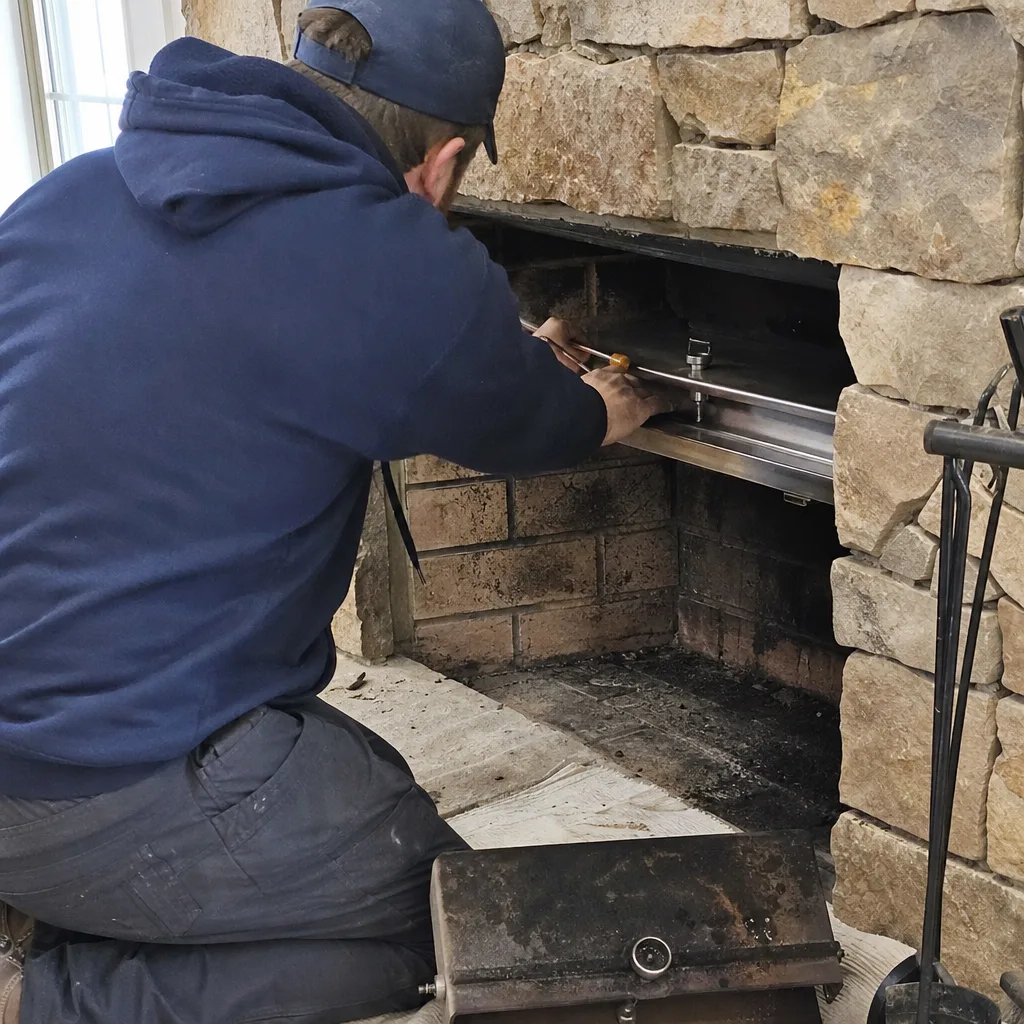
Some things you can defer. A dirty chimney in July is not an emergency. But certain findings demand a professional call immediately, and in Manassas, those findings usually cluster around the fall. If you notice a strong, tar-like smell coming from the fireplace in humid weather, that’s Class II or III creosote absorbing moisture and off-gassing, and it’s a sign the flue needs a professional cleaning before the first burn. If you see smoke backing into the room when you light a fire, or if you hear a crackling noise in the chimney while the fire is burning, stop using the fireplace and call. The same applies to water stains on the ceiling near the chimney or flaking brick faces on the exterior chimney, which indicate freeze-thaw damage that needs a chimney repair in Manassas evaluation. Level Two Chimney Manassas offers free estimates in Manassas, call (571) 946-2300 to schedule a visit.
Frequently Asked Questions
A chimney sweep in Manassas typically costs $229 to $399 for a camera-scan cleaning with a written report. Brushing-only visits run $129 to $189 but don’t include camera inspection or documentation. The final price depends on flue height, liner material, and creosote stage. Call (571) 946-2300 for a written quote, no on-site sales pressure.
The National Fire Protection Association recommends annual inspection and cleaning as needed. In Manassas, where humid summers make creosote tackier and more corrosive, we recommend a camera-scan inspection every fall before burning season. If you burn more than two cords of wood per winter, schedule a second inspection mid-season.
A Level 2 inspection is an NFPA 211 standard that includes a camera scan of the entire flue, interior and exterior examination, and a written report. In Virginia, permits, codes and inspections may also apply when a home is sold or after certain events. It’s required when a home is sold or transferred and after a chimney fire or weather event. We include this standard on every visit, even for routine cleanings.
You need a new liner when the existing one is cracked, deteriorated, or absent, and those conditions show up on camera footage. A 40-year-old clay tile liner in a Manassas colonial may be perfectly serviceable, or it may have hairline cracks that allow carbon monoxide into wall cavities. Without camera documentation, a liner replacement recommendation is just a sales pitch. Ask for the footage before you approve anything.
Creosote accumulates in the flue and can ignite at around 451 degrees Fahrenheit, creating a chimney fire that can crack tiles, damage the liner, and spread to the home’s structure. In Manassas, where the burning season is compressed and creosote sits in humid conditions for months, the risk is higher than in drier climates. A skipped cleaning also means missed water damage, which accelerates liner deterioration.
Yes, if you hire the right contractor. Clause 4 of the Haven Standard requires a documented photo record on every visit, and we’ve maintained that archive since 2009. A proper chimney company shows you the camera feed during the inspection and provides still photos in the written report. If a sweep won’t offer this, keep looking.
The Bottom Line
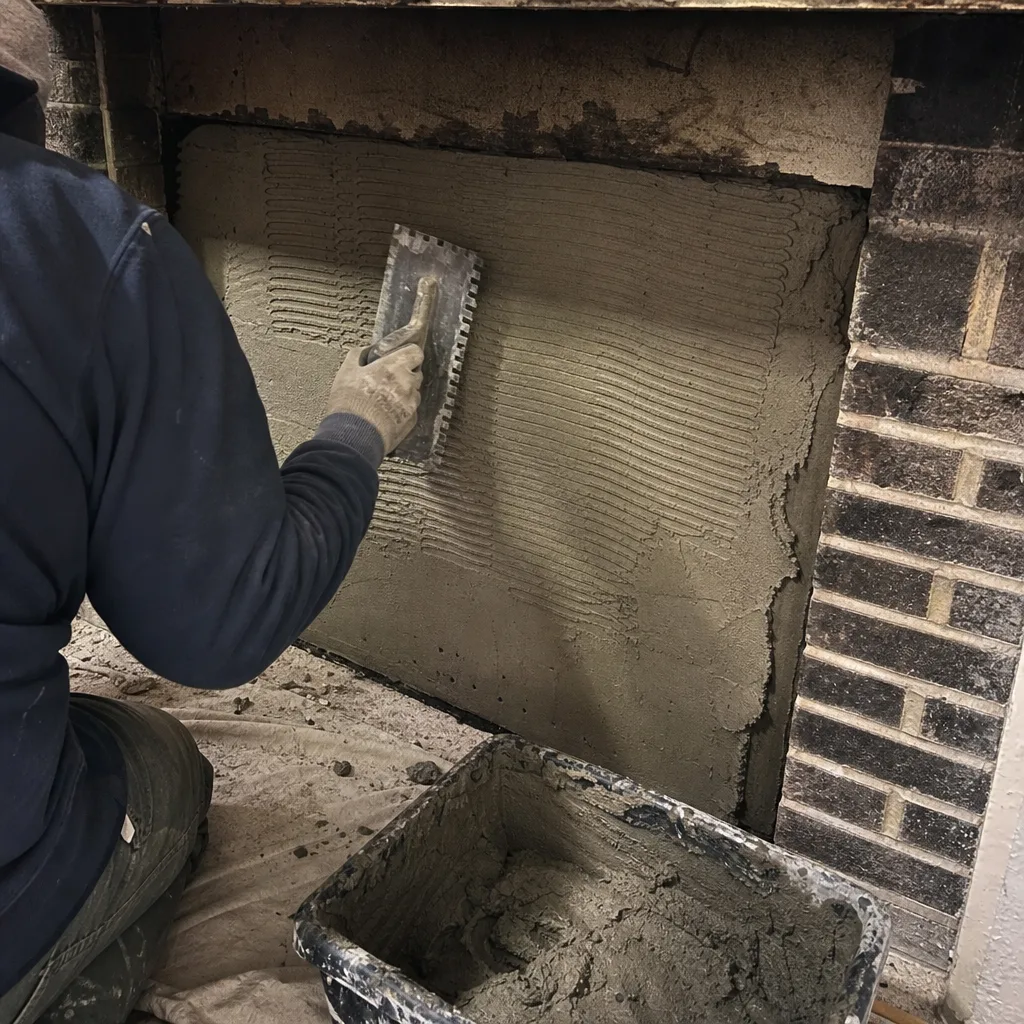
Hiring a chimney cleaning contractor in Manassas comes down to one shift in thinking: stop evaluating credentials and start evaluating documentation. A CSIA certification is table stakes. A camera scan, a written price before work begins, a documented photo record, and a warranty in writing are the actual deliverables. Ask the five questions. Watch for the red flags. And when the tech arrives, watch what they pull out of the truck before you sign anything. The right contractor is one who shows you the work, in writing, with photos, every single time. That’s the standard to hold, and the one we’ve built our company around since 2009. For more guides & resources on chimney care, explore our blog.
Ready to schedule a chimney cleaning in Manassas? Call Level Two Chimney Manassas at (571) 946-2300 for a free estimate and a written price before any work begins.
Written by Corrine Halstead, Owner at Level Two Chimney Manassas, serving Manassas since 2009.